

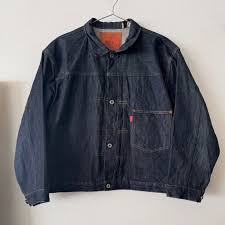
A denim jacket sewn during a wartime cotton shortage just became the most expensive secondhand jacket of its kind ever recorded. In April 2026, Guinness World Records confirmed that a Levi’s S506XXE jean jacket, produced under U.S. wartime fabric restrictions sometime between 1941 and 1946, had sold to FIVESTAR Inc., a Japanese beauty-industry company, for ¥55 million, an amount reported as roughly $260,000 and separately logged by Guinness at £260,590, according to Guinness World Records. The sale set a new title: most expensive secondhand denim jacket in the non-memorabilia category. What makes the garment remarkable isn’t a celebrity name attached to it. It’s that it survived eight decades in near-mint condition, carrying physical proof of how tightly the U.S. government rationed cotton, leather and metal during the war.
A Jacket Redesigned Around Shortages
The “S” in S506XXE stood for “simplified,” a designation Levi Strauss & Co. gave the jacket once wartime restrictions forced changes to its standard 506XX design, according to Macao News. Guinness and the trade press that covered the sale point to a specific structural giveaway: a “split back,” where two smaller panels of fabric are seamed together across the rear panel instead of the single cut piece used before the war, a change made to stretch limited yardage further, per Antique Trader. Buttons dropped from five to four and were switched to a flat “donut” style that used less metal, and the flaps were stripped off the chest pockets entirely to save cloth, according to WWD’s Sourcing Journal. None of these were style choices. They were compliance measures, the visible residue of a government agency, the War Production Board, dictating exactly how much fabric a civilian jacket was allowed to contain.

The jacket sold this spring is catalogued as item No. 17 in the reference book “Levi’s Vintage Denim Jackets,” per Macao News, which places it among a small, documented population of surviving wartime Levi’s rather than an unverified attic find. Antique Trader describes its condition as near-deadstock, with the leather collar patch intact and its lot number and size still legible after roughly 80 years, a level of preservation the outlet called extremely rare for a garment from that production run.
What the Buyer Said He Was Really Purchasing
FIVESTAR’s CEO, identified by Guinness World Records as Masayuki Sasaki, framed the purchase as cultural stewardship rather than collecting for its own sake. “This is not about how expensive a purchase it was. It is a gesture to show that Japanese aesthetics have been nurtured to an extent that we have eyes to find and value world cultural heritage,” Sasaki said, according to Guinness World Records. It’s a notable statement given that the buyer runs beauty salons, not a museum, and it underlines a pattern trade publications have tracked for years: Japanese collectors, dealers and denim heads have driven the top end of the vintage American workwear market for decades.
A Market Already Primed to Pay Big Money for Old Denim
The sale didn’t happen in a vacuum. Daniel Buck Auctions, a Maine-based house that regularly handles vintage Levi’s consigned from old clothing-store inventories, sold a never-worn 1940s Levi’s jacket for $38,100 at one sale and a 1930s Levi’s 506XX for $13,200 at another, with a single sale of period Levi’s items totaling roughly $150,000, according to Antiques and The Arts Weekly. Auctioneer Daniel Buck told the outlet that “the heavy buyers are in Asia,” adding that collectors there “seem to like the rugged, western connotations that go with this clothing.” That pattern of demand had already been building for a decade before FIVESTAR’s purchase reset the record books, and it explains why a single jacket, missing its flaps and short a button, could command a quarter-million dollars: scarcity, not styling, sets the price.
Not the First Record This Category Has Set
Guinness World Records has tracked eye-popping Levi’s sales before, though under a different title. In 2005, a pair of Levi’s 501 jeans dated to the late 1800s and pulled from an abandoned Mojave Desert silver mine sold on eBay for $60,000 to an anonymous Japanese collector, according to Guinness’s own record listing for most expensive jeans sold at online auction. That garment predates the jacket by roughly half a century and belongs to a separate category, jeans rather than jackets, but the throughline is consistent: the buyers willing to pay record prices for pre-digital-era American denim have, for two decades running, disproportionately come from Japan, where collectors prize construction details, like selvedge weave and hardware, that most American shoppers never learned to read.
What sold in April wasn’t fashion nostalgia in the usual sense. It was a physical ledger of wartime scarcity, stitched by workers following federal fabric rules, that outlasted the war, the rationing, and eight decades of ordinary wear that never happened to it.

Leave a Reply