

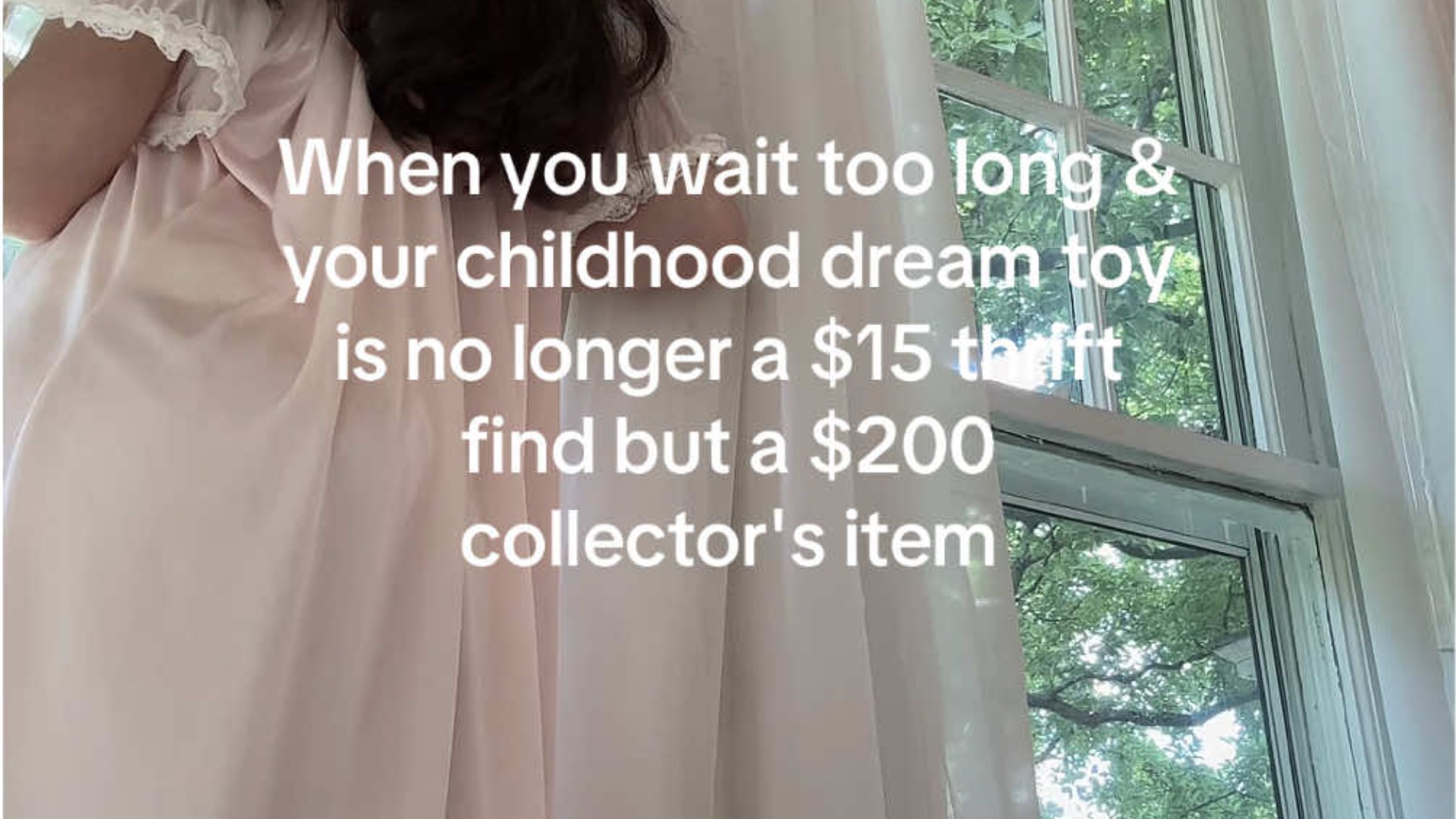
One dramatic curtain close said everything. A creator dressed in a cottagecore-style outfit pulls the curtains shut on camera, and the on-screen text does the rest of the explaining: her childhood dream toy is no longer a fifteen-dollar thrift find, it is now a two-hundred-dollar collector’s item.
The Toy That Started It All
FurReal Friends StarLily My Magical Unicorn was one of the more elaborate animatronic toys aimed at kids who grew up wanting a real-life unicorn companion, the kind of oversized, interactive plush that felt genuinely special to unwrap on a birthday. According to @madisonsfairytale’s own TikTok video, the on-screen text lays the whole situation out in a single line: “When you wait too long & your childhood dream toy is no longer a $15 thrift find but a $200 collector’s item.” No further explanation was needed, and none was given. The dramatic curtain close was the punchline.
The creator’s cottagecore styling is not incidental to the video’s tone. A unicorn toy already leans whimsical, and the outfit frames the whole clip as a small piece of theater rather than a straightforward complaint. That framing, playful heartbreak instead of genuine anger, is a big part of why the video traveled as far as it did.

Watching a Thrift Price Turn Into a Collector Price
What makes this particular toy story land with such force is the timeline it implies. There was, at some point, a version of this exact unicorn sitting on a thrift store shelf for fifteen dollars, priced like any other secondhand plush toy nobody was actively hunting for. Somewhere between that moment and now, the same toy started showing up in collector listings closer to two hundred dollars, a jump that has nothing to do with the toy itself changing and everything to do with demand catching up to nostalgia.
That gap, watched from the outside, is exactly what stings. Anyone who grew up wanting a specific toy and never got it develops a kind of mental price tag for it, usually anchored to whatever it cost, or would have cost, back when it was new or easily available secondhand. Discovering that the real market has quietly moved past that number by more than ten times is the kind of gut-punch that plenty of nineties and early-2000s kids will recognize instantly, whether their own missed toy was a unicorn, a specific action figure, or anything else that got left behind at a big-box store decades ago.
A Number Even the Hashtags Point To
The video’s own tags, including #inflation alongside #unicorn and #whimsy, suggest the creator was well aware of exactly what kind of story this was: less about the toy itself and more about watching prices climb on something that used to be genuinely affordable. Pairing a lighthearted #gurlhood tag with a blunt #inflation label captures the split tone of the whole video, nostalgic and a little sardonic at the same time.
The numbers behind the clip back up how widely it resonated. It pulled in 305,000 views on an account with 142,400 followers, landing at 57.8 times the creator’s usual median of around 5,300 views. A multiplier that large points to a video that reached well beyond regular followers, likely picked up by exactly the audience of thirty-somethings who remember wanting this specific unicorn and never quite getting around to buying it for themselves as adults.
Animatronic Toys Aged Into a Specific Kind of Nostalgia
Animatronic toy lines like FurReal Friends occupied a particular moment in toy history, built around the appeal of a plush companion that could move, react, and feel a little bit alive in a child’s hands. That combination of comfort object and gadget made them memorable in a way plainer stuffed animals were not, and it is part of why adults who owned one, or badly wanted one, remember the exact toy by name decades later. Toys built around a specific licensed character or story, the way StarLily leaned into unicorn and fantasy imagery, also tend to age into tighter, more dedicated collector niches than generic plush lines, which helps explain why prices on a toy like this one can climb so sharply once enough nostalgic adults start looking for the same thing at once.
The Real Lesson Buried in a Curtain Close
Collector markets for nostalgic toys do not move in a straight, predictable line, and a toy that seemed easy to find secondhand at any point in the last several years can quietly slip out of reach once enough other adults start looking for the exact same thing at the exact same time. The video works precisely because it captures that shift after the fact rather than warning anyone in advance. There is no tip here, no advice to buy now before prices climb further, just a dramatic curtain closing on a window of affordability that, according to the creator’s own footage, has already shut.

Leave a Reply