

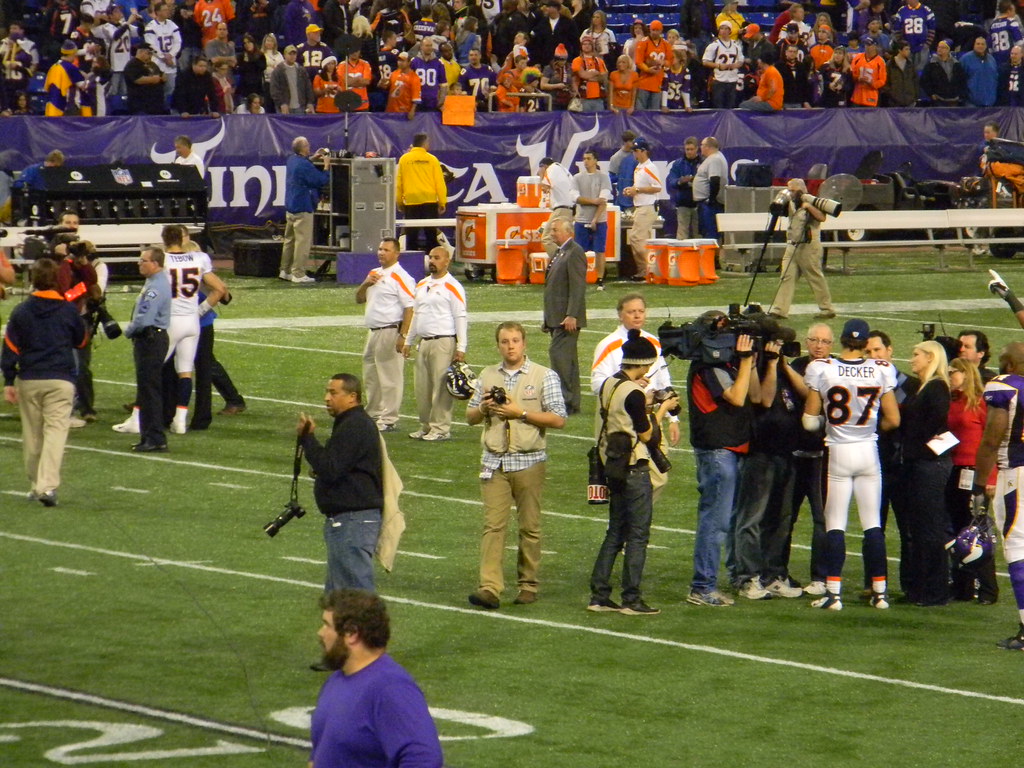
Professional football lived almost entirely on weekend afternoons before 1970, treated by network executives as a daytime product with no business competing against sitcoms and variety shows in prime time. NFL Commissioner Pete Rozelle wanted a Monday night deal anyway, and when CBS and NBC turned him down, the smallest of the three major networks decided to take a chance its bigger rivals would not touch.
Rozelle had good reason to keep pushing. Weekend football ratings were already strong, and league owners suspected a weeknight slot could add a whole new pool of viewers without cutting into Sunday attendance at the stadiums themselves. The bigger obstacle was never really the audience. It was convincing a television network to hand over one of its most valuable weeknight hours to a sport that had never proven it could hold a prime-time crowd for three straight hours.
“And What, Move Doris Day?”
CBS reportedly dismissed the idea outright rather than disrupt an established prime-time lineup built around hit shows, with one network executive supposedly asking, “And what, move Doris Day?” when the football proposal came up, a line recounted by Ultimate Classic Rock in its retrospective on the broadcast’s fiftieth anniversary. NBC passed as well, leaving ABC, then a distant third-place network, to gamble on a format nobody else believed families would actually watch on a weeknight.
ABC Sports chief Roone Arledge later admitted the network’s decision came from anxiety rather than confidence in the concept itself. Arledge said ABC worried it would lose roughly 100 affiliate stations that might otherwise air football games independently on Monday nights, so signing the NFL deal was as much about damage control as it was about innovation. That mix of fear and opportunity pushed ABC into a broadcast experiment none of its rivals wanted any part of.
The Jets, the Browns, and an Instant Hit
Monday Night Football debuted on September 21, 1970, with the New York Jets facing the Cleveland Browns, called by a three-man booth of Keith Jackson, Howard Cosell, and Don Meredith, a lineup detailed in Wikipedia’s history of the NFL on ABC. The broadcast pulled in more than a third of the entire national television audience that night, an emphatic answer to every executive who assumed men would rather watch a sitcom rerun than a live football game. Arledge loaded the broadcast with more cameras than football fans had ever seen used on a single game, along with instant replay packages and a three-person booth that gave the whole production a personality-driven feel closer to entertainment television than a typical sports wrap-up.
The Theme Song That Outlasted Several Broadcast Deals
The very first Monday Night Football broadcasts opened with a tune called “Score,” composed by Charles Fox, rather than the music most fans associate with the franchise today. The theme audiences actually remember, known as “Heavy Action,” was not written for football at all. British composer Johnny Pearson wrote the piece in 1970 for an entirely different purpose, and it first aired as the Monday Night Football opener during the 1976 season, according to American Songwriter. Before ABC picked it up, the same recording had already served as the theme for a British sports program called Superstars, giving the tune an odd secondhand history before it became one of American television’s most recognizable pieces of instrumental music.
Howard Cosell’s presence in the booth turned out to be nearly as important as the football itself. His blunt, sometimes combative commentary style drew complaints from viewers who preferred a quieter broadcast, yet that same friction kept people talking about the show at work the next morning, which was exactly the kind of buzz a struggling third-place network needed. Cosell, Meredith, and later Frank Gifford built a chemistry that made the broadcast feel like appointment viewing even for people who did not particularly care which teams were playing that week.
Monday Night Football went on to become the longest-running prime-time program in American television history under a single format, moving between ABC and ESPN over the decades while keeping football permanently anchored in weeknight programming. What began as a network’s defensive move against losing affiliate stations turned into one of the most valuable sports broadcasting franchises ever created, proving that the executives dismissing the idea in boardrooms across New York had badly underestimated how many people wanted a football game after dinner on a Monday.

Leave a Reply