

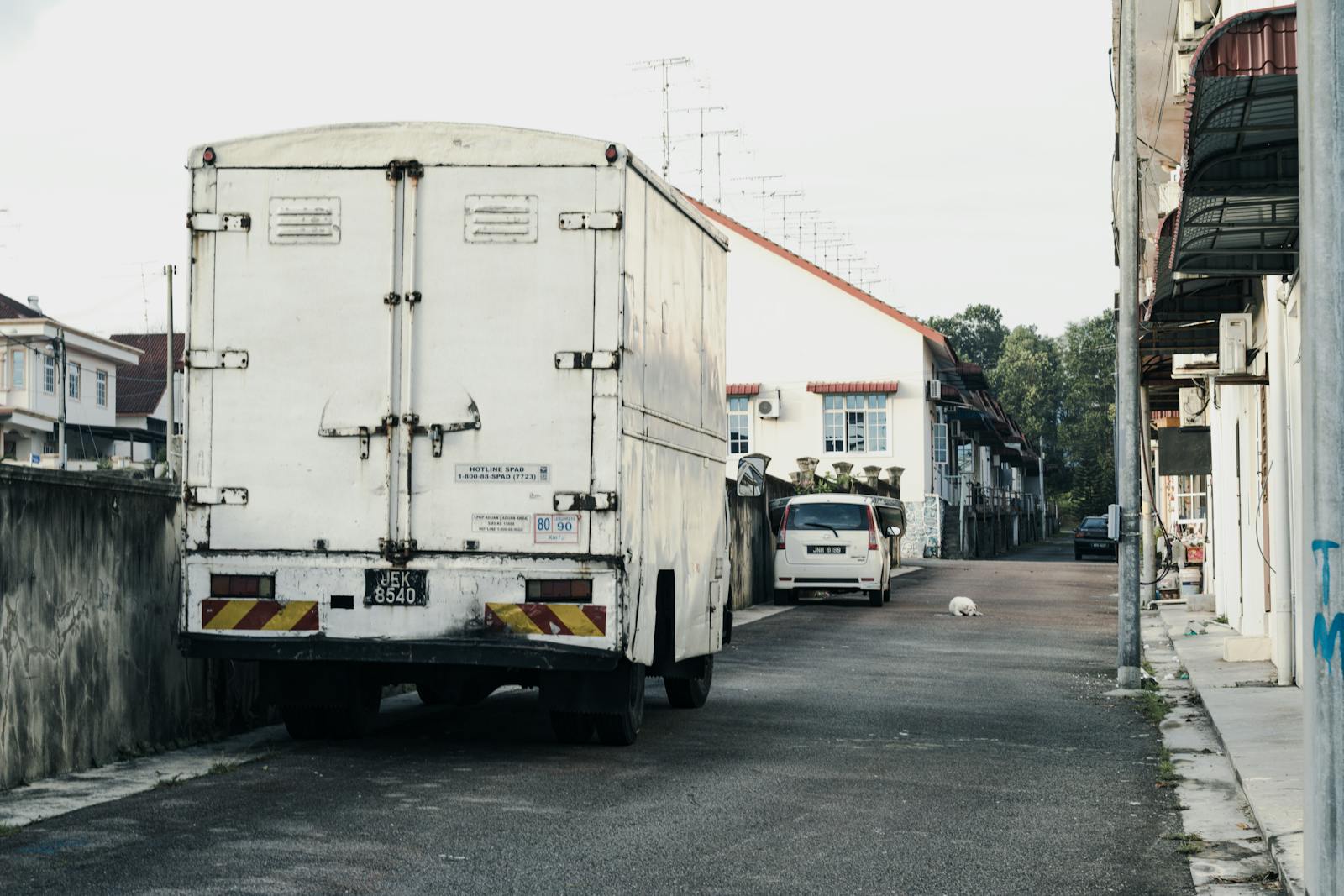
A neighbor in a suburban community had a habit that frustrated pedestrians for weeks: parking his truck and work trailer in a way that completely blocked a public sidewalk. This forced anyone wanting to walk down the street to step into the road, risking their safety. It became a daily annoyance for local residents who relied on that sidewalk to navigate the neighborhood.

One day, as luck would have it, the neighbor’s wife was tending to the yard. A nearby resident took the opportunity to voice their frustration. They mentioned the inconvenience and safety concerns posed by the trailer blocking the sidewalk. However, the wife shrugged off the complaint, showing little interest in addressing the issue, which only added to the resident’s exasperation.
After a couple of weeks of continued sidewalk blockage and no response from the neighbors, the frustrated resident decided to take action. They began documenting the situation, taking photographs of the obstructed sidewalk each day for a week. Every photo served as a timestamp of the ongoing problem, capturing the reality that pedestrians faced daily.
The resident then escalated the matter by writing letters to both the local police department’s enforcement division and the homeowners’ association (HOA). In these letters, they included the photographs as evidence. The complaints also cited HOA bylaws that prohibited storing trailers in a visible manner from the street. The resident clearly hoped the combination of visual evidence and formal complaints would prompt action from authorities.
Weeks later, the police responded. They issued a ticket to the neighbor, which led to a noticeable change in how the trailer was parked. The trailer now blocked the sidewalk less often and was more frequently found parked on the street instead of the driveway.
The situation raised questions about community accountability. A public sidewalk should remain accessible to all, yet this blockage had persisted for too long. This incident illustrates the challenges some communities face when it comes to neighbors who disregard public space and the common good.
One potential takeaway from this situation is the importance of speaking up when faced with community issues. The initial complaint was dismissed, but the insistence on addressing the problem through documented evidence and formal complaints sparked action. It serves as a reminder that residents have tools available to them, such as their local homeowners’ association and law enforcement, to address grievances. Holding others accountable can change community dynamics for the better.
Another reader expressed understanding, sharing that they had a similar issue with a neighbor’s property encroaching on a public path. They noted how frustrating it can be to feel ignored, but also pointed out the effectiveness of documenting issues before escalating them. It seems many readers found the story relatable.
Despite the resolution, some community members still ponder whether this approach might lead to more tension between neighbors. It’s a fine line between advocating for public space and maintaining good neighborly relations. Not all conflicts can be resolved easily, and some might wonder if a more diplomatic approach could have yielded a better outcome from the beginning.
In the end, the resident who took a stand must now face a decision: whether to continue addressing potential issues in their neighborhood or to step back and hope the local community maintains respectful standards moving forward. The choice remains unresolved, leaving them with the weight of their experience in the hands of their neighbors.
More from Vinyl and Velvet:

Leave a Reply