

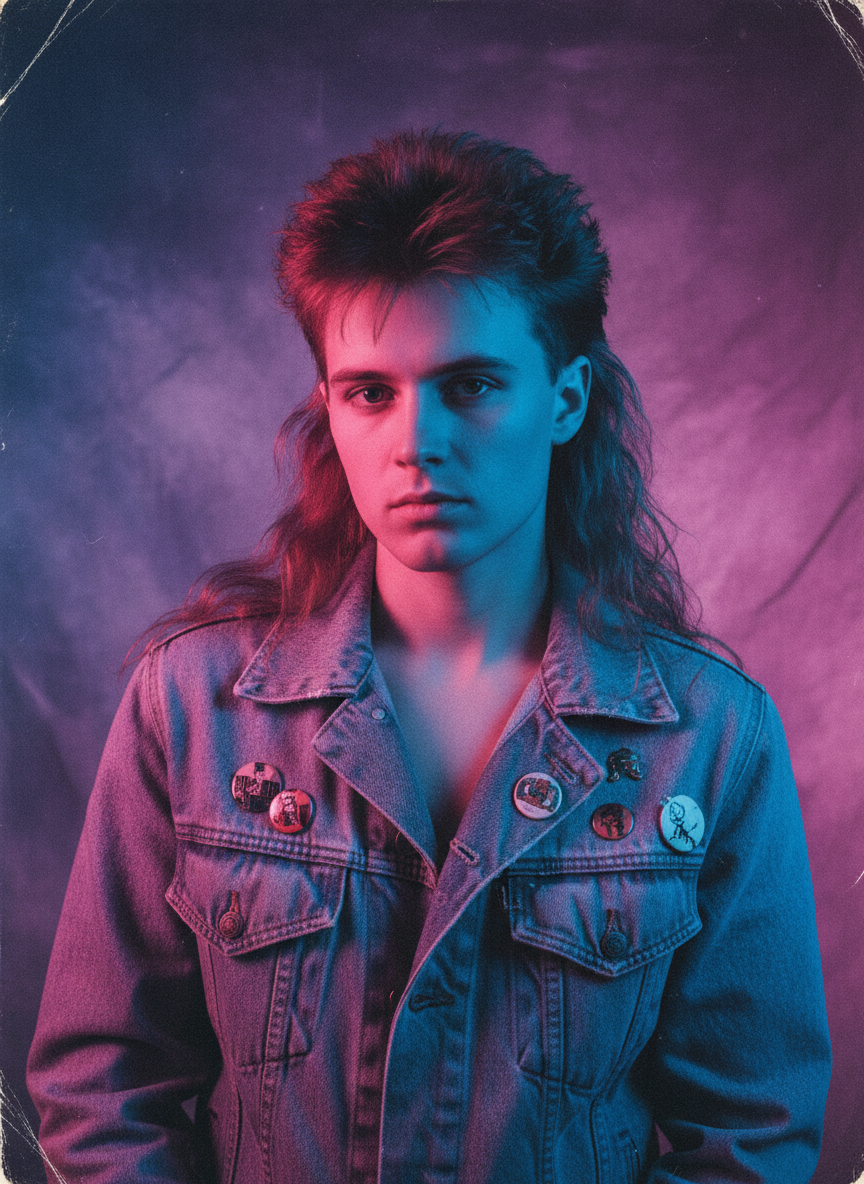
The Beastie Boys didn’t invent the haircut. They just gave it the name that stuck. Before 1994, the style now instantly recognizable as a mullet had circulated for decades, sometimes centuries, under other labels entirely, and the people wearing it had no single word to call it by.
A Word That Arrived Late
According to the Oxford English Dictionary’s entry on the term, the Beastie Boys “apparently coined, and certainly popularized” the word “mullet” through their 1994 song “Mullet Head,” followed by a six-page spread titled “Mulling Over the Mullet” in the second issue of their magazine, Grand Royal, in 1995. That article is where the joke crystallized into a name, but it also did something else: it recorded the patchwork of regional nicknames the haircut had been going by up to that point, including “Hockey Player Haircut” and “Soccer Rocker,” proof that plenty of people had been wearing the style and talking about it long before anyone called it a mullet.
Centuries of Business in Front
The short-front, long-back silhouette itself is far older than any of its 20th-century nicknames, as laid out in the haircut’s own documented history. The Roman historian Suetonius described Emperor Tiberius wearing his hair long enough at the back to cover the nape of his neck, a style associated with the Claudian family line. A sixth-century description from the Byzantine scholar Procopius describes members of the Blue political faction cutting their hair short over the forehead while leaving it long behind, a look chroniclers of the time called the “Hunnic” style. On this side of the Atlantic, the 1621 colonial account Mourt’s Relation describes an Abenaki man’s hair as “long behind, only short before,” a phrasing that could double as a modern mullet review.
Rock and Roll Gets There First
By the time the Beastie Boys were naming the thing, rock musicians had already been wearing it on stage for decades without a shared vocabulary for it. Tom Jones performed the look on The Ed Sullivan Show in the spring of 1965. David Bowie, Rod Stewart, Keith Richards, and Paul McCartney all wore versions of it through the early 1970s, treating the long-back cut as a practical middle ground between glam excess and something a stagehand could still get through airport security in. None of them called it a mullet, because the word didn’t exist yet; they just called it their hair.
The 1980s Made It a Uniform
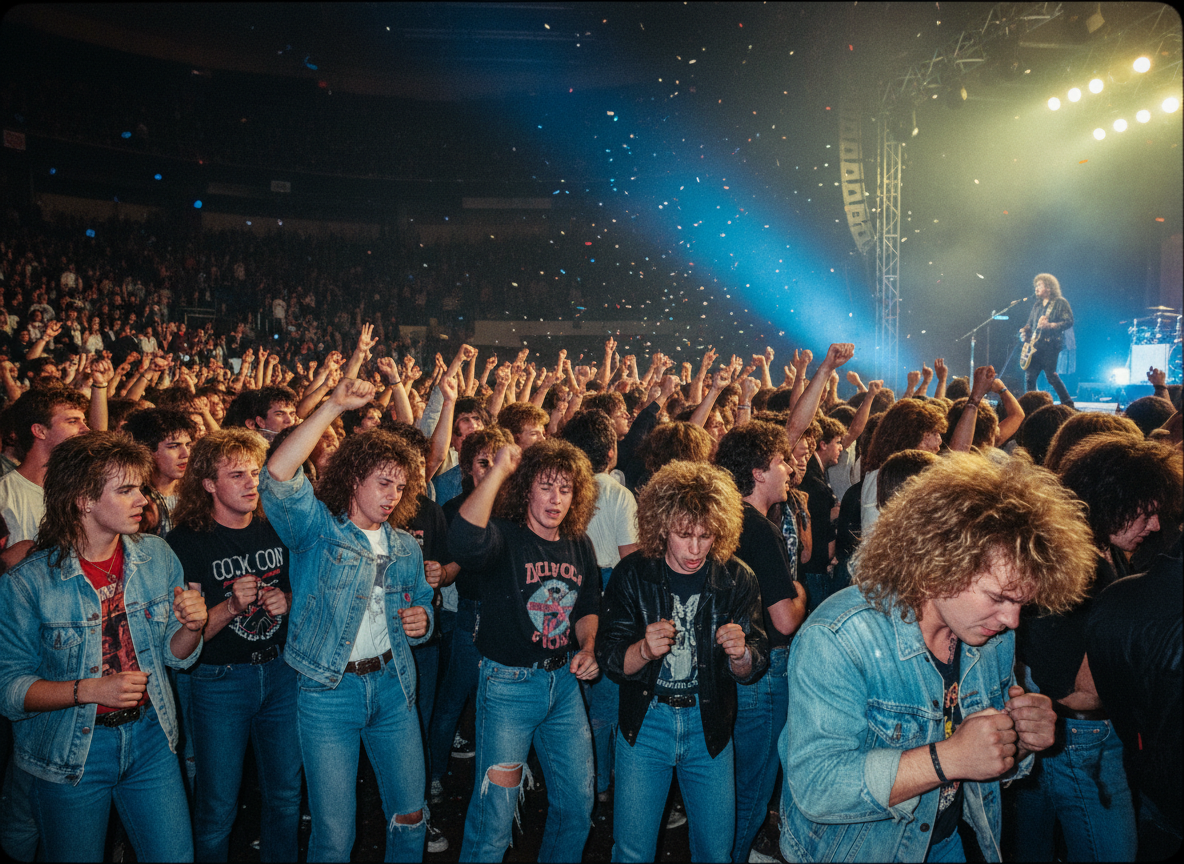
The haircut hit peak saturation in the 1980s across the United States, the United Kingdom, Australia, and continental Europe, showing up on hockey players, soccer players, and rock frontmen at roughly the same rate. It also became a recognizable identity marker within 1980s lesbian culture in the U.S. and U.K., a role it held well before “mullet” was the word anyone used to describe it. The name only caught up to the look in the mid-1990s, and once it had a name, the style became something people could ridicule collectively instead of just individually.
The Comeback Nobody Quite Explains
The mullet’s most recent revival, also chronicled in that same haircut history, runs through hockey rinks and pandemic living rooms in roughly equal measure. Chicago Blackhawks winger Patrick Kane’s “playoff mullet” became a running postseason tradition between 2010 and 2015, and Pittsburgh Penguins forward Phil Kessel revived it again in 2017. Oklahoma State football coach Mike Gundy’s mullet reportedly turned into a multimillion-dollar marketing moment for the university that same year. Then came 2020: lockdown haircuts nobody could get professionally fixed pushed the style back into daily rotation hard enough that i-D magazine dubbed it the year of the mullet, and the first USA Mullet Championship launched to formalize what had become, once again, an actual competitive category.
Once It Had a Name, It Got a Whole Genre of Jokes
The years right after the Beastie Boys’ 1995 spread turned out to be the mullet’s roughest stretch of press. DC Comics gave a returning Superman a mullet in the 1993 “Reign of the Supermen” storyline, a detail fans still bring up as shorthand for how thoroughly the look had saturated pop culture by then. Punk band the Vandals released “I’ve Got an Ape Drape” in 1998, cataloguing regional slang for the cut, while Chicago musician Wesley Willis put out “Cut the Mullet” the same year. A feature documentary, American Mullet, arrived in 2001 to interview people who’d kept the style through its least fashionable decade. More recently, Tami Manis set the Guinness World Record for longest mullet, measured at 172.72 centimeters, in August 2023, a reminder that somewhere the style never actually left.
A Haircut Waiting on Its Name
What the mullet’s long, quiet, unnamed history really shows is how much a single joke can reshape how people see something that already existed. The haircut didn’t change when the Beastie Boys named it. Only the reputation did.

Leave a Reply