

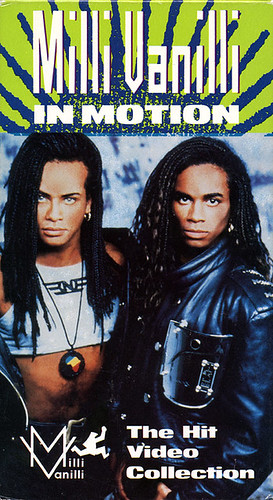
Thirty-three Grammy ceremonies had come and gone before the Recording Academy ever took a trophy back from a winner. Then, on November 19, 1990, less than eight months after Milli Vanilli accepted the Best New Artist award on national television, the Academy’s national board of trustees voted to strip the group of the honor entirely, leaving the category without a winner for that year. It remains the only revocation of its kind in Grammy history, and a scandal still cited whenever a music-industry cover-up threatens to unravel in public.
A Grammy, Then a Confession
Milli Vanilli — the duo of Rob Pilatus and Fab Morvan, fronting the multi-platinum album “Girl You Know It’s True” — won Best New Artist at the 32nd Grammy Awards in early 1990. Months later, it emerged that Pilatus and Morvan hadn’t sung a note on the record that made them famous; the actual vocals belonged to session singers whose names never appeared on the credits, while Pilatus and Morvan lip-synced through the album’s videos, their concerts, and even their Grammy-winning performance.
Recording Academy President Michael Greene announced the board’s decision in a statement carried by wire services at the time, saying the revocation came “regretfully” and describing what triggered it in blunt terms. “The decision comes as a result of admissions and revelations… that the label credit on their album ‘Girl You Know It’s True’ was incorrect,” Greene said, according to UPI’s contemporaneous report. He added that the mislabeling was “totally unacceptable” to the Academy’s voting membership, and noted Pilatus and Morvan had agreed to return the award rather than fight the decision.
Why the Credits Mattered
The Grammy rules didn’t ban lip-syncing outright, and plenty of pop acts used it in concert without controversy. The problem was narrower and, in the Academy’s eyes, disqualifying: the album packaging and credits implied Pilatus and Morvan were the performers on the recordings, when the actual session vocalists went uncredited entirely. That made the pair ineligible for a “new artist” award built around recognizing performers, not the production arrangement behind them.
Arista Records and its parent label had shipped the album with those incorrect credits, and once the truth surfaced through interviews and lawsuits from fans and record buyers, the fallout moved fast. Milli Vanilli’s catalog was pulled from some retailers, class-action suits over the deception followed, and Pilatus and Morvan spent years afterward trying to relaunch music careers under their own names, with limited success. Pilatus died in 1998; Morvan continued performing and later became a vocal advocate for artists’ rights in the music business.
A Cautionary Tale the Industry Never Forgot
The episode didn’t just end one act’s career — it reshaped how the Recording Academy approached new pop phenomena for years afterward. NPR’s reporting on the scandal’s legacy notes that Milli Vanilli’s unmasking became a greater embarrassment than any other moment in Grammy history, leaving the Academy notably gun-shy about crowning boy bands, teen-pop acts and, more recently, K-pop groups for its top honors. The phrase “pulling a Milli Vanilli” entered entertainment-industry vocabulary as a synonym for getting caught faking it, a legacy that has outlasted the group’s actual music by decades.
The story picked up an unexpected coda in November 2025, when Fab Morvan received a Grammy nomination of his own — 35 years to the week after the Academy stripped his first one. The nod came in the Best Audio Book, Narration and Storytelling Recording category, for the audiobook edition of his memoir “You Know It’s True: The Real Story of Milli Vanilli,” which Morvan narrated himself, according to NPR’s coverage of the nomination. He found himself in the same category as Supreme Court Justice Ketanji Brown Jackson and the Dalai Lama, a lineup nobody would have predicted for the man once synonymous with the Academy’s biggest scandal, as Billboard reported when the nominations were announced.
What the Reversal Still Teaches
No Grammy has been revoked before or since 1990, which is part of why the case keeps resurfacing whenever authenticity questions hit the music business — from vocal-doubling controversies to AI-generated tracks passed off as human performances. The Academy’s willingness to claw back an award, even at real reputational cost to itself, set a precedent that credit has to mean something, and that the people whose voices actually appear on a record are the ones an award is supposed to honor. More than three decades later, that principle has outlived the group it was built to punish, and outlasted the group’s own attempt to live it down.

Leave a Reply