

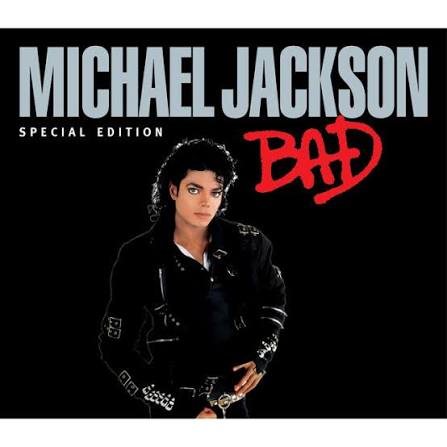
Thirty-nine years ago today, Epic Records shipped an album that would spend six weeks at number one and, in the process, quietly rewrite what a single release could do to the Billboard Hot 100. Bad hit stores on August 31, 1987, and by the time its promotional cycle wound down the following summer, it had planted five separate songs at number one — a feat no album had ever pulled off before, and one only a single other release has come close to since.
Five singles, eleven months, one unbroken streak
The run started with “I Just Can’t Stop Loving You,” Jackson’s duet with Siedah Garrett, which hit number one on September 19, 1987. Over the following ten months, according to Billboard’s own chart archive as reconstructed by Rolling Stone, four more singles from the same album followed it to the top: the title track “Bad” in October 1987, “The Way You Make Me Feel” in January 1988, “Man in the Mirror” that spring, and “Dirty Diana” in July 1988. Five for five, straight off one record — a total the Saturday Night Fever soundtrack had come closest to a decade earlier with four.
The streak worked partly because of how fast 1980s charts actually moved. No song from Bad’s five-single run spent more than four weeks at number one, which meant Jackson wasn’t blocking his own singles the way a modern multi-week chart-topper would. That turnover, combined with genuinely enormous commercial demand, is what let five different songs rotate through the top spot inside a single eleven-month stretch.
The record that’s been tied, not broken
Here’s the part that gets flattened in a lot of retellings: the five-number-ones record has, in fact, been matched. Katy Perry’s Teenage Dream produced its own fifth Hot 100 number one in 2011 when “Last Friday Night (T.G.I.F.)” topped the chart, pulling her album level with Bad’s total. What has never happened, in the decades since either album, is a sixth. No studio album has generated more than five Hot 100 number-one singles — meaning Jackson still owns the record for being first to reach the mark, and the ceiling itself has never been raised past where Bad set it in 1988. A Billboard-quoted industry executive put it bluntly at the time of Teenage Dream’s tie: he doubted the outright ceiling would ever move, given how differently hit songs now occupy the chart for months instead of weeks.
The numbers behind the numbers
Bad’s chart dominance came attached to real commercial scale. The album debuted at number one on the Billboard 200 and moved more than 2.25 million copies in its first week in the US, a pace that made it the fastest-selling album in the country at the time of its release. It has since sold more than 35 million copies worldwide, and in 2024 the Recording Industry Association of America certified it Diamond in the US — 10 million equivalent units, a milestone only a small handful of albums from any era have reached. The album was also the last of three collaborations between Jackson and producer Quincy Jones, built over roughly two years of studio work that leaned heavily on digital synthesizers and the era’s newest recording technology.
Nearly four decades on, the record isn’t really about any one song — it’s about density. Other artists have written bigger individual hits, and Teenage Dream proved the five-song feat could be repeated. But no one has found a sixth. That’s the number that’s actually stood untouched since 1988: not five, but the wall right above it.

Leave a Reply