

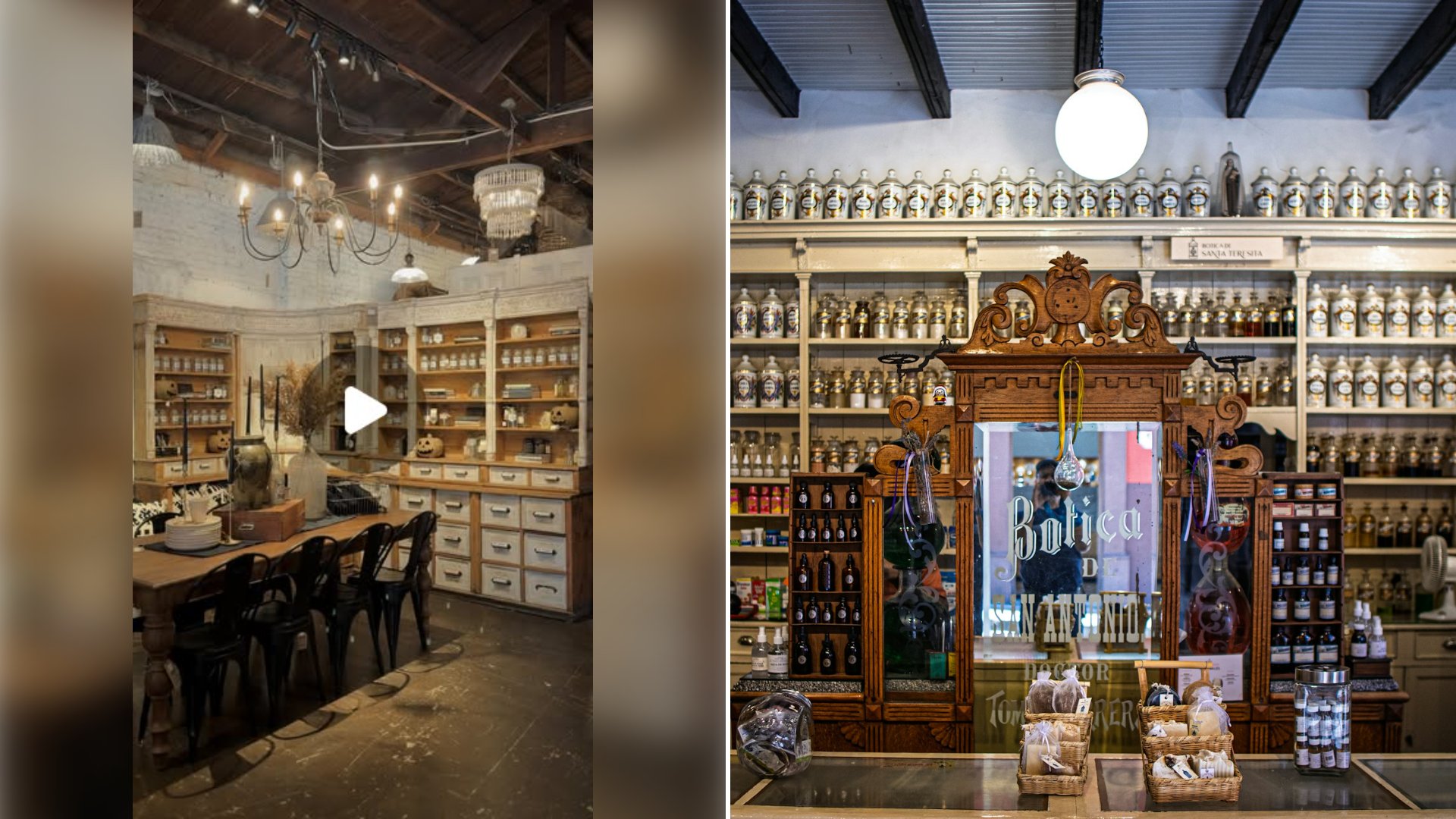
@417vintagemarket posted a video documenting the full build of a twelve foot antique pharmacy shelving unit, starting with a stack of disassembled wooden panels, shelves, and trim pieces fresh off a shipment from overseas and ending with a fully standing, styled display wall. In between, the video shows every stage of the process: panels being matched up, shelves leveled into place, hardware fitted, and the unit finally dressed with glass bottles, apothecary jars, and vintage tins that make the whole thing look like it belongs in a nineteenth century chemist’s shop rather than a modern vintage market booth.
According to the caption on the original post, the piece isn’t purely French; its origins are described as a mix of French and Romanian craftsmanship, which lines up with how a lot of pharmacy and apothecary shelving from that general era actually moved through Europe. @417vintagemarket walks through the logistics of getting a piece this large into the country at all, since furniture of this scale almost always has to be broken down into shippable sections and reassembled entirely by hand on arrival, with no guarantee every panel will line back up the way it originally did decades ago.
Pharmacy and apothecary shelving units like this one were originally built for working chemists’ shops across Europe, roughly from the mid-1800s through the early 1900s, before mass retail pharmacies and prepackaged medicine made built-in display walls unnecessary. They were typically constructed from oak, walnut, or fruitwood, with tall glass-fronted cabinet sections up top for labeled bottles and drawers below for bulk ingredients, built to the exact dimensions of the shop they were installed in rather than mass produced. That custom scale is exactly why pieces like the one in this video run so large. They weren’t designed as furniture for an average home; they were architectural fixtures built to fill an entire wall.
Once pharmacies modernized and these fixtures were ripped out, a lot of them ended up sold through architectural salvage dealers across Europe before making their way into the international antiques trade, which is how pieces with mixed regional origins, built in one country and later refurbished or sold through another, aren’t unusual at all. On the current resale market, a fully restored pharmacy cabinet at this scale regularly commands four figures and up, with large, ornately detailed examples reaching well beyond that depending on condition, glass hardware, and provenance. The scarcity comes from both the loss of original pharmacies over the past century and the sheer difficulty of transporting and restoring something this size intact.
That scarcity is also exactly why the reveal in this video works the way it does. A piece like this isn’t something a shopper can casually special-order, and watching all twelve feet of it go from a stack of flat panels to a fully dressed display wall gives viewers a rare look at just how much labor and skill go into making a piece like this sellable again. It’s easy to see a finished antique shelving unit in a showroom and assume it simply arrived that way. Videos like this one are a reminder that getting there usually takes hours of careful, deliberate reassembly, and that the final styled result is the payoff for all of it.
More from Vinyl and Velvet
- Two Women Shopping at Parma Flip Open the Glass Lids on a Dark Wood Drinks Cart and Find Glasses, Decanters and a Cocktail Shaker Waiting Inside
- Minnesota Antique Refrigeration Specialist Shows a Teal Fridge Swinging Open Hands Free When a Foot Presses a Chrome Pedal, Revealing Copper Toned Shelves Inside
- Creator Who Tags It Dumpster Diving Finds a Dirty Yellow Chair, Searches It and Sees Used Hosu Listings From $2,200 to $4,000, Then Deep Cleans It and Lounges in It

Leave a Reply