

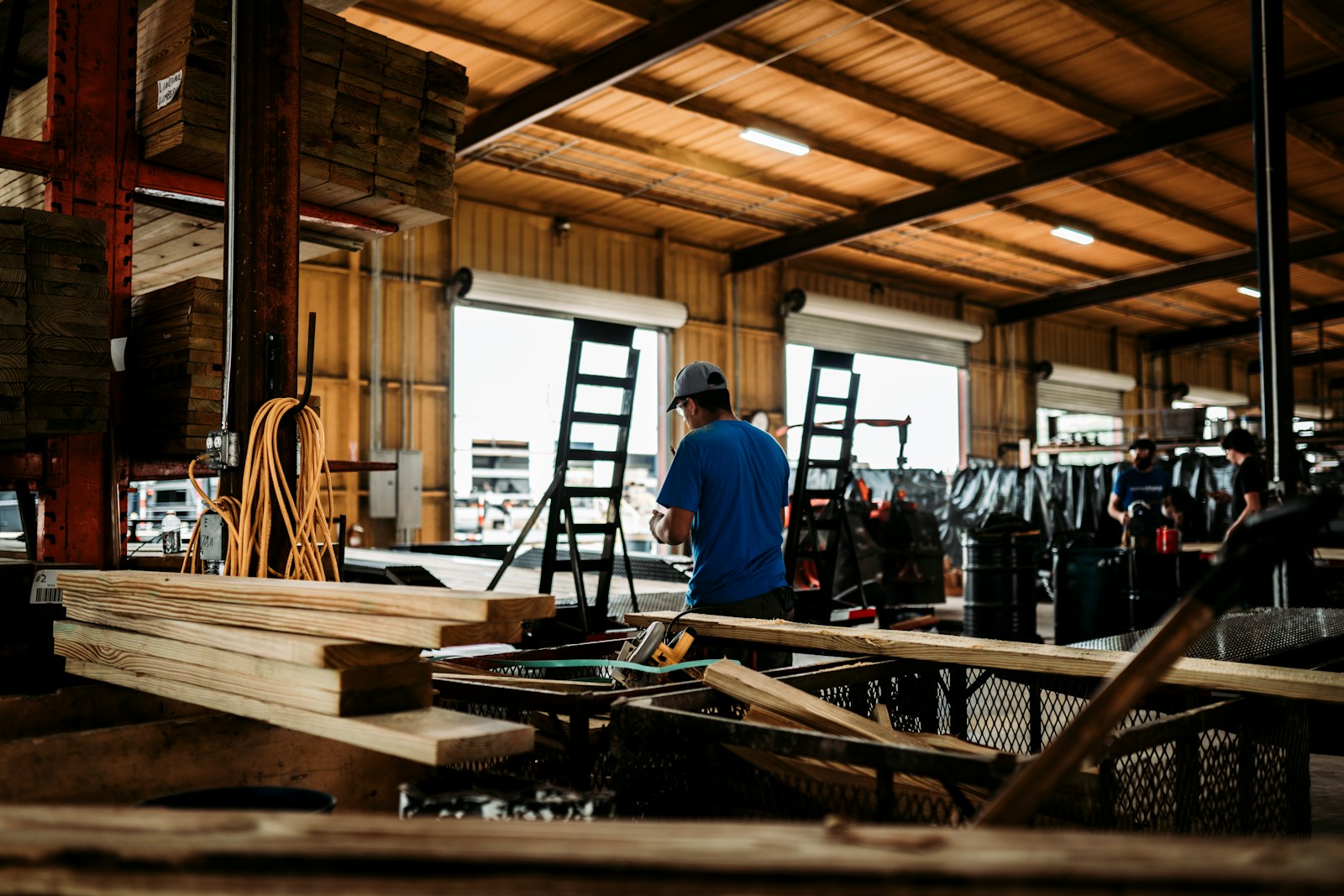
A lumber customer recently baffled an employee at a home improvement store with an unexpected refusal to walk the few steps to a nearby service desk. The incident unfolded last week when an older gentleman approached the employee with a question about wood in the lumber section.

The employee, who identified as a helper rather than a lumber expert, aimed to assist the customer. A service desk, one of two in the store, was conveniently located just a short distance away. However, as the employee began directing him to this nearby resource, the elderly man cut him off with a firm declaration: “I’m not walkin’ to the service desk.”
This reaction took the employee by surprise. They noted that the service desk was literally right beside them. In a store where such assistance was readily available, refusing to utilize it seemed irrational. Even if the desk had been farther away, the walk from the lumber section to the service desk would have taken only about 25 seconds. The employee was left wondering why the man would dismiss the offer of help in such a manner.
After the abrupt interruption, any enthusiasm the employee had for assisting the customer evaporated. By that point, they felt disheartened but remained committed to their job. Despite the customer’s refusal, the employee pointed him in the direction of the service desk near the lumber section.
Frustrations like this are not uncommon in retail, where employees often encounter customers who react negatively to even the simplest requests for assistance. The interaction highlights a tendency among some shoppers to overlook help, regardless of how accessible it is.
The employee’s experience resonated with many who have worked in service roles. It’s a reminder that sometimes customers may be caught up in their own worlds, oblivious to the resources available to them. Another worker described similar situations where customers seemed more interested in their own frustrations than in cooperating with staff trying to help.
This particular episode prompted a range of reactions online. One person told him, “I don’t get how people can be so dismissive when someone is just trying to help.” The sentiment reflecting a shared frustration seemed to spark a wave of relatable anecdotes from fellow employees who have encountered similar dismissive customers.
The entire situation raises questions about customer behavior in retail environments. Why do some individuals resist assistance, even when it’s right in front of them? It might stem from a desire for independence or even a misunderstanding of what help entails.
The lumber employee’s sarcastic wish for the customer to face difficulties while loading wood onto his vehicle reflects a sentiment likely felt by many who deal with uncooperative customers. It highlights the emotional toll that such interactions can take on people in service industries who strive to provide help.
Despite the challenging interaction, the employee still returned to their duties, perhaps a bit more disillusioned with the public’s treatment of retail workers. Such experiences can foster a sense of empathy among employees for their fellow workers who face similar treatment daily.
As the day moved on, the employee tried to shake off the encounter, focusing on the tasks ahead. They understood that not every customer would respond positively, but this particular refusal lingered. It served as a moment of reflection on how customers and employees interact in a shared space.
In retail, every day brings unique challenges, and it’s the stories like this one that reveal the complexities of those interactions. Whether the older gentleman’s refusal was a one-off reaction or part of a larger pattern of behavior remains up for debate.
For now, the employee continues to wonder about the man’s reasoning. The interaction left them pondering the balance between independence and willingness to seek help. It is a small illustration of the daily nuances that color the retail experience.
More from Vinyl and Velvet:

Leave a Reply