

On February 16, 2026, a single piece of cardboard sold for $16,492,000 and became the most expensive trading card in history, according to Guinness World Records. It wasn’t a rookie baseball card. It was a Pokémon card that was never sold to anyone, ever, at any price, when it was new. The seller was Logan Paul. The buyer was a venture capitalist most people had never heard of until that night. And the card had already lived an entire strange life — a magazine contest prize, a wrestling accessory, a private trade worth millions — before either of them ever touched it.
A Prize, Not a Product
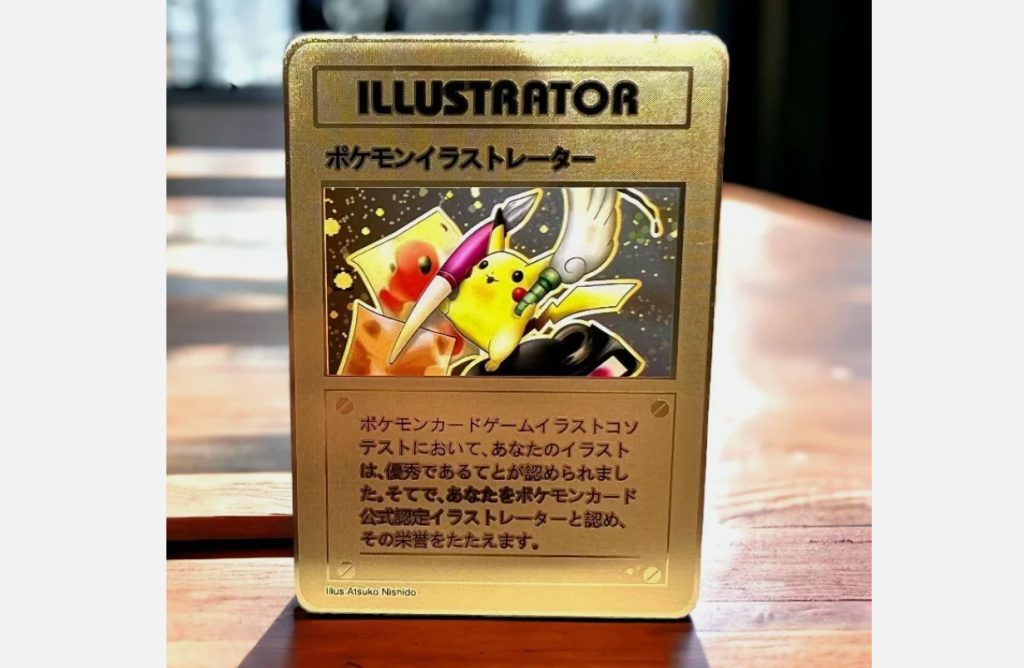
In 1998, the Japanese manga magazine CoroCoro Comic ran an illustration contest tied to the Pokémon Card Game. The card at the center of this story, known as “Pikachu Illustrator,” was the trophy: it was never sold at retail, only handed to contest winners, and just 39 copies exist because of it. The artwork came from Atsuko Nishida, the illustrator credited as Pikachu’s original character designer, which is part of why collectors treat the card less like a game piece and more like an artifact. Of those 39 cards, exactly one has ever been graded a perfect PSA Gem Mint 10. That is the copy that just sold. Every other surviving Illustrator card, no matter how carefully it was kept, tops out lower on the same 10-point grading scale. That gap is the entire reason this specific piece of cardboard outranks the other 38.
A WrestleMania Prop First
Paul didn’t buy that PSA 10 outright. In 2021 he traded his own PSA 9 copy of the same card plus $4 million in cash for it, a swap valued at $5,275,000 and recognized by Guinness as the most expensive Pokémon card ever sold in a private sale. He wasn’t shy about owning it, either. Paul had the card set into a diamond-studded pendant and wore it to the ring for his WrestleMania 38 entrance, turning a piece of 1990s magazine ephemera into a wrestling prop worth more than most houses. For years afterward, the card’s public life was mostly stunts like that one: a flex, not an investment.
Forty-Two Days, One Record
By December 2025, Paul had decided to sell. He told Bloomberg he saw a marketable moment for the card and consigned it to Goldin Auctions rather than arranging another private deal. The auction ran roughly six weeks before closing on February 16, 2026, with a winning bid of $13.3 million that grew to $16,492,000 once the buyer’s premium was added, per Guinness. That price didn’t just break the Pokémon record Paul himself had set in 2021. It also beat the previous record for any trading card sold at auction, a 1952 Mickey Mantle baseball card that had gone for $12.6 million in 2022. A Pokémon promo card, in other words, had just out-earned the most famous baseball card on the planet. Before the card left his hands, Paul posted his goodbye on Instagram: “Goodbye my friend. What a privilege it’s been to be the owner of the greatest collectible in the world.” Footage of his live reaction to the final bid, jumping and throwing his hands up in disbelief, spread quickly online and racked up half a million views within eight hours, according to Newsweek.
Who Actually Bought It
The winning bidder was AJ Scaramucci, a venture capitalist who founded Solari Capital and serves as co-chairman and president of the investment conference platform SALT, according to The Tab. He’s also the son of Anthony Scaramucci, the financier who spent ten famously brief days as Donald Trump’s White House communications director in 2017. AJ himself stays out of politics and works in finance, as The Tab noted. Coverage of the sale from Insider Gaming described Scaramucci framing the purchase as one stop on a broader hunt for rare, uncollectable objects, with a dinosaur fossil and an original copy of the Declaration of Independence reportedly next on his list. The deal came with a flourish to match the price: the card was set into a custom diamond pendant, and Paul delivered it to Scaramucci in person rather than shipping it, a detail confirmed by Guinness.
What This Card Actually Proves
Strip away the celebrity names and the number is still the story: a magazine giveaway that cost its original owners nothing has now changed hands for more money than almost any painting most people will ever stand in front of. That’s the pattern running through the whole vintage-collectibles market right now: the free stuff nobody thought to protect turned out to be rarer, and eventually more valuable, than the stuff that was built to last.

Leave a Reply