

A 69-Inch Number That Explains Everything
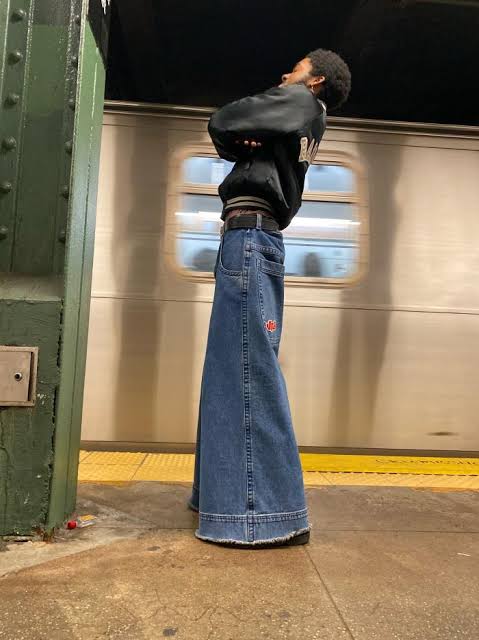
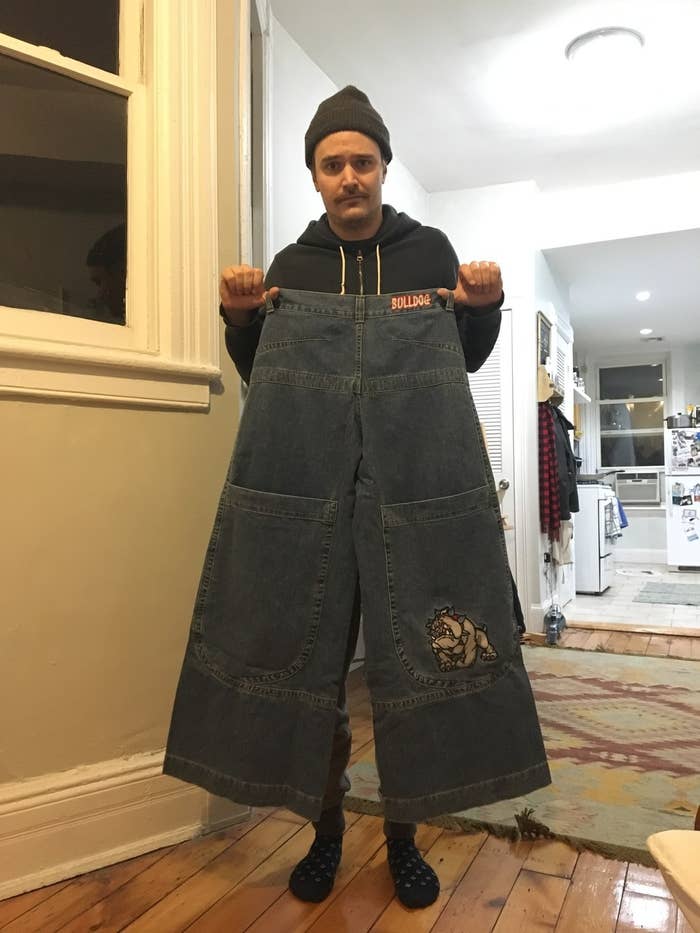
At their most extreme, JNCO’s widest jeans measured up to 69 inches around the leg opening, according to a detailed history from streetwear outlet The Hundreds, more circumference than most people’s waistlines, wrapped entirely around a single ankle. Wearers have long claimed you could genuinely tuck a skateboard deck inside one and walk through a school hallway without anyone noticing. Whether or not that specific stunt happened as often as legend suggests, the math checks out: a deck runs about eight or nine inches wide, and a 69-inch leg opening has room to spare.
Two Brothers, $200,000, and a Contested Acronym
JNCO started in 1985 when brothers Haim Milo Revah and Jacques Yaakov Revah, Moroccan-born and French-raised, put up $200,000 of their own savings and launched the brand out of Los Angeles under a parent company called Revatex. Nobody has ever fully settled what the letters stand for: The Hundreds lists both “Journey of the Chosen Ones” and “Judge None, Choose One” as competing origin stories the brothers themselves never fully clarified. What isn’t in dispute is the trajectory: Highsnobiety’s account of the brand’s rise puts JNCO’s annual sales at roughly $10,000 in its earliest years, climbing to $186.9 million by 1998 as the widest-leg silhouette on the market caught on with skaters, ravers, and mall kids who wanted the opposite of a fitted look.
How the Jeans Actually Got That Wide
The standard retail range ran from 20-inch to 36-inch leg openings, which was already dramatic compared to anything else on a department store shelf, but JNCO kept pushing further with limited extreme cuts that reached that 69-inch outlier figure. Most customers, per The Hundreds’ reporting, actually bought somewhere in the 33-to-40-inch range rather than the true extremes, wide enough to swallow a pair of sneakers whole but still walkable. The company understood exactly what it was selling: not a fit, but a statement about how much fabric a teenager could get away with wearing to school.
The Achilles’ Heel of a One-Trick Silhouette
Growth like that rarely holds, and JNCO’s didn’t. Sales roughly halved in 1999, and by 2000 the company had shuttered its Los Angeles manufacturing operation, cutting 250 jobs and shifting production overseas, according to reporting from The Hustle. A JNCO executive later summed up the core problem to that same outlet in blunt terms: eventually, you can only make pants so wide, and that ceiling became the brand’s Achilles’ heel. The company’s financial troubles compounded through the 2000s. Court filings reported by the Los Angeles Business Journal in 2012 show a lender, First Capital, suing over roughly $836,000 in defaulted payments tied to a factoring agreement, with the company’s remaining inventory and receivables valued at no more than $700,000 at the time.
The Comeback That Couldn’t Outrun Its Own Name
A Chinese investment group acquired the brand in 2009 and relaunched it in 2015, betting on the normcore-adjacent revival of 1990s streetwear to bring shoppers back. That relaunch deliberately walked away from the extremes that had made the brand famous in the first place, offering leg openings closer to 20 to 23 inches, still wide by contemporary standards but a fraction of what a true late-90s pair delivered. The pitch was a JNCO shoppers could actually wear to work, which was also, in a sense, an admission that the original silhouette had priced itself out of daily life. It didn’t fully stick. In February 2018, the company announced it was closing for good, citing licensing issues, and began liquidating its remaining stock at discount prices through its own website, a quiet ending for a brand that spent the late 1990s being anything but quiet.
What $836,000 in Debt Looked Like Up Close
The Los Angeles Business Journal’s 2012 reporting offers a rare, granular look at what a once-$186-million company looks like on its way down: a factoring agreement from 2005 that had allowed up to $5 million in advances against receivables, a lender alleging the company stopped making payments and stopped sharing financial statements by December 2011, and a separate $500,000 dispute over garment payments tied to retail chain Fallas Paredes. Legal analysts quoted at the time suggested a bankruptcy filing was the likely next step if the case went to receivership. It’s a far cry from the glossy ’90s headlines about record sales, but it’s the more honest picture of how a novelty silhouette business actually unwinds: not one dramatic collapse, just years of factoring agreements and missed payments that nobody outside the trade press ever heard about.
Wide Enough to Be Remembered
JNCO never figured out how to be a normal-sized jeans company, and that was always the entire point: the brand rose and fell on the exact same measurement, just read in opposite directions.

Leave a Reply