

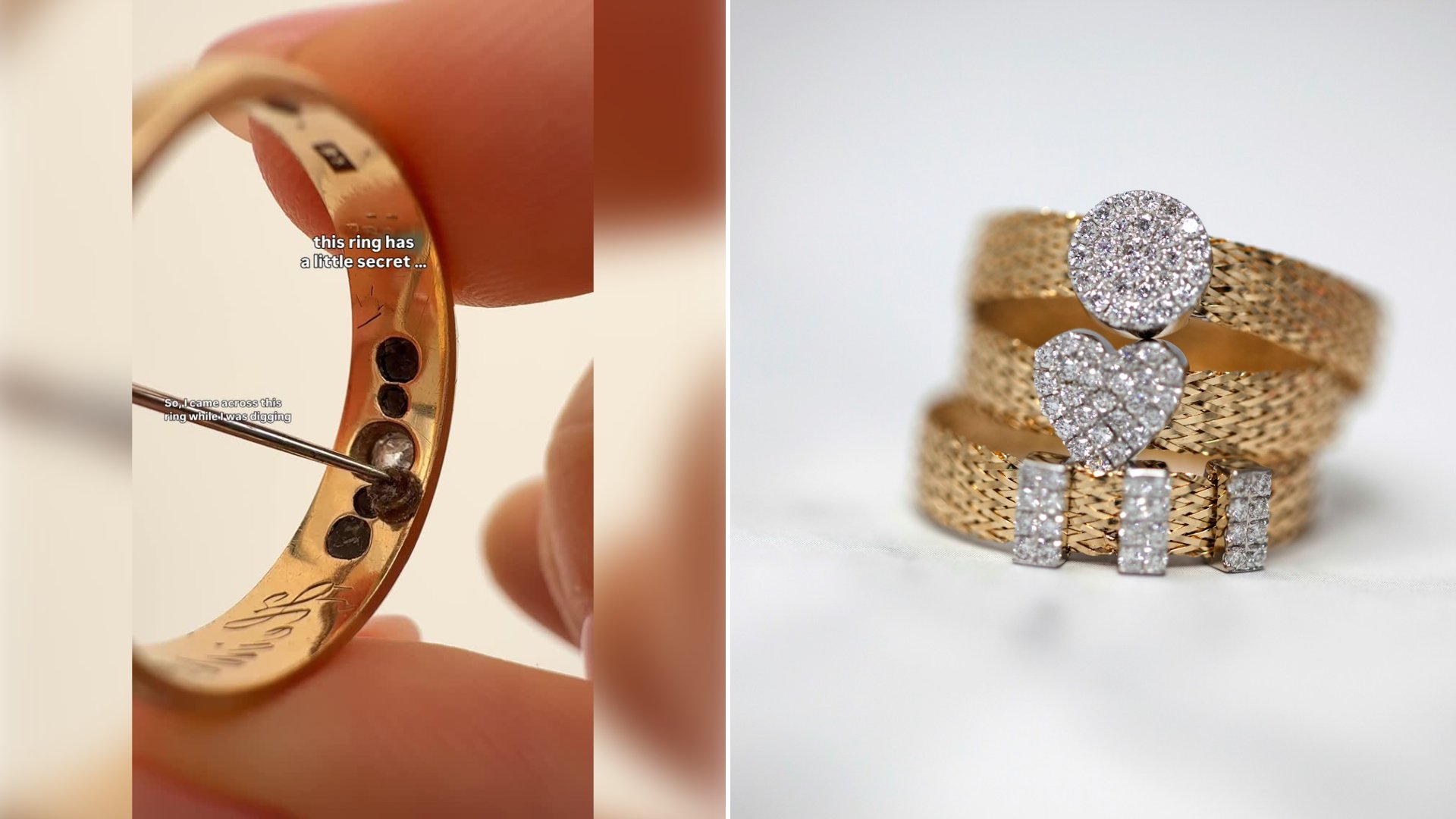
Most of what comes through a jewelry restorer’s scrap gold piles is destined for the melting crucible. Rings, chains, and odd bits of broken gold get sorted into trays, weighed, and eventually reduced back down to raw metal to be remade into something new. That is the fate a plain-looking gold ring with a row of old diamonds was headed for, until the restorer who found it in the pile stopped to take a closer look and realized she was holding something that deserved better.
She has said she fell for the ring immediately, before she had any idea what she actually had in her hands. It was slightly too big for her own finger, and her first instinct, since she had already decided to keep it for her personal collection, was simply to have it resized down. It was only when she looked closer at the way the diamonds were cut that she realized the ring was far older than a quick resize job should ever touch. The stones were old-cut diamonds, cut by hand in a style common before modern faceting techniques were standardized, with a noticeably different sparkle and softer, more irregular outlines than a diamond cut today. That style of cutting all but disappeared by the mid-twentieth century, which was her first clue that the ring was not a modern piece wearing an antique disguise.
Then she found the engraving. Tucked inside the band, where a resizing jeweler would normally cut the metal to stretch or shrink it, was a delicate inscription that told her exactly how old the ring really was: 1913. That single detail changed everything about what she was willing to do with the piece. A ring made in 1913 and still carrying its original engraving, well over a century later, is not simply old gold with diamonds attached. It is a wedding ring that someone wore on the day they made a promise, more than a hundred years before it ended up sorted into a tray of scrap.
Resizing it the normal way would have meant cutting straight through that inscription, erasing the one detail that gave the ring its entire identity. She made the call to leave the size alone rather than destroy the engraving, even though it meant she would not get to wear a ring she admitted she had already fallen in love with. Preserving the ring’s original character, she said, mattered more to her than adding one more beautiful piece to her own collection, which is the kind of decision that separates someone who collects jewelry from someone who actually restores it.
What she did next was a slow, careful cleaning process rather than a quick polish. Decades of built-up grime had packed itself solid inside the open-backed diamond settings, the kind of design where the back of each stone is left open to let more light through rather than being sealed against a metal backing. She worked a fine needle into each hole to dislodge the hardened debris, describing it as being so dry and brittle after who knows how many decades that it came out in solid crumbling pieces rather than smearing. From there the ring went into an ultrasonic cleaner, got a hand scrub with a soft toothbrush and soapy water, and came out the other side with its original sparkle fully restored, the old-cut diamonds catching light the way they likely did the day they were set.
She was candid that she does not get to keep the ring for herself, and that someone else will end up wearing a piece of jewelry with a wedding date stamped inside it from more than a hundred years ago. But she also said she felt genuinely lucky to have been the one who caught it before it went into the melt, because a decision made a few minutes earlier or later in a sorting pile is often the only thing standing between a piece of real history and a blob of reclaimed gold. Antique dealers and estate jewelers see this exact scenario constantly: scrap buyers pay by weight, not by history, which means ordinary-looking antique pieces get melted down every single day simply because nobody stopped to look closely enough at what they were holding.
It is a small moment in the much larger world of estate and antique jewelry, but it is also exactly the kind of moment that keeps items like this in circulation instead of in a furnace. A 1913 wedding band with its original engraving intact is the sort of object a museum would be happy to have in a display case, and instead it is going back out into the world to be worn and loved again, exactly the way the restorer said it deserved to be.

Leave a Reply