

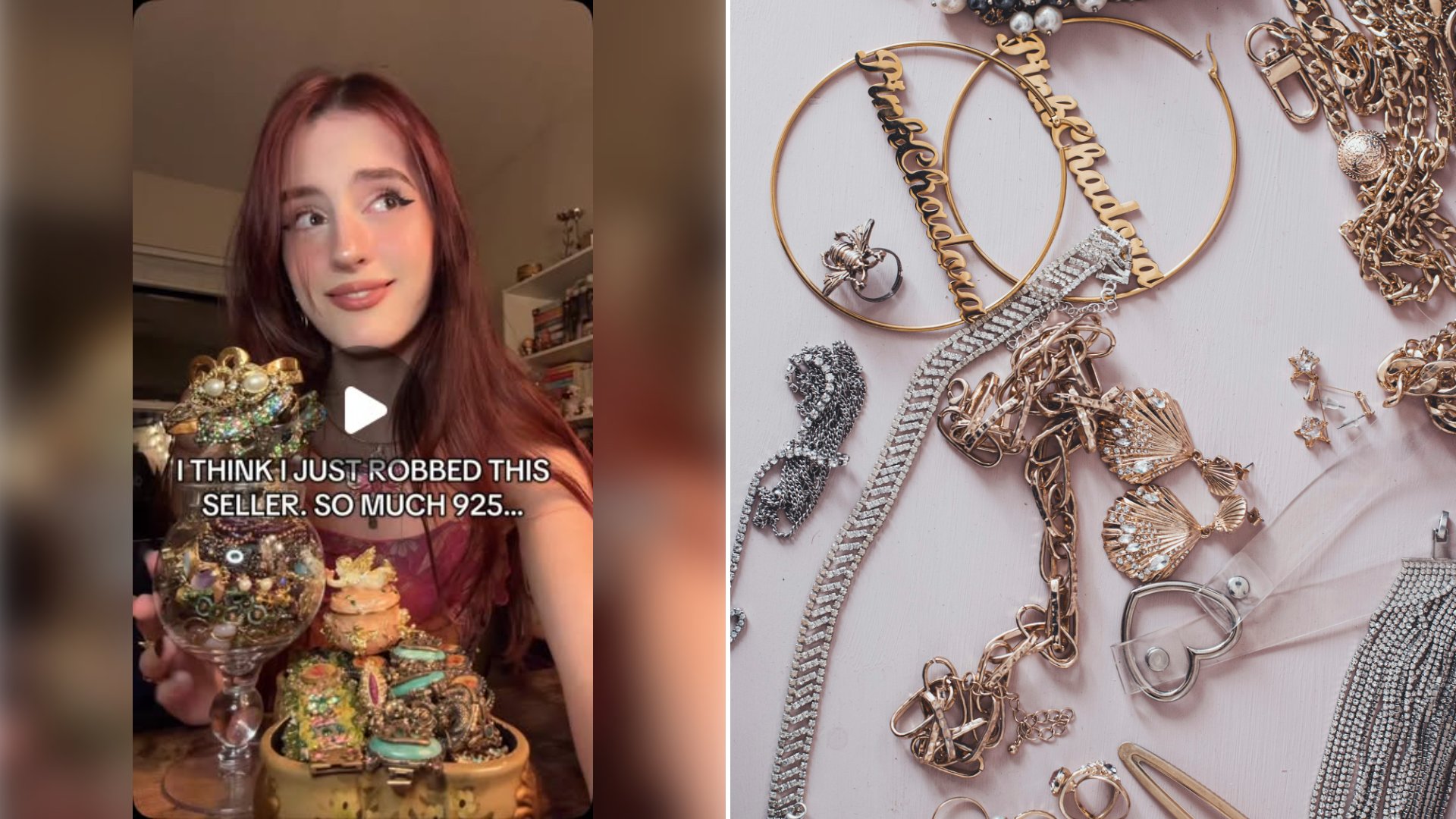
There’s a particular kind of thrill that comes from buying jewelry completely blind, with no idea what’s actually inside until the sorting begins. In a reel from @raquellnelsonn, a collector unboxes her latest mystery jewelry jar, the kind of overflowing, unsorted jar of vintage-style costume jewelry that regularly makes the rounds on resale platforms, and reacts to each individual piece as she pulls it out, genuinely stunned by how much of it turns out to be real sterling silver rather than cheap costume metal.
Buying jewelry this way is a genuine gamble. Sellers offloading a jumbled jar of tangled necklaces, rings, and pins often don’t know, or don’t bother to check, exactly what they’re parting with, which means a buyer willing to sort through the tangle piece by piece can occasionally end up with far more value than the purchase price would suggest.
Spotting genuine sterling silver in a pile of mixed jewelry comes down to a few reliable checks. The most direct is the hallmark stamp, usually found on the clasp, the back of a pendant, or the inside of a ring band. A stamp reading 925, or sometimes written out as “sterling,” indicates the piece is at least 92.5 percent pure silver alloyed with other metals for durability, which is the industry standard definition of sterling silver. Older pieces, particularly European ones, sometimes use different hallmark systems entirely, including stamped symbols rather than numbers, which is part of why familiarizing yourself with a few common international hallmarks pays off when sorting through a mixed vintage lot.
Beyond the stamp itself, sterling silver has a few physical tells that experienced sorters learn to recognize quickly. It has a distinct weight to it, noticeably heavier than similarly sized pieces made from lightweight base metals. It also tends to darken with tarnish over time, developing a dull gray or blackened patina in recessed detail areas, especially if a piece has gone unworn and unpolished for years. That tarnish, while it might look unappealing in a pile of jumbled jewelry, is actually a reasonably good sign the piece is real silver rather than a plated or base-metal costume item, since plated pieces tend to flake or discolor differently as the coating wears through to reveal the metal underneath.
A simple magnet test can help rule out certain fakes too. Genuine sterling silver is not magnetic, so a piece that sticks to a magnet is almost certainly not solid silver, regardless of any stamp it might carry. This won’t catch every type of fake, since some non-magnetic base metals are used specifically to mimic silver’s properties, but it’s a fast first filter worth running on an uncertain piece before investing more time authenticating it further.
Mystery jewelry jars have become a popular format precisely because of this uncertainty. Buyers get the thrill of not knowing exactly what they’re getting, sellers get to offload a tangled mess of jewelry without sorting it themselves, and the resale community gets genuinely entertaining content out of watching someone separate the real silver from the costume pieces in real time. It’s a format that works specifically because the payoff, finding real sterling buried in a pile most people would assume is just old costume jewelry, feels earned rather than handed over.
For anyone tempted to try buying a mystery jewelry lot of their own, the advice from experienced resellers is consistent: bring a jeweler’s loupe or a strong magnifying glass to check hallmarks closely, keep a magnet handy for a quick first pass, and go in expecting a mix of real finds and genuine costume pieces rather than assuming every item in the jar is going to be a winner.
More from Vinyl and Velvet
- Depop Reseller Sorts Through a Jar Packed Solid With Tangled Vintage Jewelry Piece by Piece, and Commenters Spot a Pendant Necklace They Say Deserves a Real Appraisal
- Carole Radziwill Says She Inherited Jackie Kennedy Onassis’s Cartier Watch, Sold It at Christie’s to Break a Widowhood Curse, and Watched Kim Kardashian Place the Winning Bid
- Jeweler Says She Took One Look at a Customer’s Family Gold Presidential Style Watch, Knew It Was Not Authentic and Suggested He Keep It and Wear It Anyway

Leave a Reply