

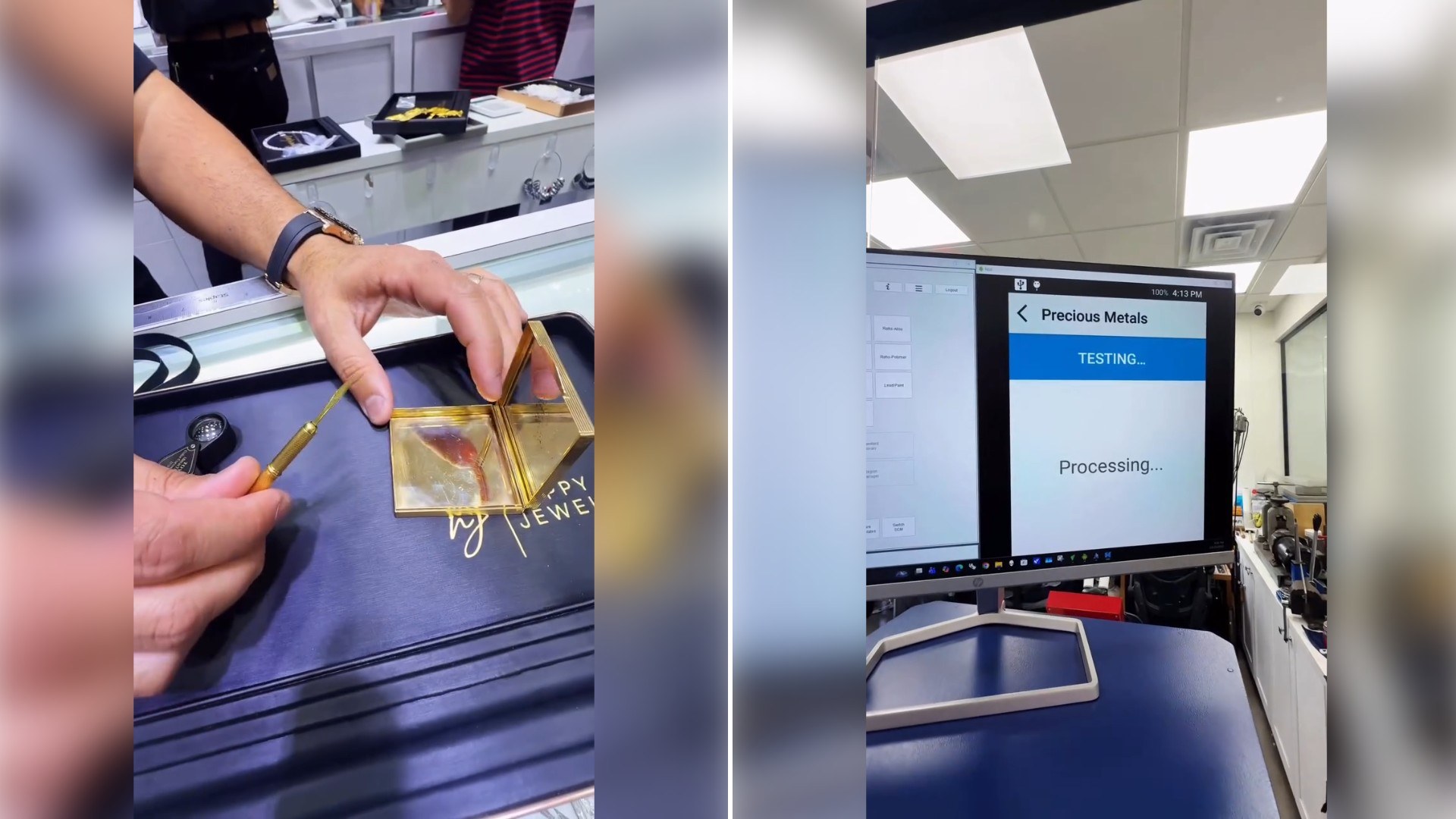
Flea market finds rarely get a proper appraisal on the spot, which makes a video from @happyjewelers stand out immediately. A visitor brings in a vintage case they had assumed was an old makeup compact, picked up casually at a flea market, and the creator, a working jeweler, agrees to test it on camera without much expectation that it will turn out to be anything special.
That low-expectation setup is exactly what makes the reveal land so hard. As the test confirms the case is genuinely solid gold and worth real money, the owner’s own reaction becomes the emotional center of the video, an offhand, low-cost flea market purchase transforming in real time into an unexpected financial windfall.
Stories like this one are a recurring, genuinely beloved format within the antiques and jewelry world precisely because they happen often enough to feel plausible but rarely enough to still feel remarkable every time. Vintage cases, compacts, and small decorative objects were sometimes crafted in solid precious metals during eras when that kind of everyday luxury item was more common among collectors, and their true material can be easy to miss at a glance, especially when tarnish or wear disguises the gold underneath.
That gap between assumed and actual value is exactly why working with a professional jeweler or appraiser matters before assuming an old object is purely decorative. Flea markets and estate sales remain one of the more likely places for genuinely valuable items to slip through simply because pricing is often done quickly, by weight or general impression, rather than through careful material testing.
The on-camera testing format itself deserves credit for how effectively it builds suspense out of a process that would otherwise be fairly clinical. A jeweler running an acid test or checking for a hallmark is, mechanically, a fairly quick procedure, but filming the process step by step, with the owner watching and reacting in real time, turns a routine authentication check into a genuine reveal moment with real stakes attached.
It is worth understanding a little about why gold specifically can hide in plain sight this way. Unlike a large piece of jewelry that announces itself, a small case or compact can be plated, tarnished, or simply assumed by its owner to be a lower-value material like brass or silver-tone metal, especially when it was acquired casually and without any paperwork or provenance attached. A flea market seller working the same assumption is exactly why an item like this can change hands for a small fraction of its real value before anyone thinks to have it properly tested.
There is also something worth saying about the specific role trust plays in a video like this one. A stranger bringing a personal item to a jeweler and agreeing to have it tested on camera, with no guarantee the result will be exciting, requires a kind of openness that makes the eventual payoff feel earned rather than staged. That authenticity is part of why this particular video format, an unscripted test with a genuinely uncertain outcome, has become such a reliable source of viral moments within jewelry and antiques content.
Solid gold cases and compacts specifically have an interesting history worth noting, since they were often produced as luxury gift items decades ago, sometimes engraved or personalized for a special occasion, before eventually being separated from any family history and passed along through estate sales, donation bins, or, eventually, flea markets. By the time an object like this reaches a flea market table, it has usually lost every trace of the story that originally made it valuable, leaving only the material itself to speak for its worth.
Videos in this format also serve a genuinely useful educational purpose beyond their entertainment value, since watching an actual jeweler walk through the testing process, even briefly, gives viewers a rough sense of what to look for and ask about the next time they come across an unfamiliar vintage object of their own. That kind of informal education, delivered through a satisfying reveal rather than a dry tutorial, is part of why appraisal-format content has found such a devoted audience online.
It is also worth pointing out how a discovery like this one ripples outward well beyond the person who owned the case. Stories like this one tend to prompt viewers to go dig through their own drawers, storage boxes, and inherited odds and ends, newly suspicious that something dismissed for years as a cheap trinket might actually deserve a second look. That ripple effect, one viral appraisal video inspiring a wave of amateur reappraisal at home, is a big part of why this particular genre of content keeps performing so well.
There is also something worth saying about how little correlation often exists between a flea market’s asking price and an item’s actual material worth. Sellers at this level are typically pricing based on general impression and turnover speed rather than any real appraisal, which means a genuinely valuable object can sit priced identically to its purely decorative neighbors on the same table, waiting for exactly the kind of curious buyer, and later, exactly the kind of camera-ready jeweler, needed to uncover the difference.
For anyone who has picked up an old case, compact, or small decorative object at a flea market and never thought twice about it, this video is a gentle nudge to get it properly tested, since the difference between a cheap souvenir and a solid gold windfall is not always visible to the naked eye.

Leave a Reply