

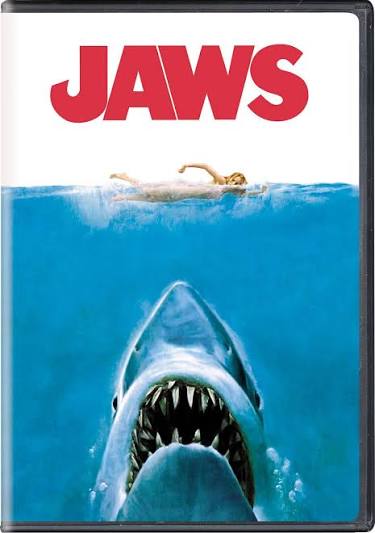
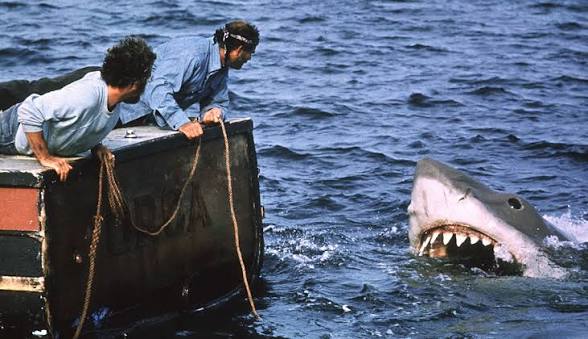
Steven Spielberg’s mechanical shark broke down so often during filming that the crew nicknamed it “Bruce” after his lawyer, and the malfunctions pushed a 55-day shoot past 150 days and the budget from $4 million toward $9 million.
That should have sunk the movie before it reached theaters. Instead, the broken shark forced Spielberg to suggest the creature with a fin, a shadow, and John Williams’ two-note score rather than show it outright, and the film that resulted became, almost by accident, the invention of the modern summer blockbuster.
A Troubled Shoot With No Obvious Hit in Sight
Universal Pictures greenlit Jaws based on Peter Benchley’s bestselling novel, but nothing about the production suggested a movie built to reset the industry. Filming on the open water off Martha’s Vineyard meant fighting boat traffic, weather, and a rubber shark that kept sinking or seizing up in saltwater, according to SlashFilm’s account of the shoot. Spielberg, then in his twenties and coming off a modest television career, was working with a production so far behind schedule that some at Universal reportedly expected the film to underperform or flop outright once it finally reached theaters.
Advertising Nobody Had Tried at That Scale
What actually launched the modern blockbuster wasn’t the film alone, it was how Universal chose to sell it. Rather than the traditional slow rollout, opening in a handful of major cities and gradually expanding over months, Universal spent roughly $700,000 on national television advertising in the days before release and opened Jaws in 409 theaters simultaneously on June 20, 1975, a wide-release strategy that was still unusual for a major studio picture at the time, according to Variety’s retrospective on the film’s 40th anniversary. The combination of saturation advertising and simultaneous wide release meant audiences everywhere could see the film in the same week the buzz started, instead of waiting for it to slowly work its way to their city.
The Numbers That Rewrote the Rules
The strategy worked past anyone’s projections. Jaws earned roughly $7 million in its opening weekend and crossed $100 million in domestic rentals faster than any film before it, according to Variety’s reporting, eventually becoming the first film to gross more than $100 million at the domestic box office. It held the title of highest-grossing film of all time for two years, until Star Wars took the record in 1977, per the same account. That kind of speed, a film going from release to industry-record numbers within weeks rather than a slow theatrical run stretched across a year, hadn’t been the standard model before Jaws, and studios noticed immediately.
Why Studios Copied the Formula Instead of the Shark
Hollywood’s takeaway wasn’t really about sharks or ocean thrillers. It was about timing and distribution. Within a few years, major studios had adopted the same playbook Universal used almost by necessity, wide theatrical release paired with heavy national advertising concentrated around the start of summer, when school lets out and audiences have more free time, according to box-office data compiled by The Numbers. Star Wars followed two years later, then a steady stream of would-be summer tentpoles through the following decades, all built on the same release-strategy logic Jaws had stumbled into out of production necessity rather than deliberate design.
An Accident That Became an Industry Standard
None of it was the plan going in. Spielberg didn’t set out to invent a release calendar, and Universal didn’t design its marketing spend as a permanent template, they were responding to a production that had run over budget and over schedule and needed a strategy that could recoup costs quickly rather than build an audience slowly over months. Fifty years later, the release pattern that resulted, wide theatrical openings timed to early summer and backed by heavy advance advertising, is simply how the industry operates, treated as an unquestioned default rather than the improvised fix for a malfunctioning mechanical shark that it actually was.

Leave a Reply