

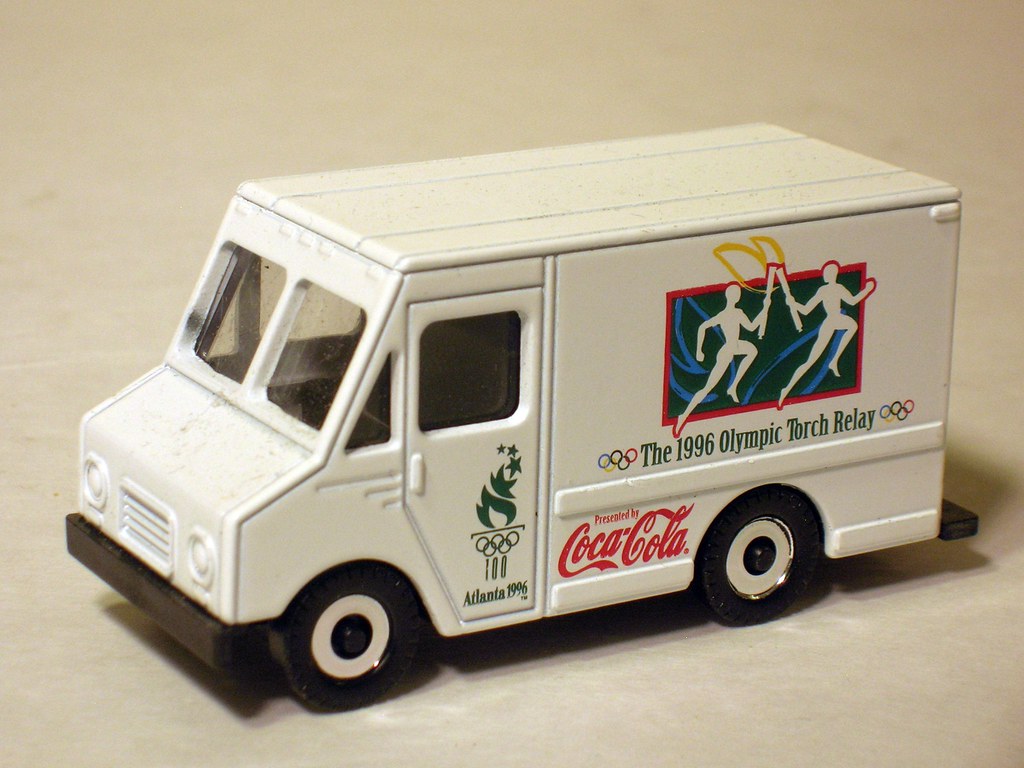
The closing ceremony of the 1996 Atlanta Olympics happened on August 4 of that year, which means this month marks 30 years since Stevie Wonder and Little Richard performed and Boyz II Men sang the national anthem to close out the Centennial Games. Three decades on, the moments people bring up unprompted aren’t really about the ceremonies at all — they’re a handful of seconds scattered across seventeen days that turned into the Games’ defining images, for better and, in one case, tragically worse.
The Ankle That Won the Team Gold
Kerri Strug’s vault remains the single most-replayed moment from Atlanta. Competing as part of the “Magnificent Seven,” Strug tore two ligaments in her left ankle on her first vault attempt, then got up and completed a second vault anyway, landing on essentially one foot to help secure the U.S. women’s team its first-ever Olympic gymnastics team gold, according to Atlanta News First’s 30th-anniversary retrospective. Coach Béla Károlyi carrying her to the medal podium became its own separate piece of Olympic iconography, but the vault itself — painful, decisive, over in seconds — is what people still describe when asked about 1996.
Ali’s Hands and “The Loudest Hush”
The Games actually opened, not closed, with their most emotionally loaded moment: Muhammad Ali, 35 years removed from his own gold medal and visibly affected by Parkinson’s disease, lighting the Olympic cauldron. NBC’s broadcast team called it live, with commentator Bob Costas noting Ali was “still a great, great presence, still exuding nobility,” and President Clinton reportedly telling NBC executive Dick Ebersol it was “the loudest hush in human history,” per NBC Sports’ retrospective on the Games’ most memorable moments. It’s the kind of moment that gets less airtime in highlight reels than Strug’s vault but tends to come up first for anyone who watched it live.
Photo: Yves Cedric Schulze / Unsplash.

Records That Are Still Talked About
The track was its own showcase. Michael Johnson won the 400 meters in an Olympic-record 43.49 seconds, then three days later set a 200-meter world record of 19.32 seconds that stood until Usain Bolt broke it in 2008, per NBC Sports. Gail Devers won the 100 meters by five-thousandths of a second over Jamaica’s Merlene Ottey, one of the closest finishes in Olympic sprinting history, while Carl Lewis took long jump gold at age 35, and swimmer Amy Van Dyken took home four golds, the most of any American athlete at the Games. The U.S. men’s basketball team, still riding the “Dream Team” branding introduced in Barcelona four years earlier, beat Yugoslavia for gold while averaging 31 points a game — a dominant if less mythologized follow-up to 1992’s original roster.
The Night the Games Turned Dark
Not every lasting memory from Atlanta is a triumphant one. On July 27, a pipe bomb detonated during a late-night concert at Centennial Olympic Park, killing spectator Alice Hawthorne and Turkish cameraman Melih Uzunyol, and injuring more than 100 others. Anonymous 911 warnings allowed for a partial evacuation before the blast, and domestic terrorist Eric Robert Rudolph later pleaded guilty to the bombing, according to Atlanta News First’s retrospective coverage. It remains the darkest chapter of the Atlanta Games, and one that longtime Atlantans bring up as readily as any medal moment when asked what they remember.
What’s Left on the Ground in Atlanta
The Games’ physical footprint outlasted the closing ceremony by decades. Centennial Olympic Park, built as the Games’ central gathering space, is now a permanent public park anchoring downtown Atlanta, surrounded by the Georgia Aquarium, the World of Coca-Cola, and the National Center for Civil and Human Rights. The Georgia Dome, which hosted gymnastics and basketball, was later demolished and replaced by Mercedes-Benz Stadium, while the Omni arena’s footprint became State Farm Arena, still home to the Atlanta Hawks. Former Atlanta mayor Kasim Reed has estimated the Games generated roughly $5 billion for the local economy, per Atlanta News First, a figure city officials still point to when explaining how a 17-day event reshaped downtown infrastructure for a generation.
Downtown Atlanta, where much of the 1996 Olympic infrastructure still stands or has been rebuilt. Photo: Christopher Alvarenga / Unsplash.

Thirty Years of Highlight Reels
What’s notable, thirty years out, is how unevenly the Atlanta Games are remembered. Ask someone what they recall and you’ll get Strug’s ankle, or Ali’s hands shaking as he raised the torch, or Johnson’s gold spikes blazing around the track — rarely the same answer twice, and almost never the closing ceremony itself. That’s the real legacy of a Games this stacked with individual moments: it never resolved into one single image, just a scattered highlight reel that different people carry different pieces of, three decades later.

Leave a Reply