

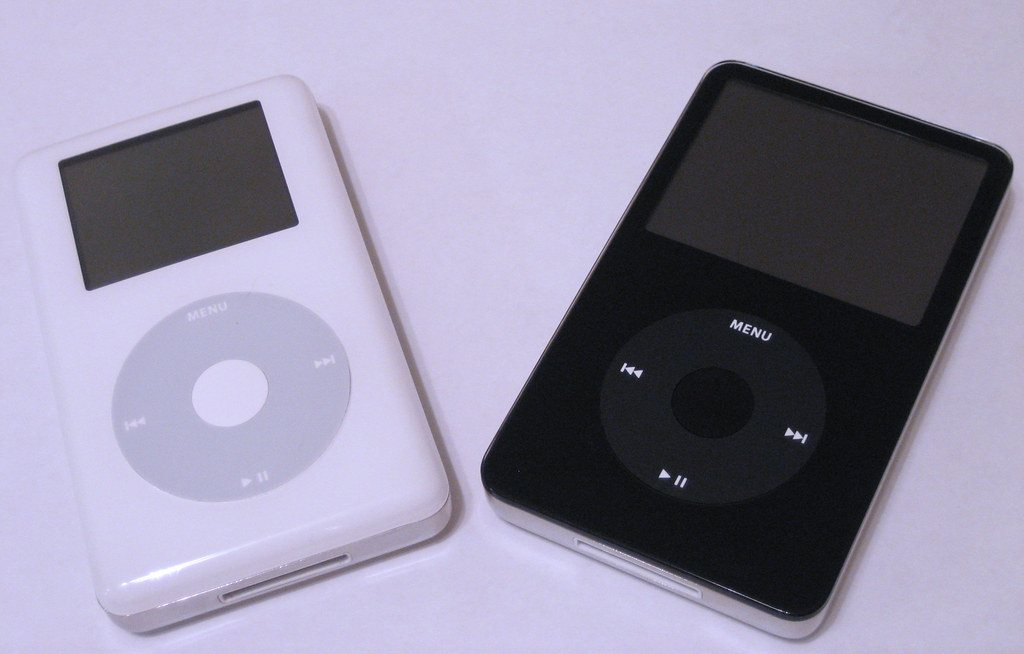
On October 23, 2001, Apple put a price tag of $399 on a white plastic brick that held “1,000 songs in your pocket,” according to the company’s own original iPod press release. Twenty-one years and roughly a dozen product refreshes later, Apple quietly pulled the plug on the entire iPod line. In between those two press releases sits one of the cleanest case studies in how a single gadget can dismantle an industry that took decades to build.
A 5-Gigabyte Hard Drive That Started a War
The specs read almost quaint now: a 5 GB hard drive, a 160×128 pixel display, 10 hours of battery life, and a FireWire connection that could load an entire CD in under 10 seconds. Steve Jobs described it in Apple’s own words as inventing “a whole new category of digital music player that lets you put your entire music collection in your pocket and listen to it wherever you go,” per Apple’s newsroom archive. What that press release didn’t say — because nobody inside Apple could have known yet — was that the “entire music collection” line was a direct threat to the format that had defined the record industry for fifteen years.
What the CD Business Actually Lost
The scale of that threat shows up in the record industry’s own numbers. In 1999, the year before Napster and the iPod reshaped how people acquired music, compact discs generated $13 billion in U.S. sales and accounted for almost 90% of all music industry revenue, according to Forbes’ analysis of RIAA historical data. By 2022, the RIAA’s own year-end revenue report put total CD revenue at just $482.6 million — a decline of more than 96% from that 1999 peak, in a format that had been the industry’s single dominant product.
That collapse didn’t happen in a straight line, and the iPod wasn’t the only cause — file-sharing services deserve their share of blame too. But the iPod was the device that made an alternative to owning CDs feel normal, then desirable, then default. It gave people a legal, Apple-sanctioned reason to rip their own discs and never buy another jewel case again, and later, paired with the iTunes Store, a reason to buy songs one at a time instead of an album at once.
Killed By Its Own Playbook
The iPod’s ending carries a certain irony: the product that helped dismantle one entire industry got dismantled by the same company’s next invention. When Apple formally discontinued the iPod touch — the last model still in production — in May 2022, the announcement read less like a eulogy and more like a footnote, because the iPhone had already absorbed the iPod’s job years earlier. Greg Joswiak, Apple’s senior vice president of Worldwide Marketing, framed the device’s legacy rather than its ending: “Music has always been part of our core at Apple, and bringing it to hundreds of millions of users in the way iPod did impacted more than just the music industry — it also redefined how music is discovered, listened to, and shared.”
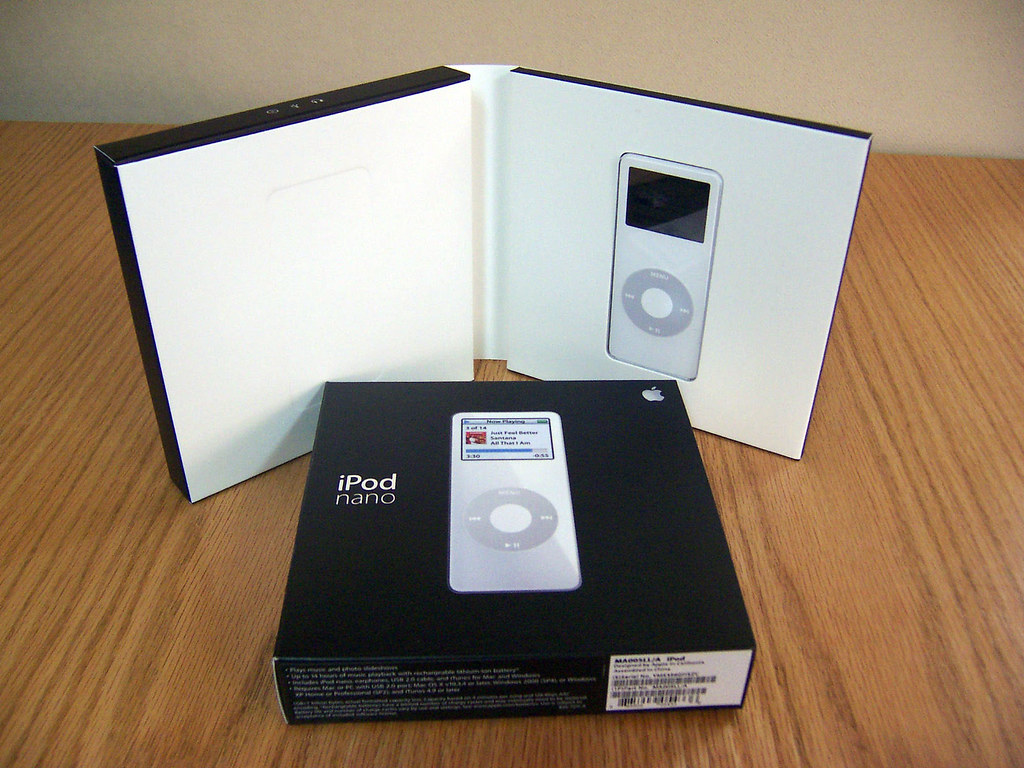
That framing was deliberate. By 2022, the iPod wasn’t really competing with anything anymore; it had already won and then been quietly absorbed into the smartphone in everyone’s pocket. Apple’s own timeline of the product line, published in that same release, traces the arc: the original iPod in 2001, the iPod mini in 2004, iPod nano in 2006, iPod touch in 2007 — the model that would end up outliving all its siblings by fifteen years.
The Pattern Underneath the Nostalgia
What makes the iPod’s story more than a trip down memory lane is how repeatable its arc turned out to be. A product doesn’t need to dominate forever to change an industry permanently — it just needs to make the old format feel unnecessary long enough for habits to shift. The CD never really recovered after the iPod normalized digital libraries, streaming never really had to fight the CD directly, and the iPhone never really had to justify killing the iPod because the iPod had already done the work of training an entire generation to expect their whole music collection in their pocket. The device is gone. The expectation it created never left.

Leave a Reply