

Think of a collection so big it needs pallets, and so organized that every single piece has an assigned cabinet. According to a post from @seesamsellhomes, an Iowa collector has spent years building what he describes as the second largest private collection of metal printing type in the United States.
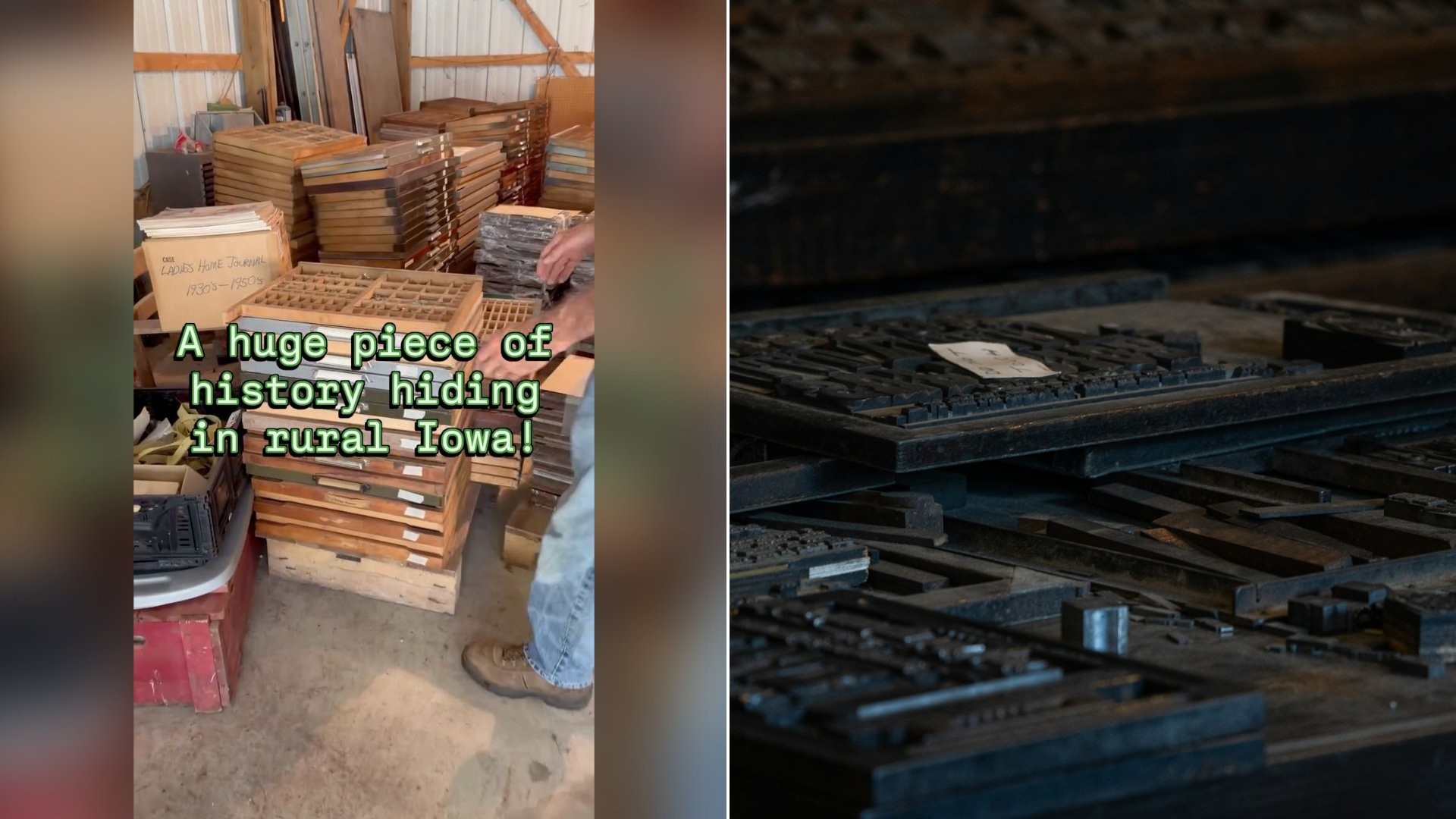
The video takes you inside the room where it all lives, and the first question says it all. “How many of these do you think you have?” The answer comes back fast: “Thousands.”
View this post on Instagram
“Thousands. Thousands.” And The Owner Is Not Exaggerating
The collector says plainly that he has thousands of pieces of type. In the caption, he calls it the second largest private collection of metal type in the country.
The visitor is stunned. “Oh my goodness,” he says as he looks around the room at the cabinets and the stacks.
Every Piece Is Labeled And Assigned A Cabinet And A Place In Line
This is a collection run like a library. “What we’ve done is labeled every one of them and put what cabinet they go in and what order they go in,” the collector explains.
That kind of care takes patience. A collection of metal type is not one big object but thousands of small ones, and without a system, it would turn into a pile of metal.
He says that once the entry cabinet is set up over by the door, they will sort the remaining pieces and put everything together.
“I’m Glad I Had All These Old Heavy Duty Pallets Around”
Then comes the line that gives you a feel for the weight of the project. “You can imagine I’m glad I had all these old heavy duty pallets around,” the collector says.
Metal type is made of heavy alloy, and a few boxes add up in a hurry. Cabinets full of it are not easy to move, so it is easy to see why sturdy pallets would come in handy.
The visitor sums it up in two words: “Quite something.”
What Metal Type Is And Why Collectors Save It
Metal type is the small block of metal with a raised letter on top that printers used to set words on a page. Each letter was placed by hand or by machine, inked and pressed onto paper, and then the pieces were put back to be used again.
The idea of movable type dates back centuries. In Europe, Johannes Gutenberg’s printing press in the 1400s made it possible to print books on a large scale, and for hundreds of years, nearly everything printed came from metal type.
Printers kept their type in shallow wooden drawers called cases, with a compartment for each letter. Large shops owned many different typefaces, in many sizes, which is why a big collection holds so much variety.
Why So Much Of It Ended Up With Collectors
As printing shifted to offset presses and then to computers in the second half of the twentieth century, many print shops closed or cleared their old equipment. Metal type, the heart of the old trade, was sometimes sold off by the pound.
That is where collectors stepped in. Letterpress hobbyists, artists and historians have saved cabinets of type from closed shops, because each typeface is a small piece of design history.
Letterpress printing still has a loyal following among people who make wedding invitations, art prints and greeting cards. They prize old type because it cannot be copied by a click.
Why Labeling Every Cabinet Matters More Than Anything
Anyone who has inherited a box of old things knows the problem. Without labels, even a wonderful collection becomes a mystery to the next owner, and the story behind each piece is lost.
By writing down which cabinet each drawer belongs in, and in what order, the collector makes it possible for someone else to find a single typeface in minutes. It also means the collection can be shared with printers, students and curious neighbors who want to see how it all works.
That is the quiet lesson in the video. The size of the collection is impressive, but the organization is what turns a lot of metal into a real piece of history.
A good system also protects the pieces. When every drawer has a home, no one has to dig through a pile, and the type stays in better shape for the next generation of printers and collectors.
How To Start Your Own Collection Of Printing History
You do not need a room full of cabinets to appreciate printing history. A few smart steps can get a beginner started, and they are good advice for any collector.
- Look for single typefaces or a few drawers at estate sales, antique shops and auctions.
- Label what you buy and note where it came from, just as this collector does with his cabinets.
- Wash your hands after handling it. Old type is made of metal that can contain lead.
- Store it in sturdy drawers or cabinets, because even a small amount of metal adds up in weight.
Whether you collect thousands of pieces or just a few letters from a favorite drawer, the satisfaction is the same. You are holding the tools that once put the written word into millions of hands.
And if you ever find a cabinet in an old print shop, remember that someone out there is probably very glad to have the pallets ready.
More Stories You May Like
- Jack Black Bowls For Ronnie And Calls Dio The Greatest Heavy Metal Vocalist Of All Time, Then Says Tenacious D’s Song Teasing Him Was Also A Love Letter
- Mama Cass Sang The Wrong Words To California Dreamin For Years, Because The Real Line Is About Pretending To Pray To Escape A New York Winter
- Record Store Owner Chases A Metal Collection For 3 Years, Then Finds About 3500 Records Waiting Where Everything Faith No More Is Off Limits

Leave a Reply