

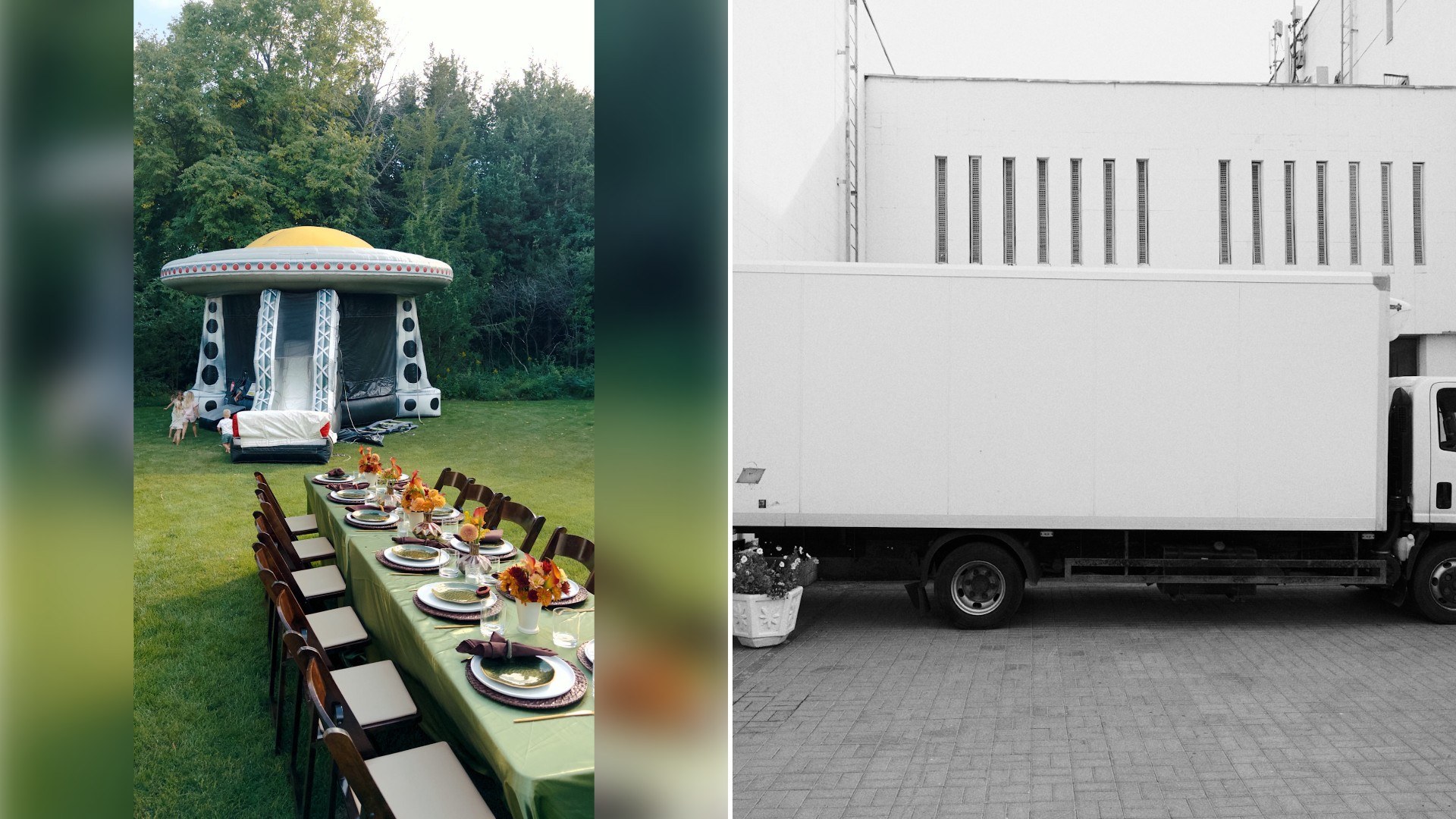
Auctions have a way of turning a simple plan into something much bigger, and that is exactly what happens in a video from @thedailynelly, who documents her husband’s reaction as he discovers just how much she actually bought at a local auction. The haul is big enough to fill an entire rental truck, and his half-joking, half-genuinely-overwhelmed question, why do they now own so many tables, becomes the running punchline of the whole clip.
What makes the video work is the specificity of his confusion. This isn’t a vague complaint about too much stuff; it’s a very particular, slightly bewildered accounting of furniture and miscellaneous items that somehow all seemed reasonable to bid on individually but add up to an entire truckload once they’re all sitting in the driveway together.
Estate and local auctions remain one of the most unpredictable corners of secondhand shopping, precisely because momentum builds so easily once bidding starts. A single planned purchase can snowball into an entire haul when lot after lot goes for a reasonable price, and the incremental nature of bidding, one item at a time, makes it easy to lose track of the cumulative total until everything is loaded up at once.
That dynamic is exactly what makes this kind of couple’s story so relatable to anyone who has ever gone to an auction, a flea market, or even just a big sale with one specific item in mind and come home with considerably more than planned. The thrill of winning a bid has a way of overriding the practical question of where everything is actually going to go once it gets home.
There is a specific psychology behind why auctions in particular tend to produce this kind of overshoot more reliably than a normal retail purchase does. A price tag at a store is fixed and final, inviting a simple yes-or-no decision, but a bid is provisional right up until the gavel falls, which means a buyer can talk themselves into one more lot on the reasoning that they might not even win it anyway. That small mental loophole, the sense that a bid is not quite a real commitment until it suddenly is, gets repeated dozens of times over the course of an auction, and the cumulative effect is exactly the kind of truckload haul captured here.
Furniture specifically compounds the problem in a way smaller collectibles rarely do. A stack of vintage postcards or a shelf of glassware can quietly absorb into a house without anyone noticing the volume, but a table, a dresser, or a set of chairs each demand their own dedicated floor space, which is exactly why a husband walking into a driveway full of furniture reacts so differently than he might to a box of smaller finds. The sheer physical presence of furniture makes the scale of an auction haul impossible to hide or downplay, for better or worse.
It is also worth appreciating why auction furniture specifically tends to be such good value in the first place, which goes a long way toward explaining the temptation to keep bidding. Estate auctions in particular often move large quantities of solid, well-built furniture quickly and at prices well below what comparable new pieces would cost, since the priority for most auction houses is clearing inventory rather than maximizing every individual sale. A buyer who understands that dynamic can reasonably justify picking up piece after piece on the logic that each one, taken alone, is a genuinely good deal, even if the combined total starts to feel excessive once it is all assembled in one place.
The need to rent a truck at all says something about how auction hauls differ from typical thrifting or flea market trips, where a car trunk or a folded-down back seat is usually enough. Renting a vehicle specifically to transport the day’s winnings is itself a small tell that the original plan has already been abandoned somewhere along the way, a logistical decision made necessary by momentum rather than one made deliberately from the outset.
Videos like this one also tend to resonate because they capture a familiar relationship dynamic playing out in real time, one partner’s enthusiasm colliding gently with the other’s practical concerns about space, all delivered with enough humor that it reads as an inside joke rather than an actual conflict. That balance, exasperation without real frustration, is a large part of why couples’ reaction content around shopping hauls performs so well across social platforms, since viewers recognize the dynamic from their own households even when the specific numbers involved are wildly different.
There is also a practical afterlife to a haul like this one that rarely makes it into the video itself but is worth acknowledging: sorting through a truckload of furniture inevitably means deciding what actually earns a permanent spot in the house, what gets passed along to family or friends, and what ultimately gets resold. That second wave of decision-making is often where an overambitious auction day quietly corrects itself, as the initial thrill of winning each bid gives way to the more sober work of figuring out where everything actually belongs.
Couples who shop auctions together regularly tend to develop an informal division of roles over time, one partner more inclined to chase the thrill of the bid itself and the other more focused on logistics and eventual placement. Videos like this one suggest exactly that kind of dynamic already in motion, with the husband’s bewildered commentary functioning less as genuine objection and more as the practical counterweight that keeps the whole hobby sustainable for the household as a pair rather than for one enthusiastic bidder alone.
For couples navigating a similar dynamic, the video’s good humor offers a useful model: a little exasperation is fine, but the real takeaway from an auction haul this big is usually a good story, and in this case, apparently, quite a lot of tables.

Leave a Reply