

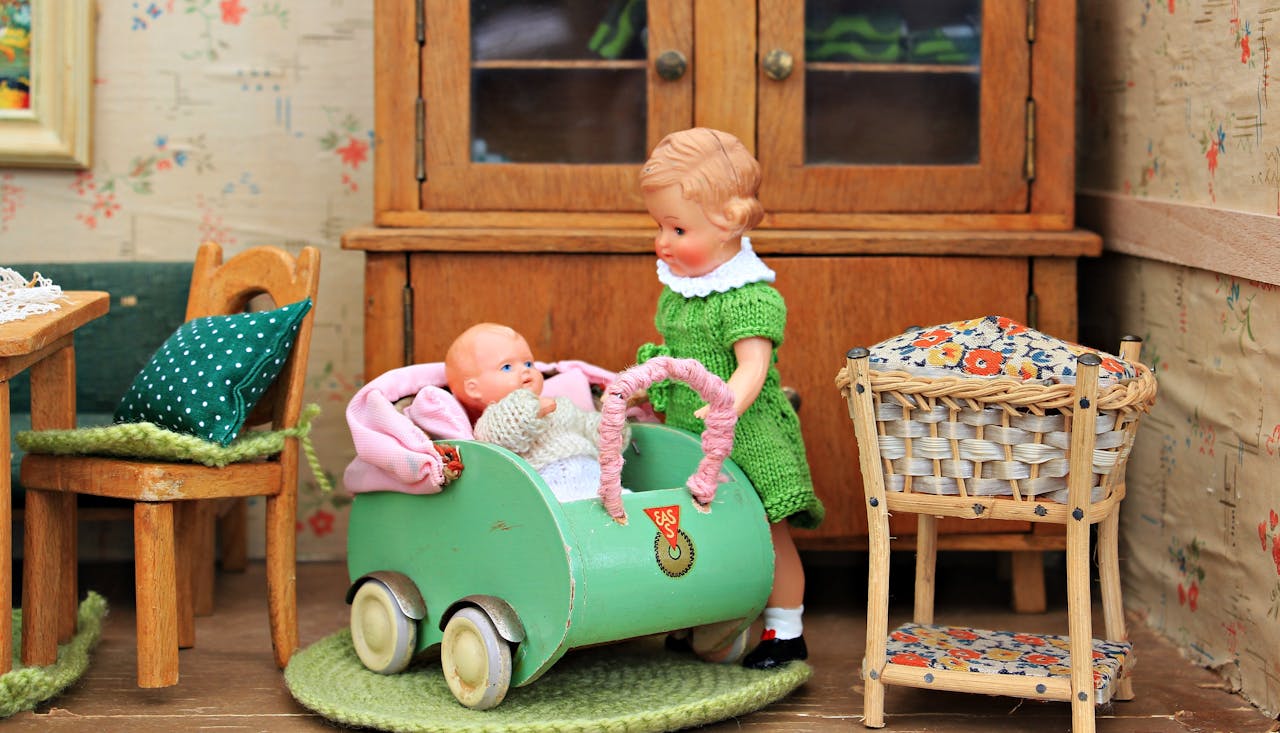
Charles Lazarus opened a baby-furniture shop called Children’s Bargain Town in Washington, D.C. in 1948, and when customers who bought a crib or a stroller didn’t come back for repeat business, he pivoted toward something parents actually needed to restock constantly: toys. That pivot eventually built a chain that, at its peak, controlled roughly a quarter of the entire world toy market. Seventy years after Lazarus opened his first store, that same company filed for Chapter 11 bankruptcy, and within a year it had closed every one of its stores in the United States.
From Baby Furniture to a Toy Supermarket
According to History.com’s retrospective on the chain, Lazarus rebranded in 1957, exiting baby furniture entirely and building what became the first true big-box toy store — a supermarket-style layout with thousands of toys on open shelves, a radical departure from the small, family-run toy shops that had dominated the category before it. The company introduced its mascot, Geoffrey the Giraffe, in television commercials in 1973 and went public in 1978, and by 1990 the chain had helped grow the U.S. toy industry from roughly $500 million in 1950 to $12 billion, according to History.com’s figures, while Toys “R” Us itself operated around 1,450 stores worldwide and controlled about a quarter of the global toy market.
The Amazon Deal That Backfired First
Years before the leveraged-buyout debt became the story, Toys “R” Us made a different strategic bet that ended up costing it dearly. In 2000, the company signed a 10-year exclusivity deal making Amazon its official online toy retailer, paying Amazon roughly $50 million a year plus a percentage of sales, according to NBC News’s coverage of the dispute that followed. Toys “R” Us grew frustrated as Amazon began signing similar deals with competitors and third-party toy sellers on its own marketplace, and sued in 2004 arguing the exclusivity was supposed to run both ways. A New Jersey judge ruled in the retailer’s favor in 2009, ending the partnership and freeing Toys “R” Us to run its own online store — but by then Amazon had spent nearly a decade building the e-commerce dominance Toys “R” Us had effectively helped fund.
The Debt That Never Went Away
The company’s undoing traces back to a 2005 leveraged buyout by Bain Capital, KKR and Vornado Realty Trust, which loaded the retailer with billions in debt right as Walmart, Target and Amazon were starting to undercut it on price and convenience — a combination the chain never found a way out from under. It filed for Chapter 11 bankruptcy protection on September 18, 2017, as Bloomberg reported at the time. What followed was a six-month attempt at restructuring that ultimately failed: the company announced liquidation in March 2018, and CBS News reported that every remaining Toys “R” Us and Babies “R” Us store in the U.S. and Puerto Rico shut its doors for good on June 29, 2018, a closure that put roughly 31,000 employees out of work.
It was a strikingly fast collapse for a company that had spent 70 years building its footprint — nine months from bankruptcy filing to a completely empty store list nationwide.

A Careful, Smaller Comeback
The brand didn’t stay dead. WHP Global acquired the Toys “R” Us name in 2021 and, per CNBC’s coverage of the relaunch, opened a two-level, 20,000-square-foot flagship store at the American Dream mall in New Jersey that December — a single showcase location rather than a return to the old 1,450-store model. “Families will come to visit because American Dream is a destination for the day,” WHP founder Yehuda Shmidman told CNBC, framing the store as a tourist stop rather than a neighborhood retailer. WHP followed that with a much larger but lower-risk strategy: placing hundreds of Toys “R” Us shop-in-shops inside Macy’s department stores rather than rebuilding standalone real estate, spreading the brand’s return across another company’s existing footprint instead of its own.
The Store That Taught Retail a Lesson About Debt
Toys “R” Us didn’t lose to Amazon in the simple way that narrative usually gets told, and the irony is that its own early Amazon deal is proof of that: the company saw e-commerce coming as early as 2000 and tried to buy its way around competing with it directly, only to get boxed out anyway. What actually killed the company was the debt load a 2005 buyout saddled it with, at the exact moment it needed capital to compete on price and rebuild its own online presence. The brand’s survival instinct — shrinking down to a single flagship and a shop-in-shop model rather than trying to rebuild 1,450 stores — is itself an admission of what actually happened: not that people stopped wanting the toy-supermarket experience, but that the company could no longer afford to run one at scale.

Leave a Reply