

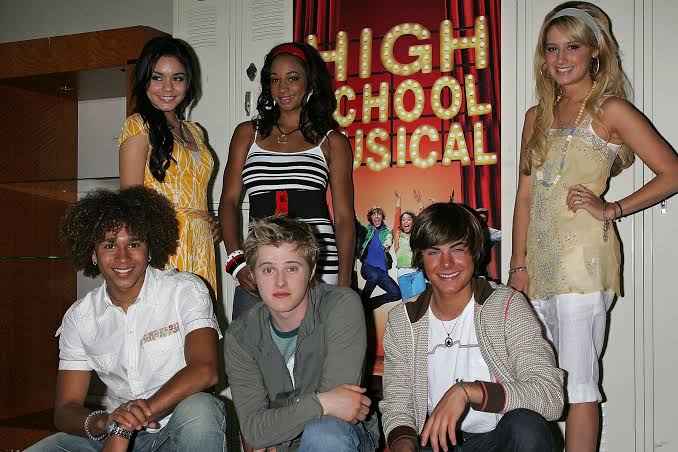
On January 20, 2006, a made-for-TV movie about a basketball captain who wanted to sing pulled in 7.7 million viewers on its Disney Channel premiere, then added another 6.1 million the next night — both records for the network, according to CNN Money’s 2007 report on Disney’s “tween machine”. Twenty years later, High School Musical reads less like a scrappy cable movie and more like the moment a studio figured out how to turn a teen crush into a balance sheet.
A Soundtrack That Broke a 20-Year Streak
The numbers started with the music. The High School Musical soundtrack became the first television-movie soundtrack to reach No. 1 on the Billboard 200 since Miami Vice did it in 1986, according to Billboard’s own chart rewind of 2006. It went on to sell 3.7 million copies in the U.S. that year alone, making it the best-selling album in the country for all of 2006 — ahead of anything from an established pop star with a real marketing budget.
That was not a fluke single-year spike. Disney’s own 20th-anniversary retrospective confirms the soundtrack ranked No. 1 on the year-end Billboard 200, the soundtrack chart, and the kids’ albums chart simultaneously in 2006. When the sequel arrived in 2007, its soundtrack went triple platinum, and the film itself drew 18.6 million viewers on premiere night — still, per Disney, the most-watched basic cable movie ever aired.
The Business Case Nobody Saw Coming
Wall Street noticed fast. By mid-2007, analyst Laura Martin estimated the franchise had generated roughly $1 billion in operating profit for Disney over two fiscal years, and the company itself projected retail sales tied to its tween properties — High School Musical chief among them — would hit $400 million worldwide that year, according to CNN Money’s coverage of the deal. DVD sales alone were credited with helping push double-digit operating-income growth at Disney’s cable division that quarter.
What made the math so attractive wasn’t just the size of the numbers — it was how cheaply they arrived. A cable movie shot on a modest budget, with no theatrical marketing spend and no wide-release print costs, was throwing off returns that rivaled a studio picture. That ratio, low input against outsized output, is exactly what turns a hit into a strategy.
The Blueprint Disney Kept Reusing
By the time High School Musical 3: Senior Year hit theaters in 2008 and grossed more than $250 million globally, the pattern was locked in: original songs, a young ensemble cast, heavy soundtrack promotion, and merchandise timed to the release window. Disney has been running that same play ever since. Its own anniversary materials trace a direct line from High School Musical to Camp Rock, Descendants, and ZOMBIES — each one a music-first franchise built for a young audience rather than a movie that happened to have songs in it.
As Charlie Andrews, EVP of Live Action at Disney Branded Television, put it in the company’s own anniversary statement: “When kids truly connect with a story, they want to experience it in every part of their lives.” Steven Vincent, the company’s SVP of Music and Soundtracks, added that the franchise endured because its core question — “Who do I want to be? Who are people saying I’m supposed to be?” — never stopped being one teenagers ask themselves.
Twenty Years of Compounding Interest
Disney’s own figures put the franchise’s lifetime viewing hours across streaming and linear television at more than 1.2 billion, and all three original films still rank among the most-watched Disney Channel Original Movies on Disney+ as of 2025. That kind of longevity is rare for anything built around a specific cast of teenagers who were bound to age out of the roles within a few years.
What actually held up wasn’t the cast — it was the model. Sell the songs first, let the merchandise follow, and treat the movie itself as the marketing budget for everything else. Every Disney tween franchise built since 2006 has run some version of that math, from the album drops to the choreographed dance numbers built to loop endlessly on cable reruns and, later, streaming queues.
That’s the part worth remembering on the 20th anniversary: nobody at Disney set out to build a case study in franchise economics. They set out to make a cheap cable movie about a basketball player who liked to sing, and the spreadsheet caught up with the songs after the fact. That sequence — culture first, business model second — is exactly why the formula still gets copied, and exactly why High School Musical is less a nostalgia footnote and more the operating manual the company never stopped consulting.

Leave a Reply