

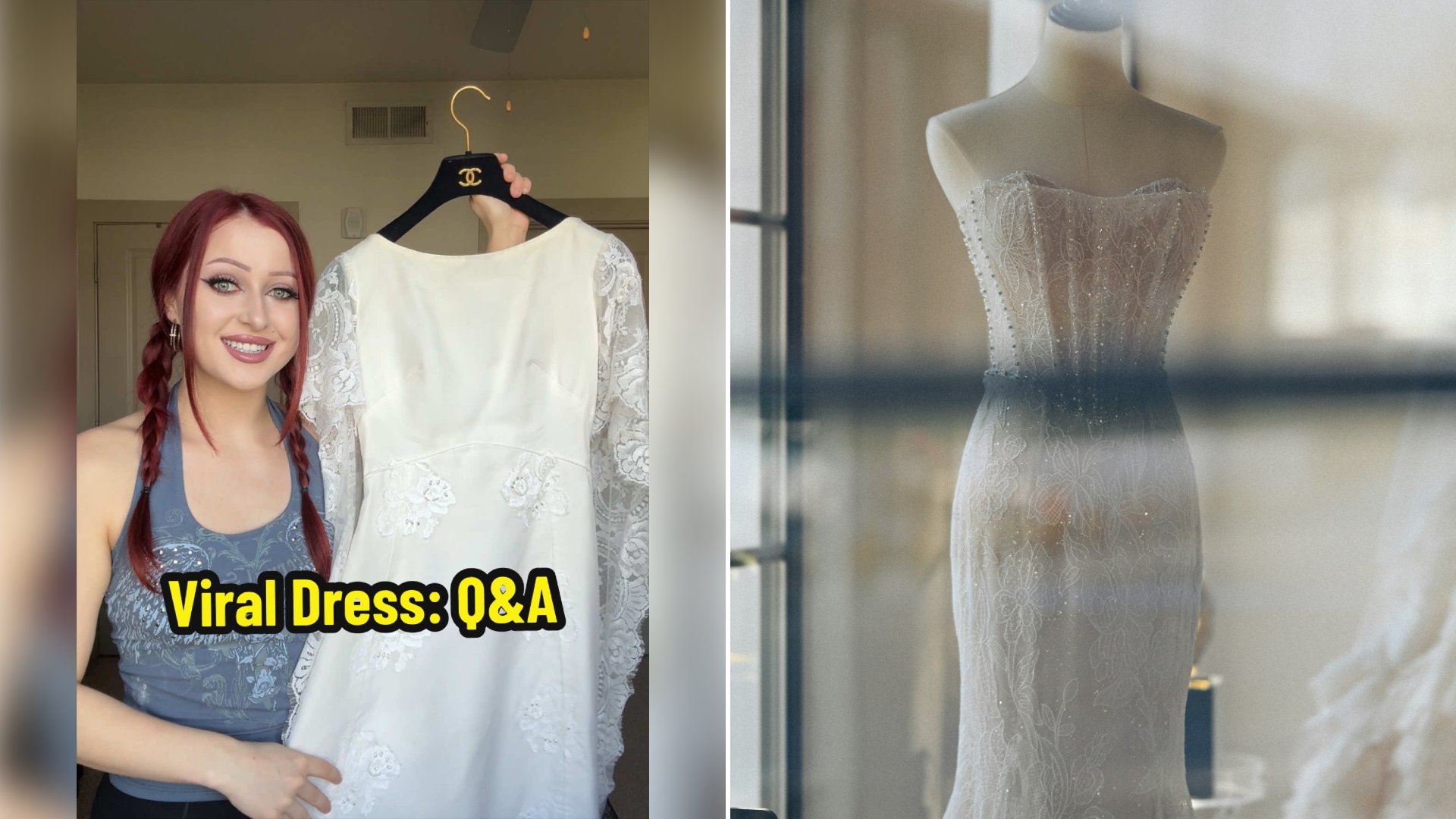
When a vintage dress goes viral, the questions arrive in waves. Who made it? What size is it? Who owned it first? Will you wear it down the aisle? For the collector behind @borrowedfrom1962, those questions piled up after her much loved gown caught fire online, so she sat down and answered as many as she could. Along the way she shared a few sweet personal details, including a family tiara and the reason her wedding plans are on hold.
@borrowedfrom1962
The Designer and the Tag
First up was the maker. She says the gown is by Alfred Angelo, and she showed the original tag as proof. There is no sizing tag, so she can only estimate, and judging by how it fits her, she thinks it is about a size 0 or 2. Anyone who has shopped for vintage knows how common that is. Sizing from past decades does not match modern numbers, and tags are often missing or faded.
Dating the Dress
How old is it? Her best guess is the late 1960s, and she bases that on the Watteau train, the flowing panel of fabric that falls from the shoulders down the back of a gown. She is careful to say that this is an assumption rather than a certainty, which is exactly how a good collector approaches dating. Silhouette details can point to an era, but without a date on a label or a record from the first owner, it remains an educated guess.
The Watteau train is named after the French painter Antoine Watteau, whose eighteenth century paintings showed women in gowns with soft pleats cascading down the back. The style came back into fashion in the twentieth century and showed up on a number of bridal and formal gowns, which makes it a useful clue when you are trying to place a dress within a decade.
An Estate Sale in Northern Minnesota
The history of the gown is the part many fans were most curious about, and here she is honest about what she does not know. She bought it at an estate sale in northern Minnesota. She is not sure who it belonged to, and she says she does not know much about the original owner. What she does know is that the woman had some very fabulous clothes and very fabulous taste. That is something you can often read from a closet, even when the name of its owner is lost.
She adds that she has a couple more pieces from the same estate sale to share, as well as another restoration project. For fans of the gown, that is a tantalizing promise. A single closet can hold decades of someone’s life, from party dresses to coats, and following the thread from one find to the next is part of the joy of vintage collecting.
Why She Bought It
Many people asked whether she plans to wear the gown for her wedding. Her answer is a gentle one. Her wedding and engagement are on hold because her boyfriend is on deployment. She bought the dress with the intention of wearing it for their engagement pictures. There is a small catch, though. He has already seen this dress, so she says she will need to find a different one that he has not seen for the grand reveal on the big day.
That detail makes the story feel warm instead of just glamorous. It also shows a smart way to use a special vintage find. A gown does not have to be a wedding dress to earn its keep. Engagement photos, anniversary portraits, a formal event or a themed shoot can all be the right stage for a piece that has already outlived its first owner.
The Tiara With a Family Story
Fans also asked where the tiara came from, and her answer might be the sweetest part of the whole thing. The tiara is the one her mom wore at her parents’ wedding. So the look pairs a gown from an unknown stranger’s closet with a piece from her own family, and the two together make something new. Nothing in the style is bought at a boutique and nothing is mass produced, which is much of the appeal.
A Short History of Alfred Angelo
The name on the tag is worth knowing. Alfred Angelo was a bridal and formalwear company founded in Philadelphia in the 1930s, and for decades it was a familiar name in American wedding shops. The company eventually closed its stores in 2017, which means a tag from the brand can feel like a small piece of bridal history. If you find a gown from a label like that at a sale, a little research can reveal logo styles and tag designs that help you narrow down the date.
Tips for Buying Vintage Gowns
If this story makes you want to shop for a vintage dress of your own, a few practical tips can help.
First, check the fabric before the fit. Lace, tulle and satin from the 1960s can be fragile, and old seams sometimes give out under stress. Hold the fabric gently up to the light and look for tiny holes, yellowing or stains, especially under the arms and along the hem.
Second, ask about the zipper and closures. Original metal zippers can stick or break, and replacing one is usually an easy repair for a seamstress. Third, measure yourself and then measure the dress. Lay the garment flat and compare the chest, waist and hip numbers to your own instead of trusting the tag.
Fourth, think about restoration before you buy. Light cleaning might be simple, while repairing a large tear or reworking a structure can be pricey. A specialist in vintage textiles can tell you what is safe, because many old fabrics should not go through a regular wash.
Fifth, store the dress carefully. Use a breathable garment bag or a clean cotton sheet, keep it away from direct sunlight and avoid plastic that can trap moisture. Acid free tissue paper in the folds helps keep delicate gowns from creasing or yellowing.
What Makes a Find Go Viral
So why did this particular gown capture so much attention? Part of it is the visual: a sweeping train and a classic silhouette make a striking image. Part of it is the mystery of a former owner with fabulous taste. And part of it is the personality of the person wearing it, someone who treats the dress with affection, shares what she knows and says plainly what she does not.
In the end, this is a story about taking something that was once part of another woman’s life and giving it a second chapter. The gown will get its moment in engagement photos, the tiara carries a mother’s memory, and somewhere down the road a different dress will make its own grand reveal. Until then, there are more finds from that estate sale waiting to be shown.

Leave a Reply