

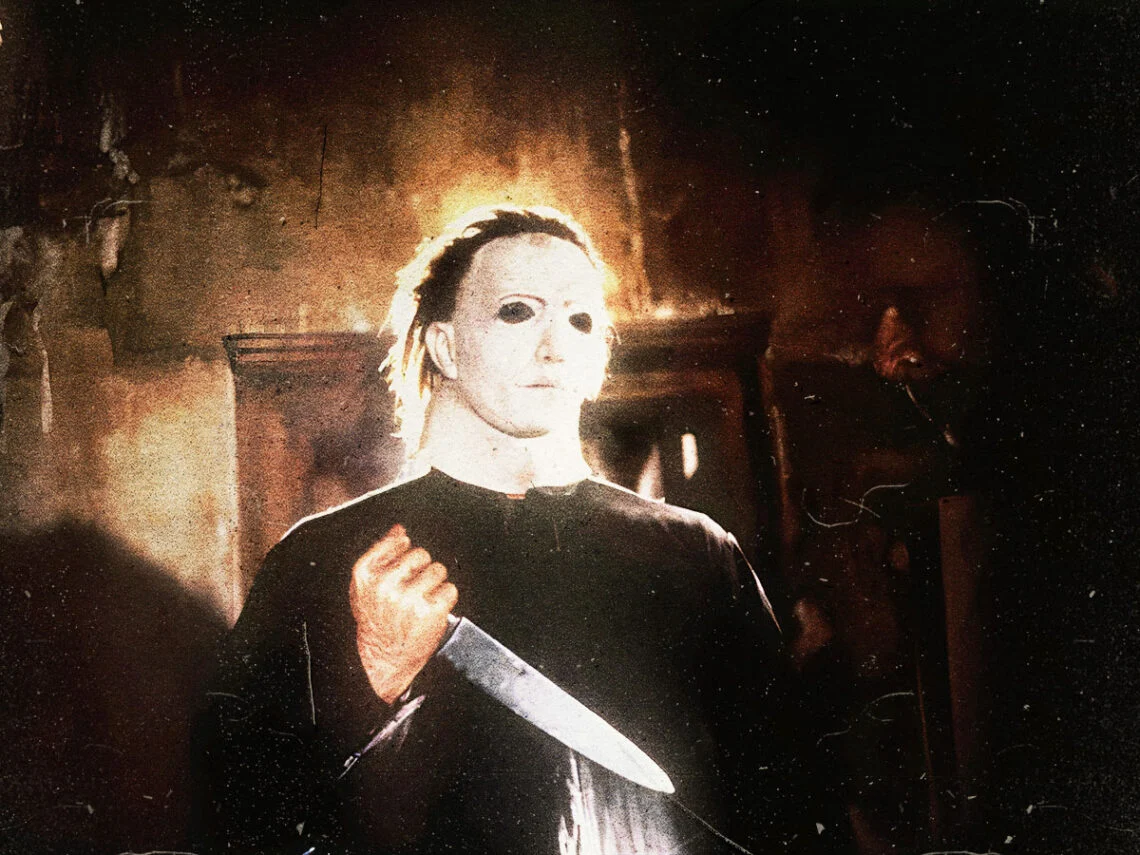
John Carpenter shot his 1978 slasher classic Halloween in twenty working days spread across a single month, on a budget so tight the crew reused the same rubber Captain Kirk mask, spray painted white, because a proper monster mask was out of reach. That penny pinching production went on to gross tens of millions of dollars and remains one of the most lopsided profit stories in movie history.
Twenty Days in a Los Angeles Suburb
Filming took place in May 1978 in South Pasadena, California, standing in for the fictional Haddonfield, Illinois. Production sources place the budget between roughly $300,000 and $325,000, a figure detailed in the film’s Wikipedia production history, which notes the crew filled fake autumn leaves onto lawns because California in springtime looks nothing like the Midwest in October. Carpenter wrote, directed, and composed the score, all for a flat fee of about $10,000, though he negotiated a ten percent stake in the film’s future profits, a decision that turned out to be one of the shrewder deals in independent film history.
The cast was led by Jamie Lee Curtis in her feature film debut as babysitter Laurie Strode, alongside veteran actor Donald Pleasence as the increasingly frantic Dr. Loomis. Curtis, the daughter of Psycho star Janet Leigh, brought an almost accidental sense of horror pedigree to a low-budget picture nobody expected much from. Carpenter’s score, a simple piano theme in an unusual 5/4 time signature, was reportedly composed and recorded in only a few days, yet it became one of the most recognizable pieces of music in horror.
Word of Mouth Over Marketing
Distributor Compass International Pictures had no meaningful advertising budget to compete with the summer’s studio releases, so Halloween built its audience the slow way, through reviews, midnight showings, and moviegoers telling their friends. That grassroots spread turned out to be enough. Domestic ticket sales reached roughly $47 million, with worldwide totals climbing to around $70 million, figures reflected in financial breakdowns from The Numbers and corroborated by contemporaneous trade reporting. Estimates put the original theatrical run at around 20 million admissions in the United States alone.
Run the math against that roughly $300,000 budget and the film returned somewhere north of two hundred times what it cost to make, a ratio almost unheard of for a studio release, let alone an independent horror picture shot by a crew of newcomers. Adjusted for inflation, that original budget equals a little over a million dollars in today’s money, while the worldwide gross would translate to well over $300 million, numbers that still dwarf most modern horror franchises working with a fraction of the risk.
A Genre Built on a Shoestring
Halloween’s success reshaped how studios thought about horror as a business. Its formula, a masked killer, a small cast, a single location, and a synth-driven score that cost almost nothing to produce, became the template that slasher films spent the next decade imitating, from Friday the 13th to countless direct imitators trying to replicate lightning in a bottle. Retrospectives marking the film’s anniversaries, including one published in TIME, point out that Carpenter’s picture proved a horror movie did not need star power or studio backing to become both a critical touchstone and a genuine box office phenomenon.
The franchise Carpenter kicked off with that shoestring production has since spawned more than a dozen sequels, remakes, and reboots, stretching across five decades and multiple generations of Michael Myers. None of the follow-ups, despite budgets many times larger than the original, have managed to replicate quite the same ratio of dollars spent to dollars earned. For a film built out of a repainted mask, a handful of local actors, and twenty days of shooting in the wrong climate entirely, that original 1978 return remains something close to a fluke nobody has managed to engineer twice.
What a Budget Like That Actually Bought
It helps to picture what a few hundred thousand dollars looked like against the rest of the American economy that year. Housing prices across the country in the late 1970s varied enormously by region, and in plenty of markets a family home could be purchased for well under six figures, meaning a scrappy horror crew technically had enough cash on hand to compete with a modest real estate purchase rather than a studio tentpole. Carpenter’s team stretched that money by shooting almost entirely on practical locations rather than built sets, using existing houses on quiet residential streets and dressing them minimally rather than constructing anything from scratch.
That resourcefulness became part of the film’s mythology almost as much as Michael Myers himself. Costume designer and crew members have described scrounging props from local hardware stores, borrowing wardrobe pieces, and relying on natural light wherever the schedule allowed, all in service of stretching a budget that would barely cover a few weeks of catering on a modern studio production. It is that scrappy arithmetic, a movie made for the price of everyday necessities that went on to out earn films costing many times more, which keeps Halloween near the top of any list ranking the most profitable independent films ever made.

Leave a Reply