

Every family has a story that gets told around the kitchen table, and now and then one of them involves a famous face. In this one, shared by @historical_usa, the storyteller is the creator’s own grandmother, who sat down and answered a simple question: did you ever meet Elvis? Her answer was a cheerful yes, and what followed was a small, warm memory from San Diego in 1955.
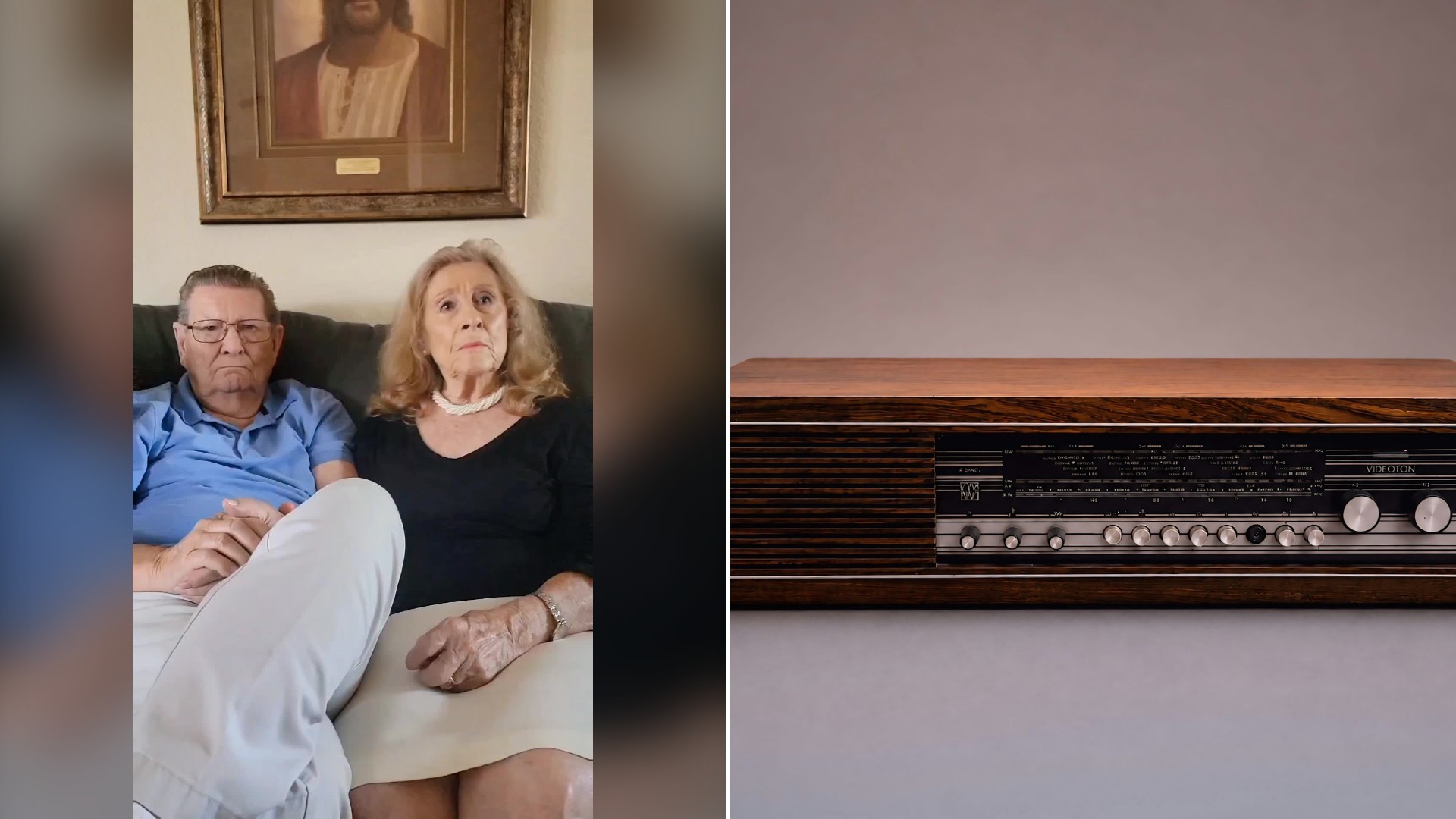
It is exactly the kind of tale that belongs on a site about vintage life and music, because it captures a time when a department store record counter was a place where the future of popular music could simply walk in the door. Here is how she told it.
@historical_usa
Working the music department at Walker Scott
The grandmother explained that in 1955 she was working in the music department at Walker Scott. The record representative from RCA who visited the store had a running promise. Every time he came in, he told her that when Elvis came to town, he would bring him in to meet her. She and her coworkers laughed it off. It sounded like the sort of thing a friendly salesman says to keep a counter happy, and nobody really expected it to come true.
The day Elvis came to San Diego
Then Elvis came to San Diego to play his first concert there. On that particular day, she was the only one working in the department. One coworker had the day off, and another was out at lunch. She admitted she could not quite remember where the other girl had gone, which is part of the charm of a memory told decades later. Into that quiet, short staffed department walked the RCA record man, and with him was Elvis Presley himself. The promise had been kept.
A friendly chat and a fixed collar
She remembered that Elvis was just getting started at the time, and that he was so handsome. He talked to her. At some point she realized the collar on her dress was not sitting right, and Elvis noticed it too. He reached over, told her that her collar needed fixing, and fixed it. She laughed as she told it, saying that she had now been touched by Elvis. It was a tiny gesture rather than a grand moment, which is exactly why it has stayed with her all these years.
Not a teenager, but still impressed
She was careful to point out that she was not a teenager back then. She was a married woman of twenty, so she felt she was somewhat beyond the teen excitement that surrounded him. Even so, she called him very nice, and the meeting clearly left an impression. There is something sweet about the way she separates the fan frenzy of younger girls from her own calm, friendly encounter across a record counter.
Looking back with sadness
Her tone shifted near the end. She said she felt very bad when he died, and that it was sad to see the way he went, describing how he seemed to slowly go downhill. The story that began with a laugh and a fixed collar finished with quiet sympathy for a man she had met only once, briefly, when his career was just beginning.
Collecting tips and ways to keep family stories alive
Stories like this one are a good reason to look at old records and old shops with fresh eyes. Here is some general advice for collectors and for anyone who wants to preserve a relative’s memories.
- Mid century department stores often had record departments where label representatives visited to promote new releases, so ephemera such as old store bags, price tags and advertisements can be collectible in their own right.
- RCA Victor became Elvis’s major label after his early recordings elsewhere, and his mid 1950s singles on that label are widely collected. Original pressings are usually identified by label design, matrix numbers and the sleeve.
- Grade the record and the sleeve separately. Tilt vinyl under a bright light to spot scratches, and check the edges and center ring for wear.
- Store records upright, never stacked flat, and keep them away from heat and direct sunlight. Plastic lined inner sleeves protect against scuffs.
- Beware of reissues sold as originals. Compare labels and pressing details against a trusted price guide before paying a premium.
- When you record a relative’s memories, ask open questions, note the date and place, and save the audio in more than one location.
- Ask about small details, such as where they worked, what the store looked like and who else was there. Those details make a story feel real to the next generation.
- Keep any photographs, receipts or keepsakes connected to the memory in the same folder or box as the recording.
Why small brushes with fame matter
Big biographies tell us what famous people did on stage, but ordinary encounters tell us what they were like in a room. A young performer stepping into a department store, chatting with a clerk and kindly fixing her collar is a gentle picture of the moment before everything changed. The grandmother’s account is short, funny and a little wistful, and it is a reminder to ask the older people in our lives about the day they almost brushed history. You may be surprised how much of it they remember.

Leave a Reply