


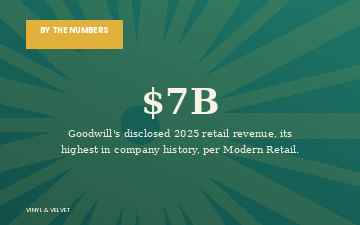
Goodwill Industries is having its best year in its 125-year history, according to reporting from Modern Retail, with the nonprofit’s combined North American network posting more than $7 billion in annual revenue. For a resale sector that has spent the last several years watching venture-backed apps fight over the same thrifting audience, Goodwill’s numbers are a reminder that the original secondhand retailer is still setting the pace.
125 Years of Reinvention
Goodwill traces its roots to 1902, when Methodist minister Edgar J. Helms began collecting used household goods and clothing from wealthier Boston neighborhoods, repairing them, and employing local residents who faced barriers to steady work to help sell them. The model — donated goods, on-site repair and resale, and job training funded directly by the proceeds — has stayed remarkably consistent for well over a century, even as the organization grew into a decentralized network of independently operated regional Goodwills spanning the United States and Canada.
Why the Timing Makes Sense
Modern Retail’s coverage frames this record year against a backdrop that will feel familiar to anyone who has watched secondhand shopping shift from a budget necessity into a mainstream lifestyle choice. Resale has grown steadily more culturally acceptable — and more searchable — over the past decade, as apps and marketplaces made hunting for specific brands, cuts and eras far easier than flipping through physical racks alone. Thrifting no longer carries the stigma it once did in mainstream retail conversations, and a generation raised on sustainability messaging has increasingly treated secondhand shopping as a first stop rather than a last resort.
Goodwill has benefited from that shift without needing to reinvent itself into a tech company. Individual regional Goodwill organizations have adopted online auction platforms and e-commerce storefronts to sell higher-value donated items to a national audience, supplementing the brick-and-mortar stores that remain the network’s backbone. That hybrid approach — physical stores anchoring local communities, paired with online sales capturing collectors and resellers who will never set foot in a specific location — has let the organization capture demand from both casual thrifters and serious vintage buyers at the same time.
A Mission-Driven Business Model
What separates Goodwill from most other resale players covered in trend reporting is that revenue was never the point in isolation — it’s the mechanism. Each regional Goodwill operates as an independent nonprofit, and proceeds from store sales fund job training, placement services and other workforce programs for people facing employment barriers, from veterans to individuals with disabilities to those reentering the workforce after incarceration. A record revenue year, in that context, translates directly into an expanded capacity to fund those programs, which is part of why Modern Retail’s reporting treats the milestone as more than a retail story.
The decentralized structure also means growth doesn’t look identical everywhere. Individual Goodwill organizations set their own pricing, inventory strategy and store formats based on local donation volume and shopper demand, so a record year nationally is really the sum of dozens of independently run operations each finding their own version of success. That local flexibility, paired with more than a century of brand trust, has proven durable in a resale market where plenty of newer, more heavily funded competitors have struggled to turn cultural relevance into sustained profitability.
What It Means for Thrift Shoppers
For everyday thrifters, a record-breaking Goodwill doesn’t necessarily mean better bargains — donation volume and shopper demand both tend to rise together, and busier stores often mean faster turnover on the racks. But it does mean a wider, more consistent supply chain of secondhand goods moving through a network most people already have physical access to, which matters in a resale landscape where plenty of competitors depend entirely on shipping and online listings. A Goodwill store remains one of the few places where a shopper can walk in, dig through freshly restocked shelves, and walk out the same day with something they’ll actually wear.
That physical presence also matters for the kind of vintage hunting this site covers regularly. Online resale marketplaces are excellent for searching a specific brand, era or cut, but they can’t replicate the experience of finding something unexpected on a rack that a search engine would never have surfaced. Goodwill’s continued strength as a brick-and-mortar network — even while individual regional organizations build out their own online auction and e-commerce arms — keeps that kind of undirected, serendipitous thrifting alive at a scale few other retailers can match.
A century and a quarter after Edgar Helms started repairing donated coats to fund job training in Boston, the basic formula hasn’t changed — donated goods, resold to fund a mission — even as the scale around it has grown almost unrecognizably large. That combination of an old, mission-first model and a newly receptive resale market is exactly what’s driving Goodwill’s best year yet.

Leave a Reply