

She was six years old when her parents spent $50 on a mysterious framed piece at a flea market in Pennsylvania. Decades later, she carried it in front of an expert and was asked a simple question: any idea what it might be worth today? Her guess was $1,500. The answer she got back left her unable to believe it.
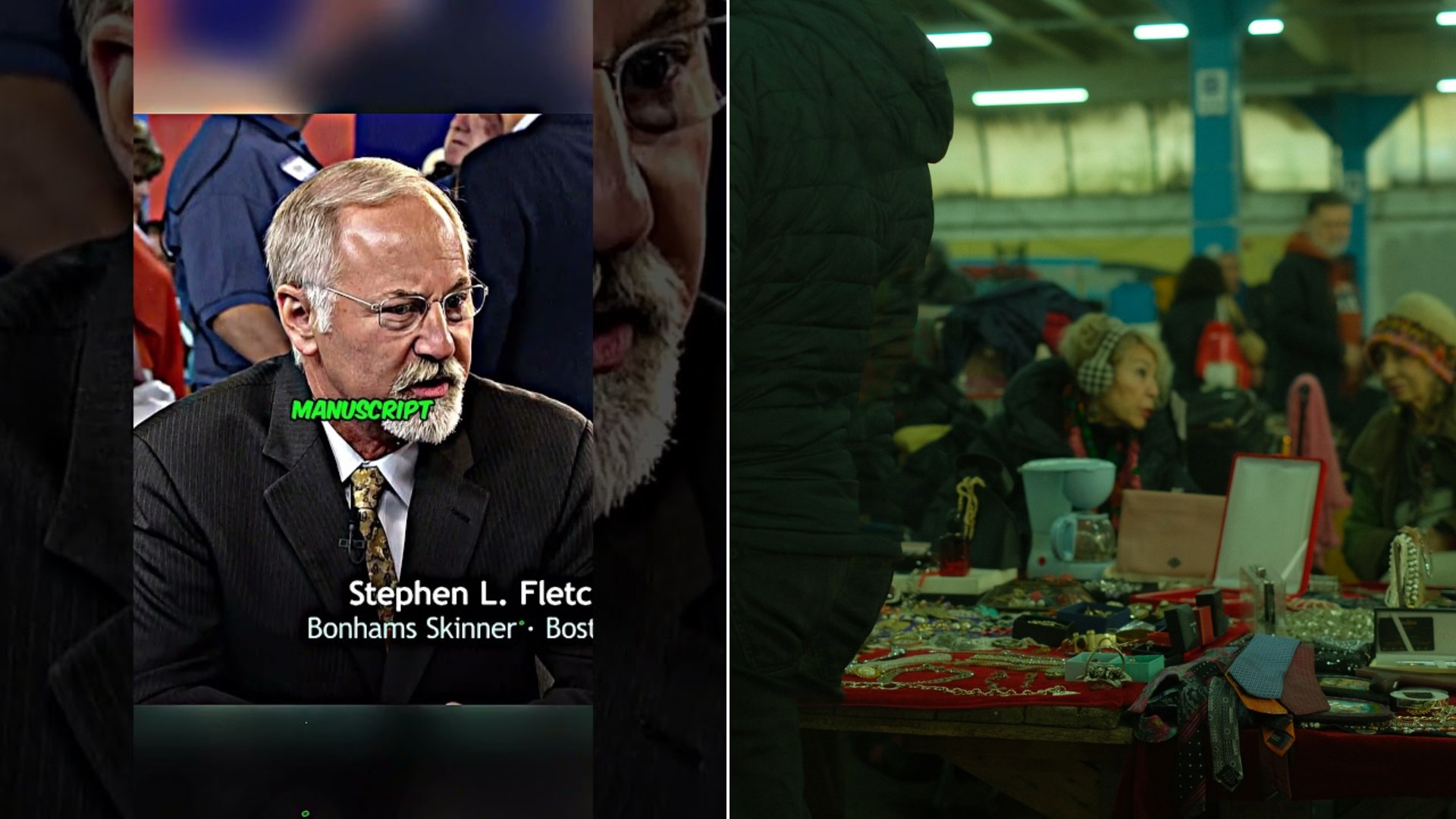
Her parents had picked it up at a flea market in the Quakertown area for almost nothing, and the family kept it all these years. No one knew exactly what it was, only that it was pretty and old. The expert took one look and recognized it right away.
It turned out to be a lovely piece with roots in Germany, an example of Germanic illustrated manuscripts. What makes this one especially interesting, he explained, is the full-size profile portrait of a man. That feature sets it apart from many of the others. His best guess was that it had been made by a man who earned his living creating these for families.
He also noted its condition is good, with only some slight discoloration. The frame is not original. And near the top, someone had written a name very early in the piece’s life, which the expert said was a great clue: it would be worth doing some research to figure out who that was and what the name meant.
Then came the number. She had guessed $1,500. He put the piece in the area of $8,000 to $12,000. That is more than five times her guess on the low end, from something her family paid $50 for and likely thought of as a nice old decoration. You can watch the original appraisal here for the full conversation.
What Is an Illustrated Manuscript Like This?
The expert described the piece as part of a Germanic tradition of illustrated manuscripts, and he suggested it was likely made by someone who did this kind of work for families. In general, hand-lettered and hand-decorated documents of this type were made to mark important family events and to keep a record. They often combine decorative borders, lettering and illustrations, and each one is a little different because it was made by hand.
That is part of what makes them collectible. Each piece is one of a kind, tied to a particular place and time, and the best ones include something unusual. In this case, it was the portrait of a man that caught the expert’s eye. When one example stands out from others of its type, collectors take notice.
What to Look for at Flea Markets
Stories like this are the reason so many of us love flea markets. Nobody can promise a $50 find will turn into $10,000, but there are things you can do to improve your odds of spotting something special:
- Look at the handwork. If lettering or illustration appears to be done by hand, rather than printed, take a closer look. Handmade pieces are often more valuable than reproductions.
- Look for names and dates. A written name, an inscription or a date gives a piece a story. The expert here specifically pointed out a name written near the top as something worth researching.
- Do not judge by the frame. The frame on this piece was not original, and it still turned out to be valuable. The frame is not what counts. The artwork inside matters more.
- Check the condition, but not too harshly. Slight discoloration is common on old paper and does not necessarily ruin a piece. Tears, water damage and heavy stains are bigger problems.
- Ask questions. Vendors do not always know what they have. If something catches your eye, ask where it came from. The answer sometimes leads somewhere interesting.
If You Think You Have Something
If a piece in your own home might be more than a decoration, resist the urge to clean it, repair it or take it out of its frame. Paper is fragile, and well-meaning fixes can reduce value. Instead, take clear photos, write down anything you know about where it came from, and ask a qualified appraiser who specializes in the type of item you have. Many auction houses also offer free or low-cost preliminary opinions from photos.
Also keep in mind that an expert’s valuation is a range for a reason. The final price at auction depends on who is bidding and how much they want it, so $8,000 to $12,000 is a best estimate, not a promise.
The Fun of Not Knowing
The best part of this story is that it started with a family that simply liked something enough to spend $50 on it. They had no way of knowing. So the next time you are walking the aisles of a flea market, take a second look at that old framed piece in the corner. You might be holding a lot more than $50 worth of history.
More Stories You May Like
- Shopper Finds A Tote Of Nearly Complete China At Goodwill For $29.99, Unboxes Eight Place Settings On Camera, And Calls It Her Favorite Thrift Find To Date
- Thrift Shop Shares The Magnet And Tap Tests For Spotting Real Silver And Crystal Before You Buy, And Anyone Who Has Overpaid For Glassware Will Want To Know
- Couple Bought A House Where The Owners Left Everything Behind And Found An 1870 Bible And A Book Of Poems Written By A Great Grandmother

Leave a Reply