

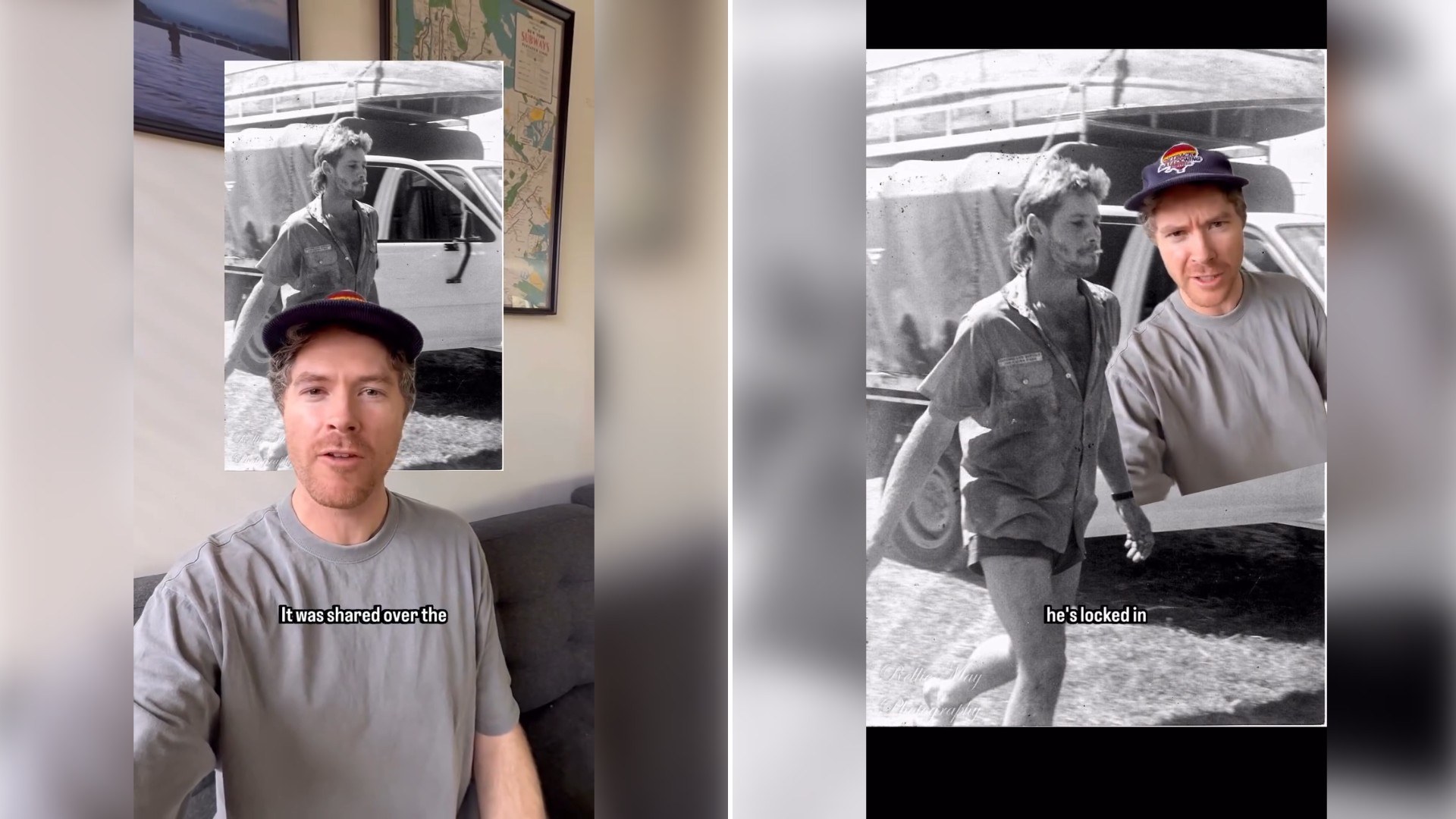
Some tributes work best as a deep dive into a single image rather than a full biography, and that is the approach @zachmander takes with a green-screen breakdown of a vintage black-and-white photograph of Steve Irwin from 1989. Rather than narrating the conservationist’s life story, the creator zooms in on one specific photo and walks through exactly what makes it, in his view, one of the greatest images ever taken of the man.
The breakdown moves through small details most viewers would scroll past without a second look: Irwin’s posture, his expression, the setting he is photographed in. Laid out one at a time, those details build into a case for why this particular photograph captures something essential about him, years before the crocodile-wrangling persona that would later make him a global television star.
Photographs from before a public figure’s fame carry a specific kind of appeal to fans and collectors alike, offering a version of the person unfiltered by the image they would later become known for. A 1989 photo of Irwin predates the Crocodile Hunter brand entirely, making it less a piece of merchandise and more a genuine historical artifact, the kind of image collectors of vintage entertainment photography actively seek out precisely because it shows a public figure before the world knew who they would become.
Close-reading a single photograph this way is also its own small tradition within fan communities and nostalgia content, standing in contrast to the clip-compilation format that dominates so much retrospective content online. Slowing down to examine one still image allows for a kind of attention that a moving highlight reel simply cannot offer, and it is exactly that patience that turns an old photo into something worth genuinely appreciating rather than just scrolling past.
There is something particularly fitting about approaching Irwin this way, given how much of his own public persona was built around paying close attention to small details other people overlooked entirely, whether that meant noticing the subtle body language of an animal most viewers would consider simply dangerous or reading a habitat’s smallest cues before anyone else in the room registered them. A video that slows down to examine every detail of a single photograph of him applies that same patient, observational instinct back onto the man himself.
The green-screen presentation format itself is worth noting too, since it has become a recognizable visual shorthand across nostalgia and commentary content more broadly, letting a creator stand alongside a blown-up version of the reference image rather than simply narrating over it in a small inset. That choice gives the photograph equal visual weight with the person discussing it, reinforcing the sense that the image itself is the real subject of the video rather than merely supporting material for a broader point.
Pre-fame photography of beloved public figures has become an increasingly appreciated category within collecting circles generally, not just for figures from entertainment but across sports, music, and public life. There is a particular fascination in seeing someone before the persona solidified, before the specific mannerisms and catchphrases that would eventually define them in the public imagination, and a photograph like this one offers exactly that kind of unfiltered glimpse.
It is also worth considering how differently a photograph like this lands depending on when a viewer first encountered Irwin’s work. For those who grew up watching him on television, an early photograph like this one adds a layer of depth to an already familiar figure, filling in a chapter of his life that television never covered. For younger viewers discovering him primarily through clips and tributes online, a photo like this one offers a starting point into a fuller, more human picture of who he was before the cameras that made him famous ever started rolling.
For fans of Irwin or of vintage celebrity photography more broadly, videos like this one are a good reminder that a single, well-chosen image can carry as much weight as an entire retrospective, provided someone takes the time to actually look closely enough to explain why.
There is also something worth saying about the specific medium of black-and-white photography itself in a video like this one. Color naturally draws the eye toward the most immediately striking elements of an image, but black and white strips that away, forcing attention onto composition, expression, and posture instead. For a breakdown built entirely around noticing small, easily missed details, that stripped-down visual format is doing quiet work of its own, making the exact kind of close observation the video is built around easier for the audience to follow along with in real time.
Fan-made tributes built around a single archival image have also become a recognizable way for online communities to keep a public figure’s memory present without leaning on the same handful of iconic clips that tend to circulate endlessly in more conventional retrospectives. Digging up a comparatively obscure photograph, one most casual fans have likely never seen before, and giving it this kind of careful attention offers something genuinely fresh even to viewers who feel they already know every angle of a well-loved public figure’s story.
Long after the specific details of this breakdown fade from memory, the photograph itself will still be doing the same quiet work it always has: showing a version of a beloved figure that only close, patient attention can really reveal.

Leave a Reply