

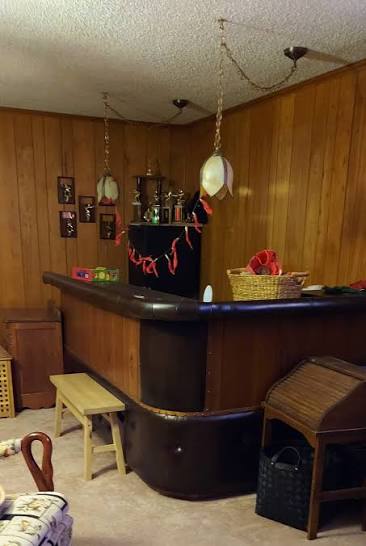
National Association of Home Builders data shows demand for wet bars roughly doubled between 2001 and 2012, reaching about 4 percent of new home requests — a real, measurable uptick for a feature most design writers had already declared dead. The basement wet bar, it turns out, never actually left. It just went quiet for a couple of decades.
Built by Hand in the Postwar Suburbs
The home bar boom traces back to returning World War II veterans settling into new suburban houses with no nearby restaurants or bars to socialize in. According to historical reporting on the trend, suburban homeowners in the 1950s took entertaining into their own hands, and basements became the default location because they offered enclosed, private space that wouldn’t disrupt the rest of the house. Men built bars themselves using instructions pulled from Popular Mechanics, framed in wood paneling, and stocked according to guides like Mr. Boston’s Official Bartender’s Guide, which walked amateur hosts through building a proper Old Fashioned or martini. This wasn’t a luxury purchase — it was a weekend carpentry project married to a crash course in cocktail-making.

From Wood Paneling to Hidden Globe Bars
By the 1960s and into the 1970s, home bar design had diversified well beyond simple wood-paneled counters. Styles ranged from tiki and nautical themes to rustic and art-deco looks, built from materials as varied as Formica, bamboo, chrome, glass brick, and vinyl upholstery. Some homeowners went further, installing bars concealed inside furniture that looked like something else entirely — a television cabinet that opened to reveal bottles and glassware, or a spinning globe that split apart into a miniature bar. The basic formula stayed consistent across styles: a dedicated space for spirits, mixers, and specific glassware for each drink, plus stools for guests to gather around while the host worked.
The Nightlife Boom That Emptied the Basement
The home bar’s decline in the 1980s wasn’t really about the feature itself falling out of style so much as changing habits around where people wanted to drink. As nightlife venues, bars, and restaurants multiplied and younger adults increasingly preferred going out over hosting, the basement bar started collecting dust rather than guests. Wood paneling and glass brick came to read as dated rather than sophisticated, and by the 1990s a home wet bar was more likely to be something a buyer wanted ripped out than installed.
Now It’s Leaving the Basement Entirely
Recent renovation data suggests the wet bar’s comeback isn’t confined to finished basements anymore. Research on new-construction preferences shows wet bars are considered essential or desirable by roughly 30 percent of buyers shopping homes priced between $250,000 and $500,000, and by 42 percent of buyers in homes priced above $500,000 — figures reported through builder-industry coverage of current wet bar demand. That same reporting notes a real shift in placement: rather than tucking bars into finished basements, contractors are increasingly building them into great rooms, dining areas, and spaces adjacent to living rooms, positioned as visible entertaining features rather than hidden ones. Houzz’s own emerging trends research from 2025 backs this up from a separate angle, identifying customizable beverage stations — everything from bar carts to dedicated wine and beer refrigeration setups — as a top design search trend as more homeowners lean into entertaining at home rather than heading out.
Same Impulse, Better Materials
What’s changed most isn’t the desire for a home bar — it’s the execution. Today’s version swaps Formica and wood paneling for quartz counters and integrated refrigeration, and it’s built to look like it was always part of the room rather than a separate retreat. But the underlying motivation is identical to what drove suburban dads to build bars into their basements seventy years ago: a want for a dedicated space to host people without leaving the house. The wet bar didn’t die in the 1980s so much as go dormant, waiting for craft cocktail culture and a renewed appetite for at-home entertaining to bring it back upstairs.

Leave a Reply