

Estate sale crews find all kinds of things tucked in pantries and basements, but this one came with a smell. The team behind @andersonfamestatesales pulled out a can of sliced bacon from 1995 and, at a follower’s request, decided to open it on camera. It took some work to get the lid off. Once they did, the verdict came fast. “It smelt like dog food,” their caption says.
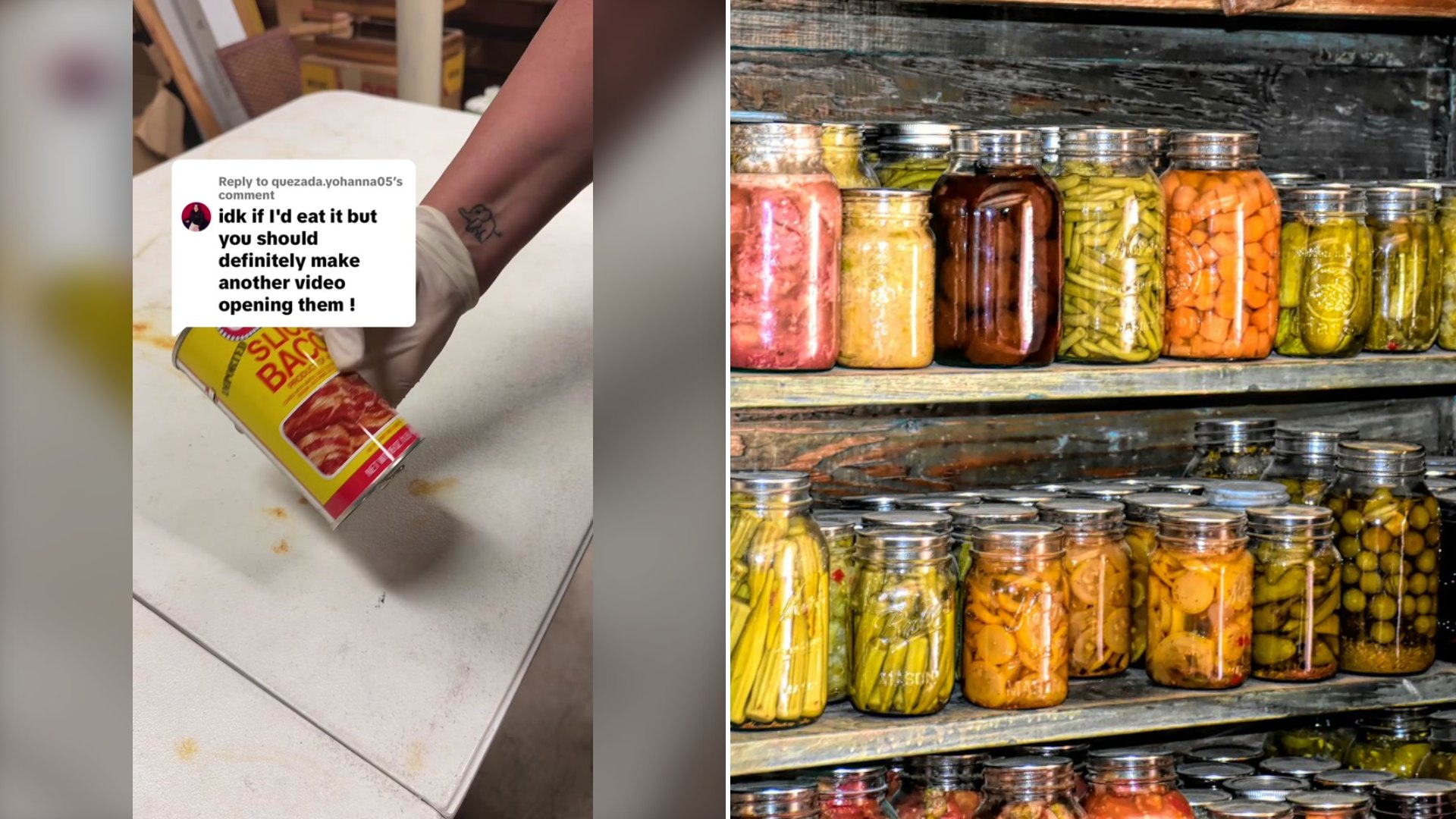
“Okay, so here we are, gonna open the ’95 sliced bacon,” the video begins. Right away, there is a problem. They are not sure how the can is supposed to open, and they try one approach, then another, then a third, before finally rolling the lid back.
The first whiff is enough. “Does that smell?” one of them asks. “It’s like dog.” Inside, the bacon is wrapped up in layers, and the whole thing is not exactly appetizing. Partway through, one of them stops to note a slight problem with the protective gear. “I have to wash my hands because I have a hole in the glove.”
Still, they give it a fair look. “Honestly, it doesn’t look…” one of them starts, before trailing off. The video wraps with a simple reminder of what they just opened: “This is canned bacon from ’95.”
A Prepper Find With a Sense of Humor
The caption leans into the absurdity. “Canned Bacon from 1995? 1895?” they write. They tagged it with doomsday preppers, a nod to the kind of household that stocks shelf-stable meat for emergencies, and they joke that they might save a few cans so a brave buyer can “cook it up and let us know how it taste.”
Canned bacon is a real product, sold for camping, emergencies and long-term food storage, and it is the kind of thing that often turns up in the back of a pantry decades after someone bought it. For estate sale companies, finds like this are part of the job. Sometimes the most memorable item in a house is not an antique at all, but a can nobody ever got around to opening.
@andersonfamestatesales
How Long Is Canned Food Really Good For
If you are cleaning out your own pantry, or a loved one’s, it helps to know what the experts say. The U.S. Department of Agriculture advises that high-acid canned foods such as tomatoes and fruit are best used within 12 to 18 months, and low-acid canned foods such as meat, poultry, fish and most vegetables within two to five years, for best quality.
The USDA also notes that commercially canned food kept in good condition, in a cool, dry place, can remain safe longer than that, but the taste, texture and nutrition decline over time. A can that is three decades old is well past the point where anyone should consider eating it.
Warning Signs to Throw a Can Away
Some cans should go straight in the trash, no matter the date. Toss any can that is:
Bulging or swollen at the top or bottom.
Leaking or sticky on the outside.
Deeply dented, especially along the seams or rim.
Rusted in a way that does not wipe off.
Spurting liquid or foam when opened, or giving off a bad smell.
These can be signs of spoilage, including the bacteria that cause botulism, a rare but serious illness. The toxin cannot always be seen or smelled, so never taste food from a questionable can to check it. Symptoms can include blurred or double vision, drooping eyelids, slurred speech, trouble swallowing and muscle weakness. Anyone who develops them after eating canned food needs emergency medical care right away.
Be especially careful with home-canned jars found in a basement or cellar. Improperly home-canned low-acid foods, such as green beans, corn and meats, are among the most common sources of botulism in the United States. If you do not know who canned it, when, or how, throw it out.
How to Safely Get Rid of Old Canned Food
If you find old cans while clearing out a house, do not open them just to see what is inside. Unopened cans that look damaged can be placed in a sealed plastic bag, then a second bag, and put in a trash can that children and pets cannot reach.
If a can leaks or you have already opened one, wear disposable gloves and avoid splashing the contents. Health officials recommend cleaning any spills with a solution of one-quarter cup of household bleach to two cups of water, letting it sit for several minutes, then wiping it up and washing your hands well with soap and water. Toss the gloves and any paper towels in the same sealed bags.
Before you toss everything, glance at the labels. Empty vintage tins and cans with old graphics, especially from well-known brands, are sometimes collected for display. If a can is still sealed, though, skip keeping it as decor. An old can that bulges or leaks on a shelf later is a mess nobody wants.
When stocking your own emergency pantry, write the purchase date on each can with a marker and rotate them. Put new cans in the back and use the older ones first. That way your emergency supply stays fresh, and nobody ends up opening your bacon on camera thirty years from now.
More From Vinyl and Velvet
- Woman Goes to Her First Ever Estate Sale Where Everything Was Two Dollars a Piece and Leaves With a Haul of Bling Bags and Shoes for Around Six Hundred Dollars Total
- Woman Waits Two Hours in Line for a Highland Park Estate Sale Billed as a Billionaire Sale Where Everything Was $25 and Shoppers Fought and Stole From Piles Before She Walked Out With a Giorgio Armani Silk Scarf
- Shopper Finds an Estate Sale Advertised as a Garage Sale With Handmade Quilts a Mirror and a Wooden Bread Box and Negotiates the Whole Haul Down to Two Hundred Fifty Dollars

Leave a Reply