

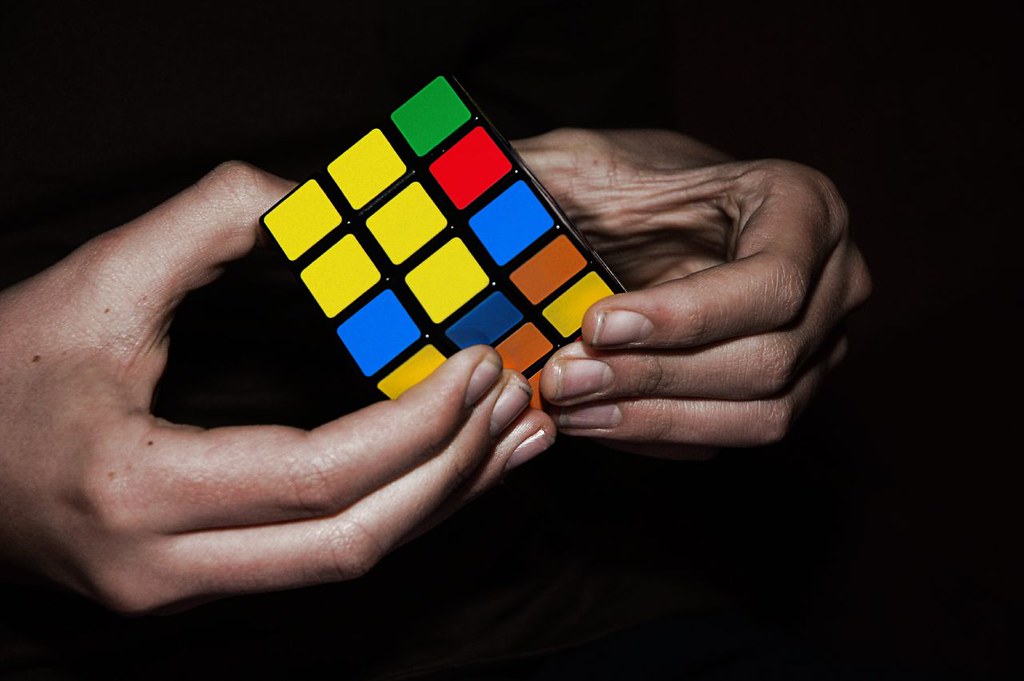
Erno Rubik did not set out to invent one of the best selling toys in history. He was a professor of architecture and design in Budapest in the spring of 1974, looking for a better way to help his students understand how three dimensional objects move in relation to each other, and what he ended up building on his own worktable out of wooden blocks, rubber bands, glue, and paper clips turned into an object that would eventually occupy toy shelves in nearly every country on earth.
Rubik was not trying to design a puzzle. According to Smithsonian Magazine’s history of the cube, he wanted a physical model that could demonstrate structural movement, something his architecture students could hold and manipulate to grasp concepts that were hard to explain on a chalkboard. The rotating mechanism he engineered to let each face twist independently, without the whole structure falling apart, was the real breakthrough. The scrambled colors were almost a side effect of solving that mechanical problem.
The Inventor Who Couldn’t Solve His Own Puzzle
Here is the detail that tends to surprise people most. Once Rubik had a working model, he scrambled it to test the mechanism, and then realized he had no idea how to get it back to its original state. As CBC Radio has reported, it took Rubik roughly a month of trial and error to work his way back to a fully solved cube, largely because he had no background in the kind of combinatorial math the puzzle actually required. He has since described the experience of finally cracking it as something close to relief mixed with disbelief that he had built something even he struggled to defeat.
From Classroom Model to Global Phenomenon
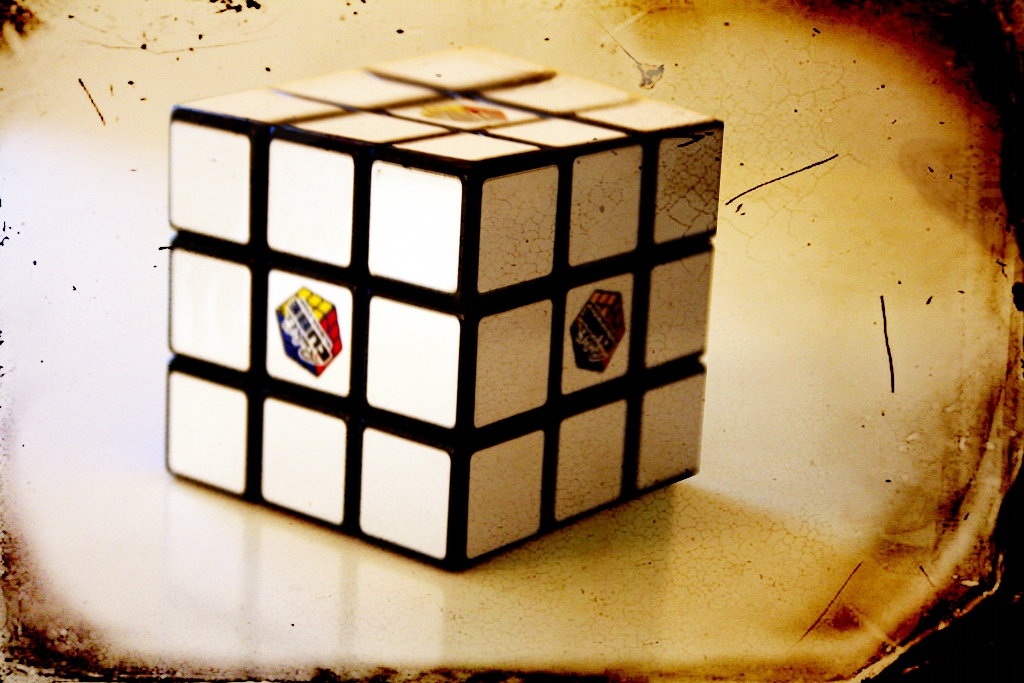
What started as a teaching aid eventually made its way out of Rubik’s classroom and into toy stores, first in Hungary and then internationally after Ideal Toy picked it up and introduced it at the New York toy fair in 1980. It caught on almost immediately, landing on magazine covers, showing up in television commercials, and even inspiring an entire wave of solution guides that dominated bestseller lists in the early 1980s. The New York Times famously wrote the cube off as a fading fad by 1982, only for interest to keep resurging in wave after wave for decades afterward.
A Puzzle With Nearly Unlimited Configurations
Part of what has kept the cube relevant for fifty years is the sheer scale of what it actually is. A standard three by three cube has more than 43 quintillion possible configurations, yet exactly one of them counts as solved. That combination of simplicity on the outside and near infinite complexity on the inside is what turned it into a genuine tool for mathematicians and educators studying group theory, alongside its life as a toy sitting in a kid’s bedroom.
Why It Became a Defining Symbol of the Era
For anyone who grew up in the early eighties, the cube is inseparable from the decade itself, sitting alongside home video game consoles and boomboxes as one of the objects most associated with the period. Its bright primary colors and simple cube shape made it instantly recognizable even to people who had never tried to solve one, and that visual simplicity is part of why it still shows up constantly in retro themed design, merchandise, and pop culture references today.
Still Selling Decades Later
According to Forbes, roughly 450 million Rubik’s Cubes have sold worldwide since that 1980 debut, a number that keeps climbing thanks to a competitive speedcubing scene that did not even exist when Rubik built his first prototype. Current cube solvers now chase fractions of a second in official competitions, an entire subculture built on top of a toy that its own inventor once needed a full month just to solve a single time.
There is something fitting about the fact that the person who created one of the most iconic puzzles of the twentieth century was, for a little while, its least successful solver. Rubik built something to teach a concept, then had to teach himself how his own invention actually worked, and that struggle turned out to be the same thing that has hooked millions of people ever since. Half a century later, the cube still sits on desks and shelves everywhere, quietly daring anyone who picks it up to do better than its own inventor’s first month.

Leave a Reply