

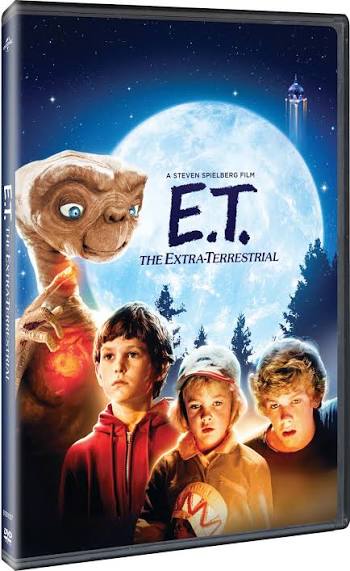
“E.T. the Extra-Terrestrial” opened on June 11, 1982, in just 1,101 theaters and pulled in $11.9 million its first weekend — a solid but unremarkable start for a Steven Spielberg movie about a stranded alien and the boy who hides him in a closet.
Then something unusual happened: instead of the typical second-weekend drop-off, the film’s gross climbed six percent, and climbed again the week after that, according to No Film School’s account of the film’s theatrical run. By the time it finished, “E.T.” had become the highest-grossing film ever made, on a production budget of roughly $10.5 million, a return so lopsided it remains one of the most efficient blockbusters in Hollywood history.
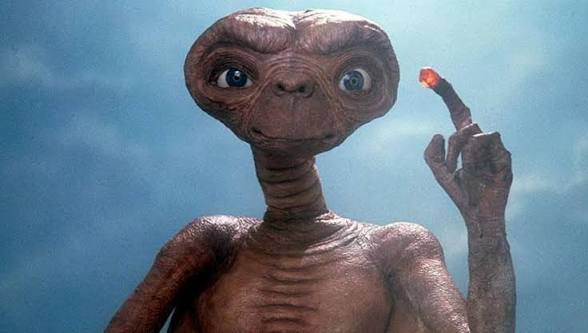
A Slow Build That Outran Everyone
Wide releases weren’t standard practice yet in 1982; a hit built its audience over months through steady word of mouth rather than a single opening-weekend blitz across thousands of screens. “E.T.” became the defining example of how that older model could snowball. No Film School’s reporting notes the film stayed in the theatrical top ten and grossed over $1 million per weekend for 44 consecutive weekends — spanning from its June release through the following spring, a run that outlasted nearly every other film of its era and, according to the same reporting, has never been matched since, largely because modern distribution windows are simply too short to allow it.
Passing Star Wars
Somewhere in that extended run, “E.T.” pulled ahead of “Star Wars” to claim the title of highest-grossing film of all time, a milestone No Film School’s account of the record confirms happened during the film’s original theatrical release rather than through any later re-release padding its total. That made Spielberg, at 35, the director of both the number two and the new number one movies in box-office history simultaneously — “Jaws” still sat near the top of the all-time list from 1975, and now “E.T.” had leapfrogged it and everything else. Final tallies compiled by the film reference site FilmSite put the movie’s lifetime gross at $439.4 million domestically and $797.3 million worldwide across its theatrical releases, staggering figures for a film that cost roughly as much to make as a single “Star Wars” prequel would decades later spend on marketing alone.
A Decade at the Top
The record didn’t move for years. “E.T.” held the highest-grossing-film-of-all-time title for eleven years, according to a Collider retrospective on the film’s box-office run, a reign that only ended when Spielberg unseated his own movie with “Jurassic Park” in 1993 — an unusual case of a filmmaker breaking his own box-office record more than a decade after setting it, and doing so with dinosaurs instead of an alien botanist. That kind of directorial rematch with oneself is rare enough that it’s happened only a handful of times in box-office history, and Spielberg’s name shows up in more than one of those instances.
Why the Run Still Reads as Improbable
What’s easy to lose in the raw numbers is how unlikely the setup was. Universal Pictures greenlit a modestly budgeted, dialogue-light film centered on a child actor and a rubber-and-cable puppet, competing that same summer against effects-driven heavyweights like “Poltergeist” and “Blade Runner” — a crowded field where a quiet story about loneliness and friendship had no obvious commercial edge. Spielberg himself had just come off “Raiders of the Lost Ark,” an action blockbuster, and pivoted to a film built almost entirely on restraint, trading chase sequences for long stretches without dialogue and an ending that plays for tears rather than triumph. Audiences kept returning anyway, in numbers no one at Universal had projected, week after week, for the better part of a year.
Universal’s own marketing had leaned on mystery rather than spectacle, keeping the title character mostly hidden from early trailers and posters, a strategy that ran counter to how effects-heavy summer movies were typically sold and that made the film’s word-of-mouth-driven growth pattern even more unusual for the period. That approach meant the film had to earn repeat viewings and personal recommendations the slow way, one theater and one weekend at a time, rather than front-loading its audience through saturation advertising the way a franchise tentpole would today — which makes the 44-week run less a fluke of timing and more a demonstration of how far sustained word of mouth alone could carry a film before modern release patterns made that kind of slow-building phenomenon effectively impossible to repeat.
Box-office records tend to fall to bigger budgets and franchises built for scale — which is exactly what makes “E.T.” the outlier worth remembering: a small, strange, deeply sincere movie that out-earned the entire history of cinema before it, on the strength of nothing but word of mouth and a boy’s bicycle silhouetted against the moon.

Leave a Reply