

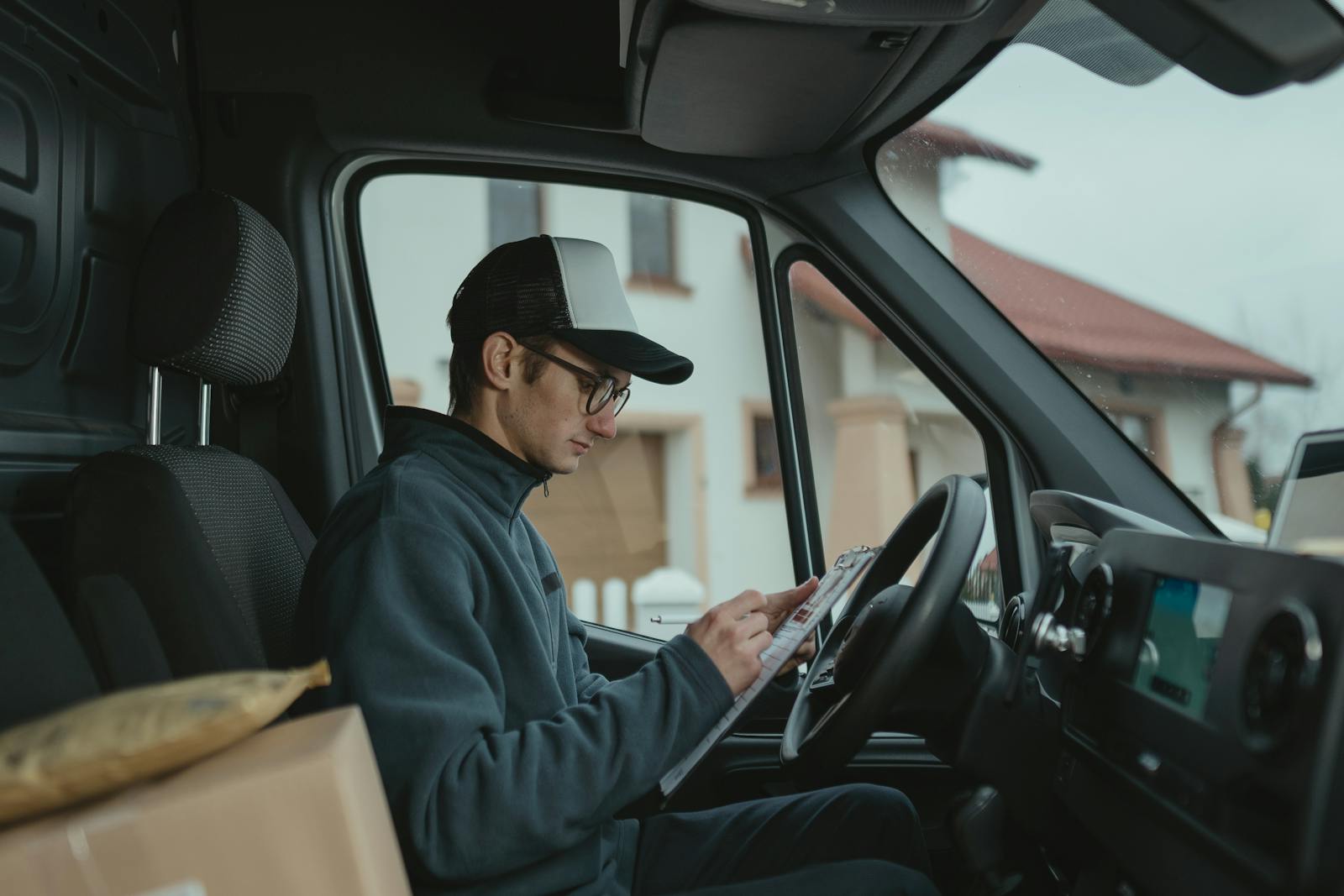
A delivery driver for a construction company parked in the only driving lane on a busy city street last week, blocking traffic during peak hours. This unyielding decision quickly caused a jam, stranding bus passengers and frustrated drivers alike. Tensions mounted as bus passengers and nearby residents yelled at the driver, imploring him to move.
The driver, however, was determined to make his delivery. He shouted back, insisting that he was allowed to park there for his work. This determination to prioritize a delivery over the flow of traffic sparked an unexpected act of retribution from a frustrated bus passenger.
The passenger, who witnessed the chaos from inside the bus, decided to take matters into his own hands. Instead of simply reporting the driver’s behavior to the company’s headquarters, he concocted a scheme to give the driver a taste of his own medicine. He called the company’s headquarters, adopting the voice of a kindly old man, and falsely claimed that he found a significant amount of cash that the driver had supposedly dropped during his delivery.
In this ruse, the passenger provided the company with the location, date, time, and truck ID, playing the role of Good Samaritan and sparking the interest of the delivery driver. The driver, believing he had lost $1,800, expressed his gratitude and agreed to meet the passenger for the supposed return of the cash. The meeting was set to take place at a local recreation center, just a short distance away.
Once the driver arrived at the designated location, the passenger texted him, claiming he needed a few more moments to pick up a prescription. Eager and perhaps a bit anxious about his supposed windfall, the driver stepped out of his vehicle and started to pass the time, smoking outside while waiting for the call that would supposedly change his day.
Twenty-five minutes passed, during which the passenger sent a few apologetic texts but kept the driver waiting. At this point, the driver began growing restless, moving back and forth between his vehicle and the rec center entrance. The passenger, observing all of this from a distance, knew he had to keep the ruse alive.
As the minutes ticked by, the driver’s patience wore thin. After several calls and unanswered texts, he became increasingly agitated. The passenger, now ready to reveal the truth, finally decided to call the driver back using his real voice. He told the driver, “Sorry man, I know waiting sucks. Remember that delivery you made on _____ Street? I was on the bus that had to wait for you. Now, you’ve waited for money that doesn’t exist, and by the way, I’m watching you from my house right now.”
The driver, caught completely off guard, turned bright red with embarrassment and anger. The passenger could see the frustration on his face as he realized he had been played. The aftermath was a flurry of angry calls and texts directed at the passenger, although they all went to a burner phone set up for precisely this purpose. The driver’s threats, however, did little to unsettle the passenger, who had simply wanted to teach the driver a lesson about blocking the street.
In the following days, the passenger continued to reach out to the driver, calling from different numbers just to remind him of his prior actions. “Hope you didn’t need that $,” he would message, further adding to the driver’s growing frustration. The entire ordeal was a clear demonstration of how a single selfish act can ripple through the lives of others, often leading to unforeseen consequences.
Onlookers have had mixed reactions to the passenger’s revenge. One person told him this was a creative way to make a point, while another called the whole thing immature. The range of responses highlights how people view accountability and justice differently, especially in the context of road rage and public nuisance.
For the passenger, the thrill of the scheme and the driver’s reaction provided a form of satisfaction. Yet, it left him contemplating whether he had gone too far or if this was just a necessary reminder to the driver not to block city streets. Now, he faces a choice: should he report the driver’s incivility to the authorities, or let this lesson stand on its own?
More from Vinyl and Velvet:

Leave a Reply