

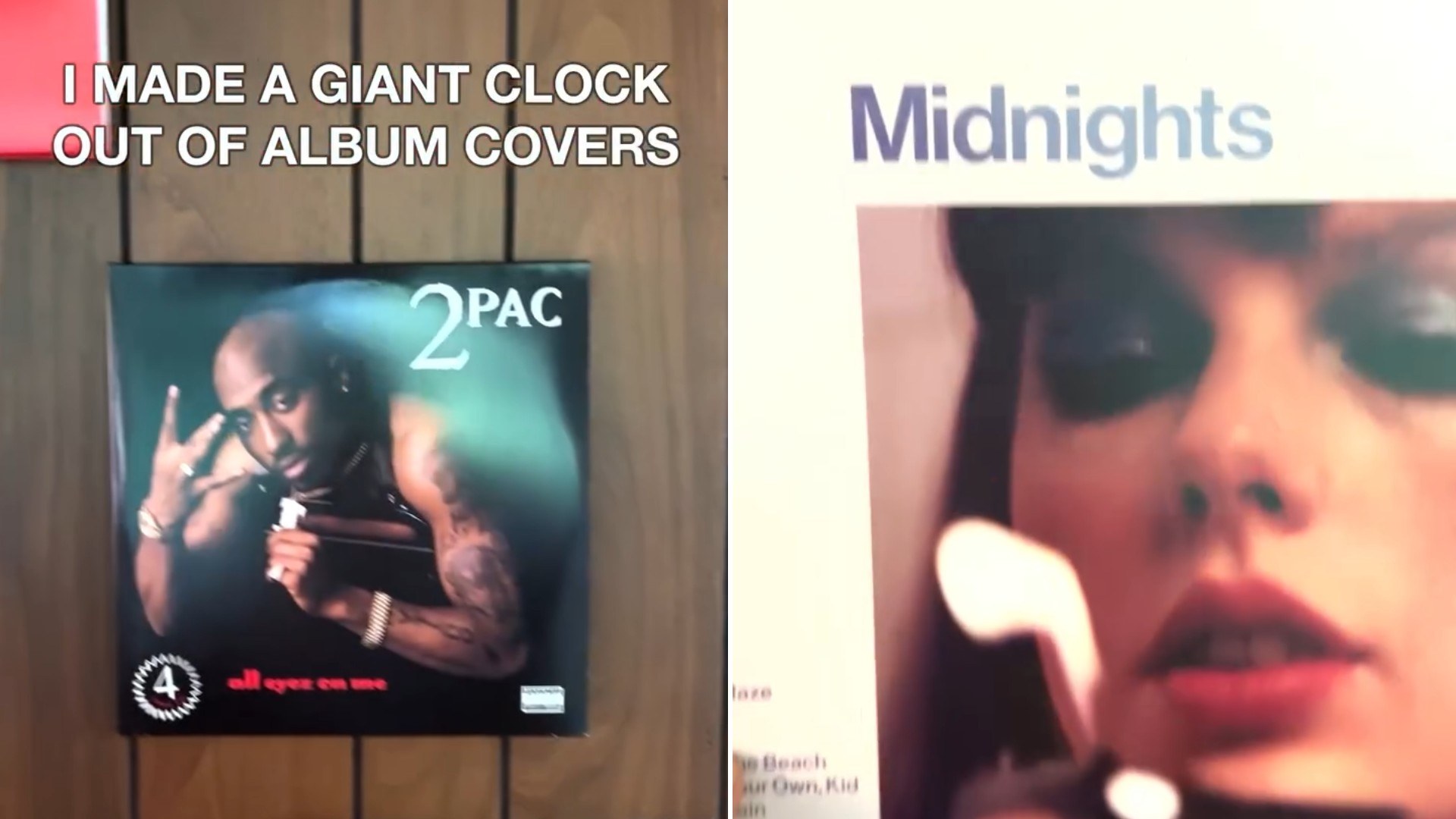
Most people who grow up collecting vinyl end up with the same question eventually: what do you actually do with a collection once it’s grown too large to just keep in milk crates on the floor? Creator @rudy_willingham answered that question in dramatic fashion, transforming his personal record collection into a fully functional piece of wall art built around a working clock. In a fast-paced montage, he drills a clock mechanism directly into a wood-paneled wall and arranges his own album covers around it in place of numbers, finishing with a genuinely functioning timepiece made entirely out of the records he’s spent years collecting.
The finished result does double duty in a way that a lot of DIY projects strive for but rarely pull off convincingly: it’s genuinely useful, telling actual time, while also serving as a permanent, striking display for a music collection that might otherwise stay boxed away or stacked in crates, rarely seen or appreciated on a daily basis. Instead of choosing between function and display, he built something that delivers both at once, and the reveal of the finished clock working properly against a backdrop of album covers is exactly the kind of payoff that makes a fast-cut montage video worth watching all the way through.
View this post on Instagram
Record collecting inherently comes with a display problem that other collectible hobbies don’t necessarily share in the same way. Vinyl is bulky, and a genuinely serious collection can take up an enormous amount of physical space, especially once it grows beyond a shelf or two. Collectors are constantly experimenting with new ways to store and display their records that go beyond simply stacking them upright in a crate, whether that means custom shelving, framed album art, or, in this case, an entirely functional repurposing of the album covers themselves as design elements built directly into the wall.
Choosing to arrange the albums around the clock face in place of numbers is a particularly clever design decision, because it forces a genuinely personal curation process. A clock only needs twelve positions marked, which means selecting which twelve albums, out of what’s presumably a much larger collection, get the honor of being permanently mounted and visible every single day. That’s not a small decision for a serious collector. It essentially forces someone to identify their most personally significant records, the ones meaningful enough to display prominently and permanently rather than keep filed away with the rest of the collection where they’re only pulled out occasionally.
That selection process is exactly what the closing question in the video plays on, asking fans which of their own favorite albums he might have left out. It’s a clever way to invite engagement, but it also gets at something genuinely interesting about music collecting and personal identity. Every collector has favorites that didn’t quite make whatever cut they set for themselves, records that matter enormously to them personally but that, for whatever reason, didn’t end up in the final twelve. Asking the audience to weigh in on those choices turns a personal design decision into a broader conversation about taste, nostalgia, and what earns a permanent spot on display versus what stays tucked away.
For anyone with a growing collection of records, books, or any other kind of physical media that’s started to overflow its original storage solution, there’s a genuinely useful lesson embedded in a project like this one. Display doesn’t have to mean simply lining items up on a shelf in the most obvious, straightforward way. With a bit of creativity, a collection can be turned into a functional piece of the home itself, something that serves a practical purpose while also keeping the collection visible and appreciated daily rather than hidden away in storage. That kind of integration tends to deepen someone’s relationship with their own collection, since it stays part of daily life rather than becoming something only revisited occasionally.
There’s also a broader point here about how physical collections, especially ones built up over years, function as a kind of visual autobiography when displayed thoughtfully. A wall covered in someone’s chosen albums tells a story about their taste, their history, and the specific music that shaped them, in a way that a digital playlist simply can’t replicate visually. Projects like this one are a reminder that the objects people collect are rarely just about the items themselves; they’re about how those items get woven into daily life and shared space, turning a personal passion into something visible, functional, and worth talking about every time someone walks past the wall and checks the time.
There’s also a practical dimension worth acknowledging for anyone tempted to try something similar. Mounting albums permanently, drilling directly into a wall, and building around a functioning clock mechanism all involve a level of commitment a simpler shelf display doesn’t require. Once the records are up, they’re up, which raises the stakes on the initial selection process in a way that a more easily rearranged shelf never would. That permanence is part of what makes the finished piece feel special, but it also means the planning that goes into choosing which twelve albums make the cut matters far more than it might for a display that can be reshuffled on a whim.
For anyone with a growing collection and a bit of wall space to spare, projects like this one are worth studying not just for the aesthetic payoff but for the underlying idea: sometimes the best way to actually enjoy a collection is to stop treating it as something to store and start treating it as something to build with.

Leave a Reply