

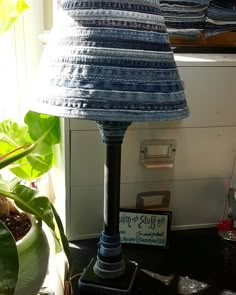
A nine-inch lamp shade cut from actual dark blue denim is currently holding a 4.8-star average across 26 customer reviews on Wayfair, marked down to $40.15 from its original $55 price tag. It sits in the company’s Charlton Home lighting line next to a matching denim bell shade, both built over a styrene backing board designed to cast what the product description calls “a warm, natural, and smooth light.” Two years ago, this same fabric was mostly showing up on Etsy as throw pillows and quilts. Now it has migrated onto lighting fixtures, and shoppers are apparently buying it faster than retailers expected.
A Trend Etsy Called Early
The groundwork for denim’s move into home decor was laid in 2024, when Etsy’s annual trend report singled out “denim decor” as a category to watch, describing the fabric as “your approachable new neutral” and noting the aesthetic drew on a laid-back, lived-in look inspired by the 1970s. At the time, the platform already hosted more than 16,000 denim home-decor listings spanning throw pillows, quilts, placemats, custom wall art, and upholstered furniture. Etsy predicted the category would keep expanding rather than fade after a single season, and lighting has turned out to be one of the places that growth landed.
What’s Actually on the Shelf
Mainstream retailers have since built denim into standing product lines rather than treating it as a one-off novelty. Wayfair’s Charlton Home Denim Fabric Empire Lamp Shade comes in a nine-inch, spider-mount version sized for a standard table lamp, and the company also sells a smaller five-inch clip-on bell shade in the same fabric for sconces and buffet lamps. Both are imported, both are priced well under $60, and both racked up dozens of customer reviews rather than sitting as a design-blog curiosity nobody actually bought. That kind of unglamorous retail traction, more than any single influencer post, is usually what separates a real trend from a passing aesthetic.
Why Denim Actually Works as a Shade
There’s a practical reason a fabric best known for withstanding manual labor also happens to flatter a 60-watt bulb. Lighting designers have made this case about textile shades for years; Kate Figler, a designer quoted in coverage of the broader fabric-lampshade trend, has explained that materials like linen, jute, and cotton “are great for this trend as they diffuse light well, creating a warm and inviting atmosphere.” Denim is, at its core, a heavyweight cotton twill, and it behaves the same way those softer weaves do once light passes through it. The tight diagonal weave scatters a bulb’s glow evenly instead of throwing a hot, sharp beam the way a thin synthetic shade often does, and it holds up to bumping and dusting far better than linen does over years of daily use.
Handmade Sellers Got There Ahead of the Big Retailers
Big-box lighting lines weren’t actually first. Independent makers had been quietly stitching denim shades by hand for a while before Wayfair’s version showed up, and Etsy’s own marketplace for denim lamp shades is still stocked with one-off and small-batch versions built from repurposed jeans, work jackets, and raw yardage. That bottom-up activity is worth noting alongside the mass-retail numbers, because it suggests the trend wasn’t manufactured top-down by a single company’s marketing team. Crafters were already solving the same design problem, a durable, warm-toned textile that could stand in for linen, before a national retailer decided it was worth mass-producing.
Heritage Fabric, New Furniture
What makes the trend feel more substantial than a color-of-the-year gimmick is what denim already carries with it. This is a fabric with roots in American mining camps and railroad work, later adopted by rebellious teenagers, then by suburban parents, then by nearly everyone else, it has spent a century and a half absorbing whatever American style was doing next. Turning it into a lampshade is a small, almost domestic version of that same pattern: a hardworking material never designed to sit still in a living room gets to soften into something decorative instead. The Etsy data suggests shoppers were drawn to denim decor specifically because it read as comfortable rather than precious, the interior-design equivalent of a favorite broken-in jacket rather than a fragile heirloom nobody wants to touch.
Denim spent generations getting shredded at the knees, bleached by sun, and handed down until it fell apart, and now a piece of it gets to do nothing more strenuous than glow softly over a nightstand, which might be the most American retirement a fabric could ask for.

Leave a Reply