

Vintage toys from the 1960s often promised kids a grown up experience: real baking, real cooking, real candy. The 1968 Suzy Homemaker Taffy Puller was one of them, a little machine that was marketed to ten year olds. It raises a fun question. If a ten year old could do it, how hard could homemade taffy really be?
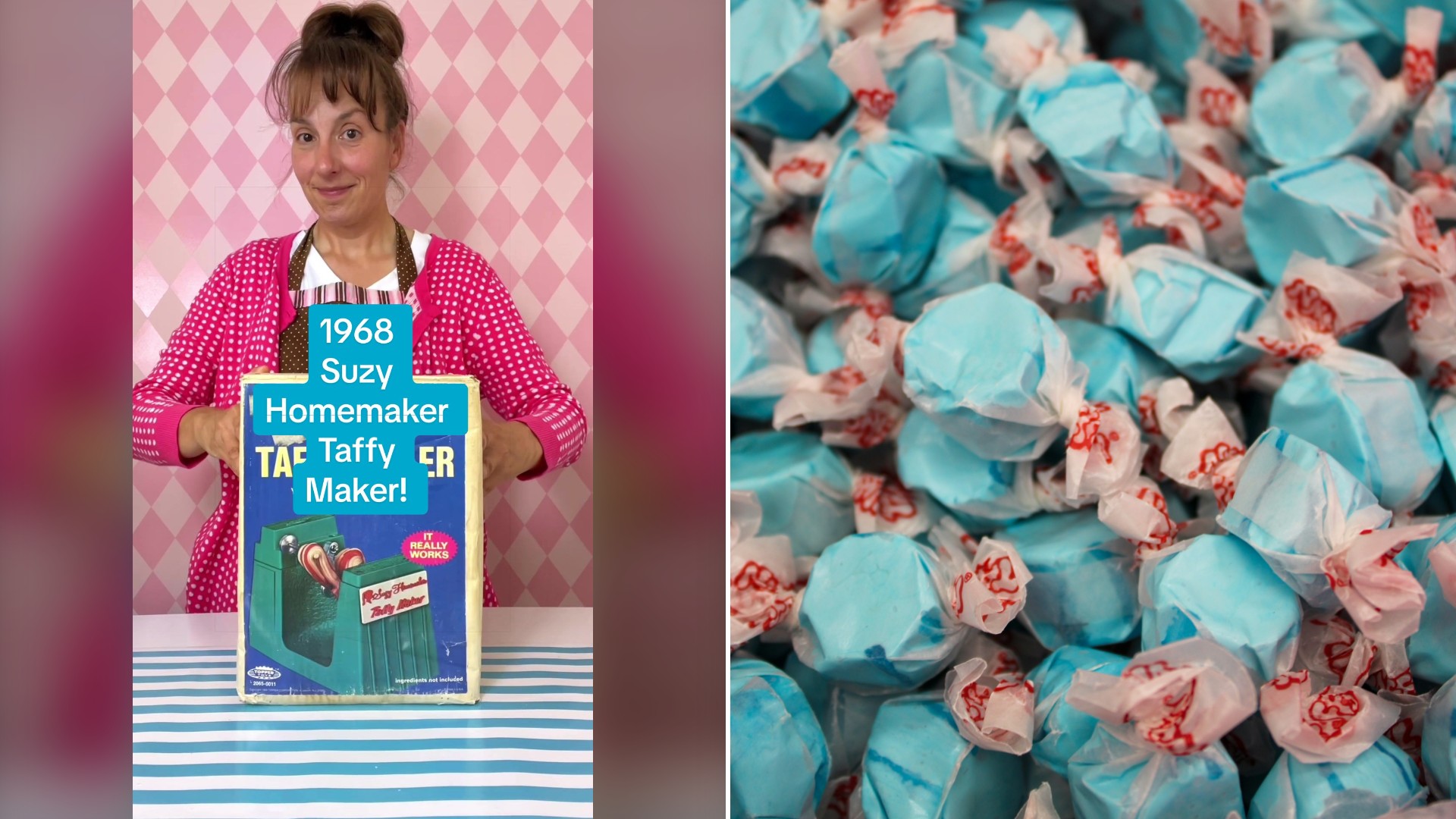
Creator @themistressmelt decided to find out, and the answer turned into four attempts, four failures and one broken toy.
@themistressmelt
The toy and the plan
The setup is cheerful. She holds up the boxed Suzy Homemaker Sweet Shoppe Taffy Puller in front of a pink harlequin backdrop, shows the old commercials, and unboxes a yellow machine. On screen she admits she expected it to be blue like the picture on the box.
Her reasoning is simple. Taffy is only three simple ingredients, so how hard could it be? She lines up sugar, corn syrup and butter and cooks them on a small pink hotplate.
Four tries, four failures
The first batch, in her words, was a rock hard disaster. On the second try, the mixture made it to the taffy puller, then suddenly seized up and became a brittle brown candy blob. For the third attempt she added pink food coloring and ended up with a rock hard candy loop.
By the fourth round she had a plan. She took the syrup off the heat earlier to avoid overcooking and was rewarded, she says, with some beautiful pink taffy, glossy and light on the puller. Then it hardened again, and as she cranked, one of the machine’s metal arms snapped off.
The ending shows all four batches on a paper plate beside the broken arm. She tries to bite a pink shard and gives up, joking that she does not even like taffy and asking, “How did those 10 year olds do it?”
Why taffy is trickier than it looks
Taffy really does start with simple ingredients, but candy making is more about temperature than recipe. Sugar syrup changes texture dramatically as it gets hotter. A few degrees can be the difference between soft and chewy and hard and glassy. That is why candy makers use a thermometer and why even small differences in a stove or hotplate matter.
Taffy is generally cooked to a firm stage, cooled until it can be handled, and then pulled again and again. The pulling stretches the candy, folds air into it and turns it lighter and chewier. If the syrup is cooked too far, it cools into something closer to hard candy, which no amount of pulling can fix.
Humidity also plays a part. Sugar candy can pick up moisture from the air on a damp day, which affects how it sets. Small toy hotplates may also run unevenly, so it is easy to scorch the bottom of a small batch.
Using vintage toy appliances today
Mid century children’s kitchen toys are a popular category with collectors. Some were made to really work, which is part of the charm, but age changes how they behave. If you want to try one, a few precautions are wise:
- Inspect any cord and plug for cracking or fraying before plugging in a toy with a heating element.
- Check plastic and metal parts for stress cracks, since old plastic can turn brittle.
- Wash anything that will touch food and use only food safe materials.
- Do not force a crank or handle that resists, because old gears and arms can snap.
- Keep an adult in charge of hot sugar, which can cause serious burns.
Many collectors decide the box, the manual and the working condition are worth more than a batch of candy. Displaying the toy complete in its original packaging is a common way to preserve it.
Common questions
Are vintage toy appliances safe to use? It depends on their condition. Heating elements and wiring age, so it is safer to treat many of them as display pieces unless they have been inspected.
Where do you find toys like this? Estate sales, flea markets, thrift stores and online auctions are common sources. Complete boxed examples tend to be the most sought after.
Is a broken part the end of a toy’s value? Not always, but missing or damaged parts usually reduce what collectors will pay. A careful repair may help, though it is best to keep any original pieces.
The takeaway
The toy may have been aimed at ten year olds, but making candy is a skill that takes practice, a thermometer and some patience. The best part of this experiment is the honest result: four attempts, a pile of rock hard candy and a good laugh. Sometimes the nostalgia is the real prize.
Credit for the original post goes to @themistressmelt on TikTok.

Leave a Reply