

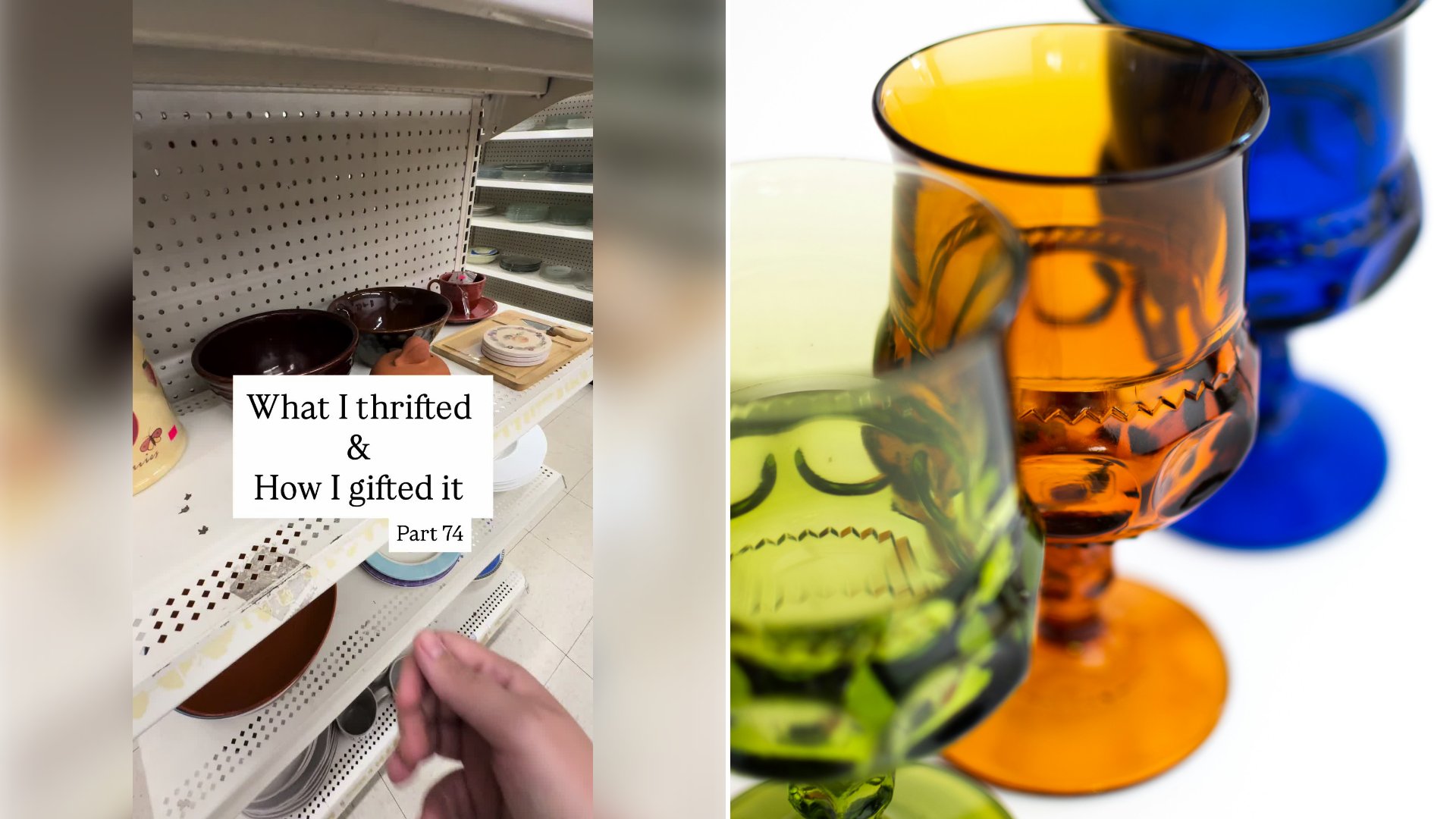
Instead of grabbing a bottle of wine and calling it done, one creator walks through an entirely different approach to a host gift: sourcing individual secondhand pieces from thrift store shelves, one at a time, and building them into a curated set that actually looks intentional. A vintage glass, a small dish, a linen napkin pulled from separate racks on separate trips, all brought together into something that reads as a single, thoughtful gift rather than a pile of mismatched secondhand finds.
The creator, @consciously_curated_home, focuses specifically on this kind of intentional secondhand sourcing, treating thrift stores less like a bargain bin and more like a rotating inventory worth returning to with a specific finished look already in mind. The video breaks down the actual process step by step, rather than just showing a finished product with no explanation of how it came together.
@consciously_curated_home
The math behind this approach is where it actually earns its appeal. A boxed host gift set bought new — matching glassware, a coordinated tray, a small decorative object — routinely runs anywhere from thirty to sixty dollars or more at a standard retailer, simply because the packaging, branding, and curation are built into the price. Individual secondhand pieces, by contrast, are typically priced per item rather than per set, often landing in the one to five dollar range at a thrift store depending on the piece and the region. Assembling a comparable set secondhand can realistically come in at a fraction of retail cost, even accounting for the time spent sourcing pieces that actually work together.
That time investment is really the trade-off being made. Buying a matched set new is fast and requires no eye for pairing, while thrifted gifts demand patience, multiple store visits, and a willingness to pass on pieces that almost work but are not quite right. The payoff is a gift that looks curated specifically because it was, piece by piece, rather than pulled off a single shelf already packaged together. It also means no two gifts assembled this way ever look identical, which is its own kind of value a mass-produced set cannot replicate.
This kind of secondhand gifting has grown alongside a broader shift toward intentional, lower-waste consumption, particularly among shoppers looking for ways to give something that feels personal without buying something brand new and mass-produced for the occasion. A vintage glass or a well-made ceramic dish found secondhand often carries better build quality than its modern equivalent, since many were originally produced in eras when household goods were made to be used for decades rather than replaced every few years.
The real lesson in a video like this is less about the specific gift and more about the mindset behind it: treating a thrift store as a sourcing destination with a plan, rather than a random browse with no end goal. That shift in approach is what turns secondhand shopping from a bargain hunt into something closer to actual curation.
More from Vinyl and Velvet
- Estate Sale Shopper Says She Leaves Every Estate Sale With a Little Trinket and This Time the Trinket Is a Red Stained Glass Koi Fish Lamp She Cradles in Her Arms
- Thrifter Wonders If a Silver Toned Grape Cluster Stand on a Store Shelf Is the Perfect Match for Her Red Glass Strawberry Salt and Pepper Shakers, Then Tests It at Home
- Two Women Shopping at Parma Flip Open the Glass Lids on a Dark Wood Drinks Cart and Find Glasses, Decanters and a Cocktail Shaker Waiting Inside

Leave a Reply