

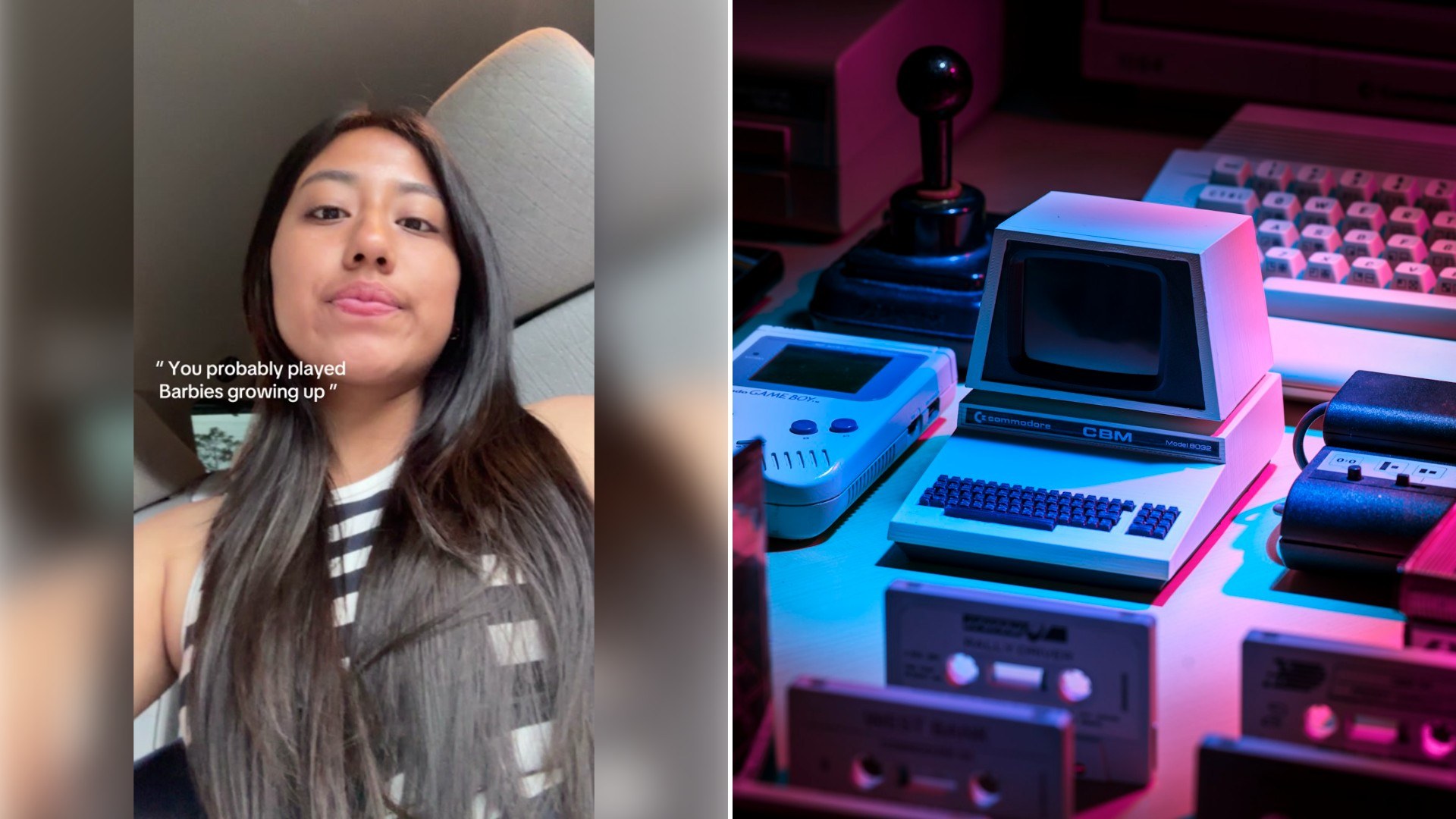
Nostalgia content gets a lot more interesting when it pushes back on an assumption instead of simply confirming one, and @evelynnmundo does exactly that using a split-screen format built around a stereotype she clearly does not fit. Rather than showing the Barbie-filled childhood many might assume, she plays gameplay footage of Crash Bandicoot alongside a caption capturing a classic sibling-gaming dynamic: when you die, it’s my turn.
That single line does a lot of work, instantly recognizable to anyone who grew up sharing a single console and a single controller with a sibling, trading off turns based entirely on how long the other person managed to survive. The video isn’t really about Crash Bandicoot specifically so much as it is about that shared, universal waiting-for-your-turn gaming childhood.
Crash Bandicoot remains one of the defining platformer franchises of the late 1990s gaming era, and its continued presence in nostalgia content speaks to just how widely shared that specific console-gaming childhood experience really was, cutting across the kind of gendered assumptions this video directly calls out. Turn-based sibling gaming sessions, built around exactly the dynamic referenced here, were a near-universal experience for anyone who grew up with a single shared console rather than individual devices.
By using the split-screen format to directly reject an assumption about her own childhood, the creator adds a layer of commentary that elevates the video beyond simple gaming nostalgia into something more pointed about who gets assumed to have grown up gaming and who does not.
The specific phrase when you die, it’s my turn carries an entire social contract within a single sentence, one that generations of siblings negotiated instinctively without ever writing it down or discussing it formally. That unspoken rule governed countless childhood afternoons, dictating exactly how long any one player got to hold the controller and creating its own small, recurring drama every time a difficult jump or a tricky enemy threatened to end a turn prematurely. Referencing that dynamic so directly and so briefly works precisely because the audience does not need any further explanation; the shorthand itself is the joke.
Split-screen and contrast-format videos like this one have become an especially effective tool for pushing back against assumptions in nostalgia content broadly, since they let a creator state an expectation and immediately counter it within the same short clip, without needing a long verbal explanation. Placing gameplay footage directly against a caption referencing an assumption about girlhood toys creates an instant, visually legible contradiction that lands far more efficiently than a spoken rebuttal ever could in the same amount of time.
There is also something worth saying about why Crash Bandicoot specifically works so well as the chosen counterpoint here, rather than a more obscure or niche gaming reference. The franchise’s mainstream popularity during its original run means the reference lands broadly, recognizable to a wide swath of viewers regardless of their own gaming background, which strengthens the video’s underlying point: this was not some niche subculture experience limited to a small group, it was an ordinary, widely shared part of childhood for an entire generation, gender assumptions notwithstanding.
Gaming nostalgia content more broadly has increasingly taken on this kind of corrective, myth-busting tone in recent years, pushing back against decades of marketing and cultural assumptions that treated console gaming as a primarily male childhood experience despite the reality that plenty of girls grew up equally invested in the same games, the same consoles, and the same sibling rivalries over controller time. A video like this one adds one more small, specific data point to that broader corrective conversation, grounded in a genuine personal memory rather than an abstract argument.
It is also worth noting how effectively humor works as a vehicle for this kind of gentle pushback, landing the underlying point without ever needing to state it as an explicit complaint or argument. The video never directly says the assumption is wrong in so many words; it simply shows the reality instead, letting the contrast between expectation and actual gameplay footage make the point far more persuasively than a straightforward statement ever could.
There is also a broader nostalgia lesson buried in the specificity of the memory being referenced here, the reminder that the most resonant nostalgic content rarely relies on grand, sweeping statements about an entire decade or generation. Instead, it succeeds by zeroing in on one small, precise ritual, in this case the exact negotiation over controller turns after a death in a platformer, and trusting that specificity to do the emotional work. A vague reference to childhood gaming would land far softer than this exact, lived-in detail, which is precisely why the caption resonates as strongly as it does with anyone who shared that same experience.
The comment sections under videos like this one also tend to reveal just how widely shared these small rituals actually were, with viewers frequently adding their own version of the same rule, sometimes with slight variations depending on the household, the siblings involved, or the specific game being played. That kind of communal recognition, strangers discovering they all followed some version of the identical unwritten rule growing up, is part of what makes this style of nostalgia content so effective at building a sense of shared generational identity across people who never actually knew each other as kids.
For fellow gamers who grew up sharing a console with siblings, this video is a quick, sharp reminder that the specific memory of waiting your turn is far more universal, and far less gendered, than pop culture stereotypes often suggest.

Leave a Reply