

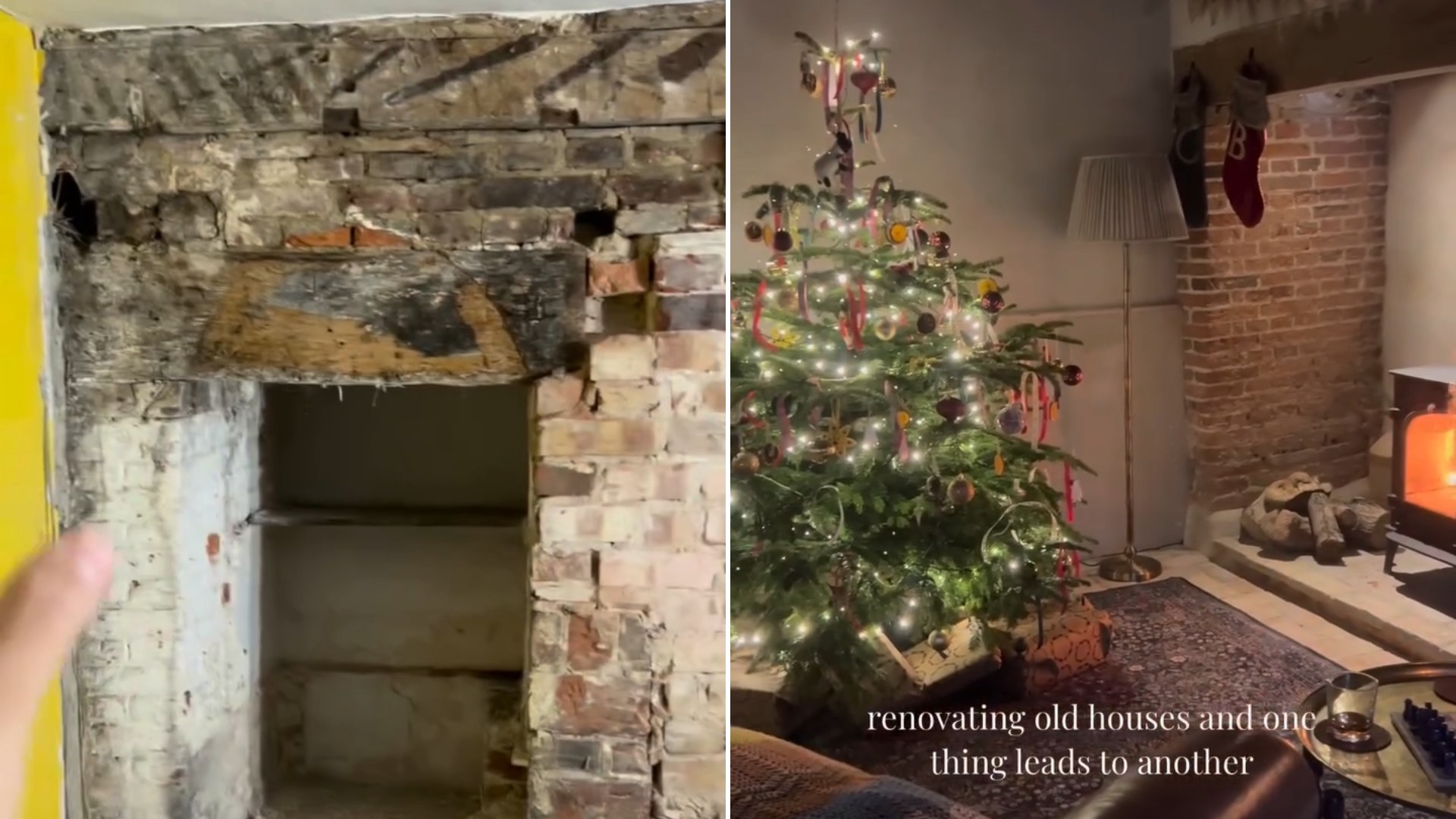
Restoring a home that’s been standing for four hundred years means accepting that you’re going to find things nobody currently living remembers. For the couple behind @lifeatmoathouse, that reality turned into one of the best moments of their entire renovation: a completely hidden inglenook fireplace, uncovered from behind a wall where it had apparently been sealed away for who knows how long.
What Exactly Is an Inglenook
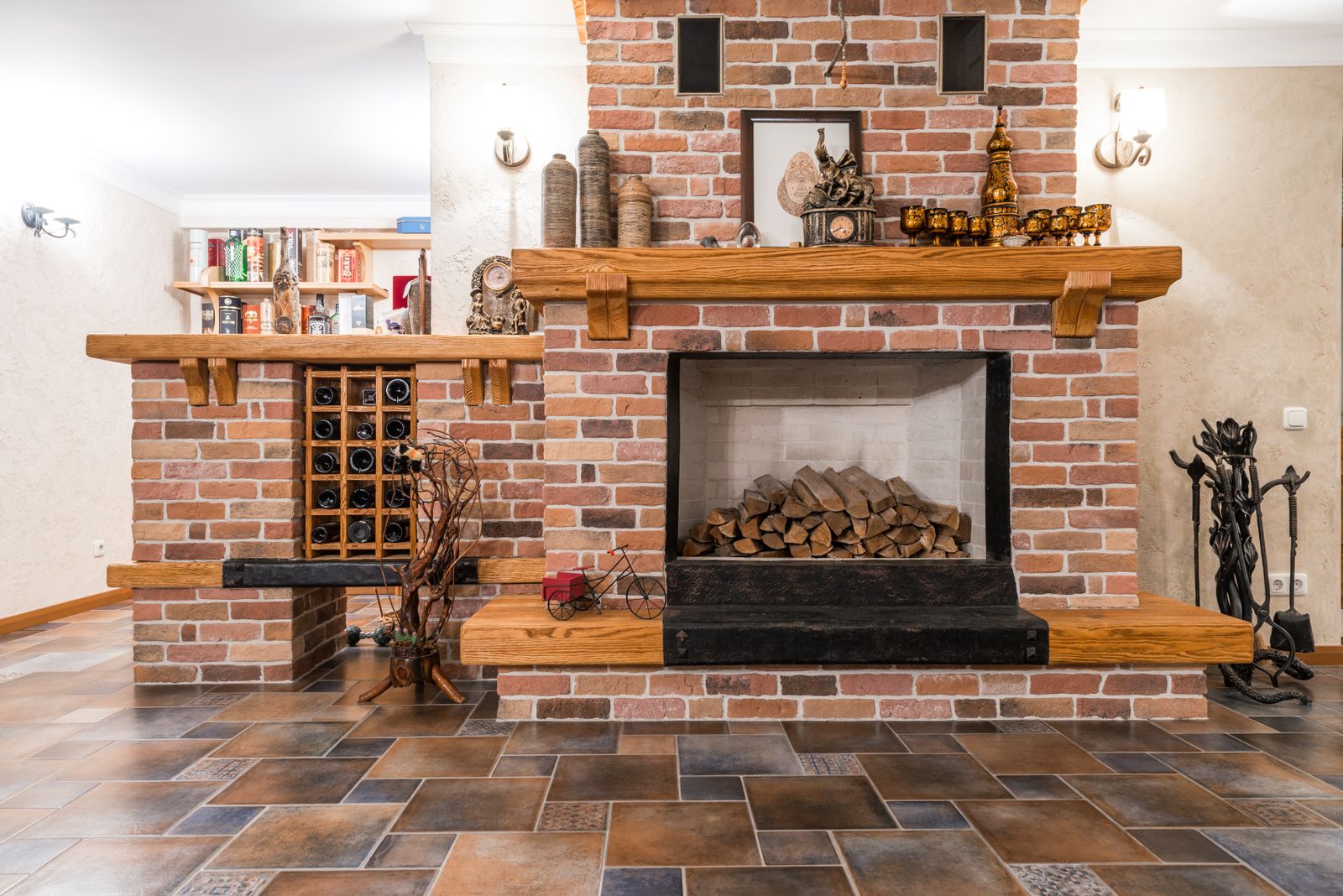
An inglenook is a recessed nook built around a fireplace, large enough to walk into and often big enough to seat people on either side of the hearth itself. They were a common feature in English homes built during the Tudor and Jacobean periods, roughly the fifteen hundreds through the early sixteen hundreds, when fireplaces did double duty as the primary heat source and the main cooking setup for the entire household. A house that’s four hundred years old sits comfortably in that window, which makes an inglenook a completely plausible, if still thrilling, thing to find hiding behind a wall.
Because inglenooks were built to be functional rather than decorative, they tend to be substantial. This isn’t a small decorative alcove, but a genuine architectural feature with its own scale, often including built-in seating, a mantel beam thick enough to have survived centuries, and enough depth that the fireplace itself feels like a small room rather than a simple opening in a wall.
Why These Fireplaces Get Covered Up
Given how central inglenooks once were to daily life, it might seem strange that anyone would wall one off. But home renovations across the centuries have a way of prioritizing whatever era’s needs come first. A later owner might have wanted a smaller, more modern fireplace, or simply needed the extra wall space for a different room layout. Central heating, once it became common, made an enormous walk-in hearth feel more like an oddity than a necessity, and covering it over was often the easiest way to modernize a room without tearing the whole house apart. Multiply that kind of decision across four centuries of different owners, and it becomes almost expected that somewhere in a house this old, an entire fireplace might simply have vanished behind plaster and lath.
A Discovery Worth the Whole Renovation
For anyone restoring a genuinely historic home, this is close to the dream scenario. Structural surprises during old-home renovations are usually the bad kind: rot, unstable foundations, wiring that should have been replaced decades ago. Finding an intact inglenook, by contrast, is the rare surprise that adds value, character, and history back into a home instead of costing more time and money to fix. It’s the kind of discovery that reframes an entire renovation, turning what might have been a purely practical project into something closer to archaeology, with each layer of wall peeled back revealing a little more of what the house actually used to be before generations of updates buried it.
There’s also something deeply satisfying about restoring a fireplace that was clearly meant to be the heart of the home, literally and otherwise, back to a place where people can actually gather around it again. An inglenook wasn’t just a heat source. It was where a household’s daily life happened, where food got cooked, where people sat close together on cold nights in a home with no other source of warmth. Bringing one back into use after however many decades it spent sealed away reconnects a house to exactly the kind of daily life it was originally built around.
Old Homes Keep Their Secrets Well
Four hundred years is a long time for a house to accumulate hidden layers, and this inglenook is a solid reminder that even after generations of renovations, additions, and updates, older homes can still be holding onto something completely intact, just waiting behind the next wall. For a renovation project already built around honoring that history, finding proof that the house had even more of it to offer than expected is about as good as it gets.
It also raises an obvious question for anyone else living in an old house: what else might be sitting behind a wall that nobody has bothered to check in decades. Most people renovating a centuries-old property go in expecting problems to fix, not features to rediscover, which is exactly why a find like this sticks with people. It flips the entire emotional tone of a renovation project, turning a stretch of demolition into the moment the house finally gets to show off something it had been keeping to itself the whole time.

Leave a Reply