

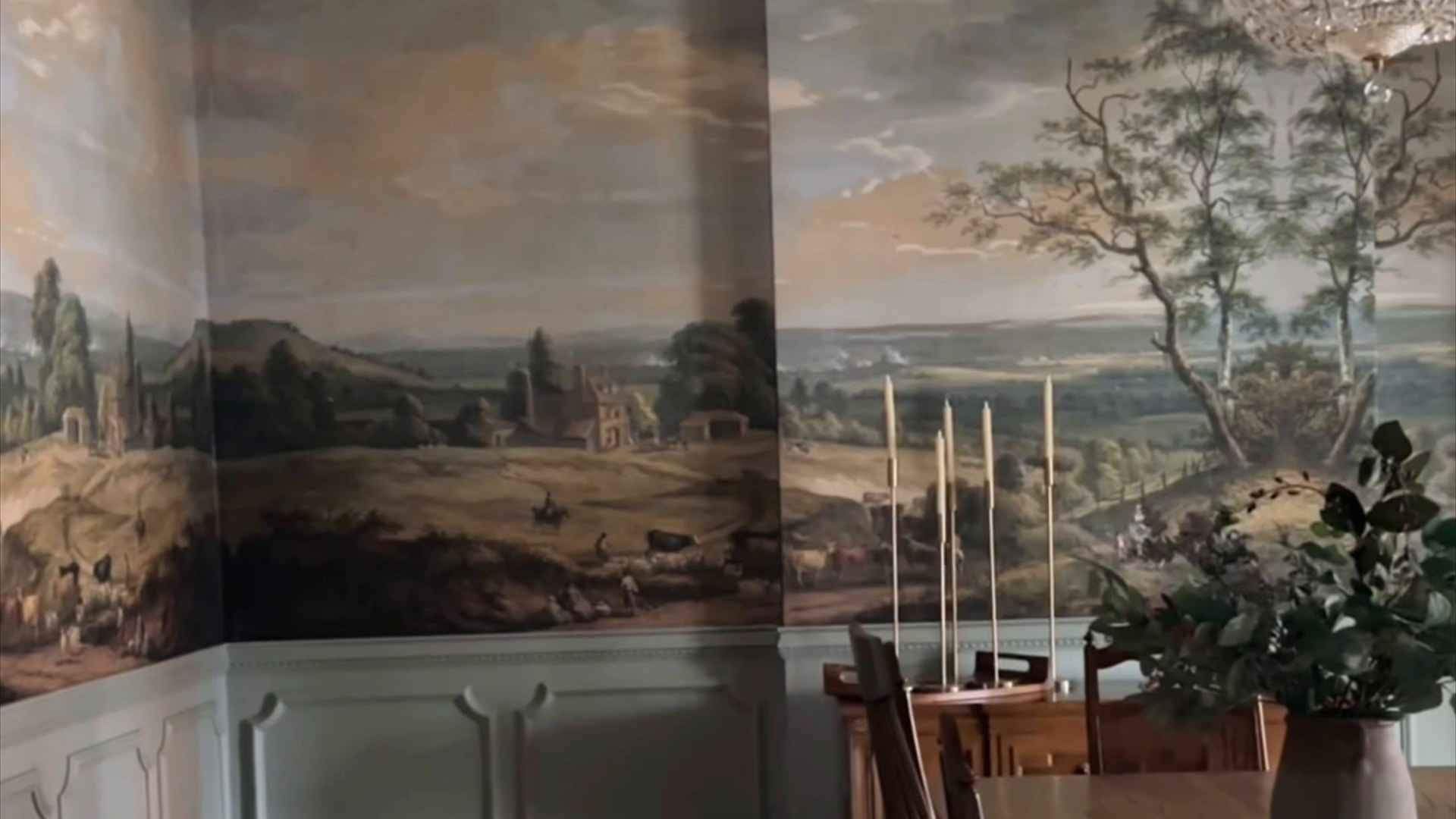
Buying a house that “needs everything” sounds like a warning label to most buyers, but one couple treated it as an invitation. Their room-by-room progress on an Italianate home built in the 1860s is now pulling in an audience well past their usual reach, one beige, half-finished room at a time.
“Move In Day vs. Now,” Room by Room
The video comes from TikTok creator @inhonorofdesign, who overlaid the footage with the text “move in day vs. now…” before walking through a series of dramatic before-and-after room transformations, according to @inhonorofdesign’s own TikTok video. Her caption sums up the entire approach in one line: “Restoring the character back into our 1860s Italianate home one beige room at a time.” It is a self-aware admission that the house did not arrive photo-ready, and that the restoration is happening in patient stages rather than one dramatic gut renovation.

A Video That Outpaced the Account’s Usual Numbers
The clip pulled in 183,400 views against a channel median of 7,400, a jump of roughly 24.8 times normal reach for an account with 18,000 followers. That multiplier is a meaningful signal on its own, but it’s the specific format — a straightforward day-one-versus-now comparison — that tends to travel especially well in restoration content, since it gives viewers an immediate, easy-to-parse sense of scale without requiring any prior context about the project.
What “Italianate” Actually Means for a House This Old
Italianate architecture became one of the most popular American residential styles in the decades before and after the Civil War, recognizable by tall narrow windows, ornate cornices, and low-pitched rooflines borrowed loosely from Renaissance Italian villas. A home built in the 1860s in this style would have originally featured elaborate millwork, high ceilings, and decorative trim details that were often painted over, plastered flat, or simply removed by later owners chasing whatever look was fashionable at the time. Restoring a house like this one is less about adding character than it is about excavating character that got buried under decades of “updates.”
Why “One Beige Room at a Time” Resonates
The phrase works because it captures something most renovation content glosses over: real restorations rarely happen all at once. A full historic home renovation is expensive, time-consuming, and often has to be sequenced around what’s structurally urgent versus what’s simply outdated. Calling out the beige as a temporary, in-progress state rather than a finished aesthetic choice is an honest bit of self-deprecation, and it likely reads as relatable to anyone who has ever lived inside their own slow-moving renovation project rather than a magazine-ready finished home.
The Appeal of Watching Progress in Real Time
Move-in-day comparison videos work because they compress months or years of labor into a few seconds of visual proof. For a house this old, that proof carries extra weight: it is not just showing off new paint or furniture, it is documenting the process of pulling a 160-year-old structure back toward something closer to its original identity. Viewers who might never take on a project this large themselves still seem drawn to watching someone else do it patiently and transparently, mistakes, unfinished rooms, and all.
A Reminder That Restoration Is Rarely Instant
What this video ultimately sells isn’t a finished dream home — it’s permission to be mid-project. For anyone sitting inside their own half-renovated old house wondering if the beige walls and unfinished trim will ever come together, watching a nearly 160-year-old Italianate slowly regain its character one room at a time is a small, practical kind of encouragement. The nearly 25x jump in views suggests plenty of people needed to see exactly that.
Why 19th-Century Homes Draw a Different Kind of Attention Online
Restoration accounts built around homes from the 1970s or 1980s tend to attract a nostalgia-driven audience who remember the era firsthand. An 1860s Italianate pulls a different crowd entirely — viewers drawn less by personal memory and more by sheer architectural curiosity about a structure that predates nearly everyone watching by well over a century. That distinction matters for how a video like this spreads. It isn’t riding on shared memory the way a retro kitchen reveal might; it’s riding on the simple fact that very few people ever get to see the inside of a house this old mid-restoration, room by unfinished room.
The Long Game of Historic Home Ownership
Owning a home built in the 1860s comes with a different set of expectations than owning something from even fifty years later. Plumbing, wiring, insulation, and structural systems have typically been replaced multiple times over the house’s lifespan, often by owners with wildly different levels of skill and historical sensitivity. Untangling decades of mismatched repairs while still preserving whatever original detailing survived is slow, deliberate work — which is exactly why a caption admitting the process is happening “one beige room at a time” reads as candid rather than as an excuse. Viewers watching this kind of long-haul restoration are essentially watching a multi-year project compressed into a single scrollable clip, and the honesty about the pace appears to be a real part of the draw.

Leave a Reply