

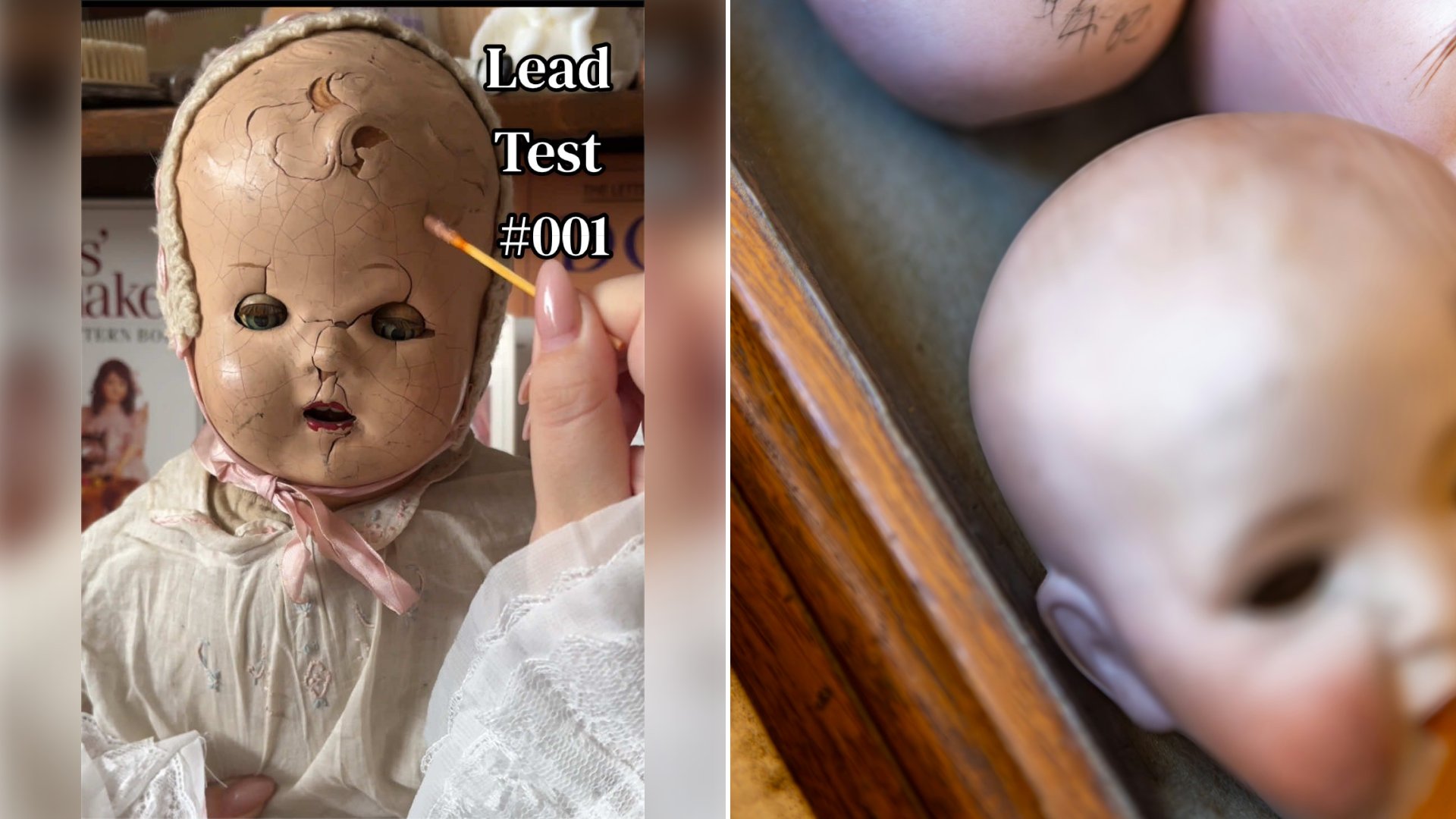
Antique doll collecting is usually framed as a gentle, nostalgic hobby full of lace dresses and painted porcelain faces passed down through generations. TikTok creator @soulmori flipped that image on its head after noticing unexplained hair loss and deciding to test her entire antique doll collection for lead using a simple store bought testing kit. What started as a precaution turned into a video that has collectors everywhere second-guessing how they handle their shelves.
One by one, she swabs the painted faces, hands, and hairlines of her vintage dolls, watching for the color change that signals a positive reading. The tension builds with each test, because these are not random flea market finds, they are pieces she has handled, displayed, and lived alongside for years. Several of the dolls reportedly tested positive, which is exactly the kind of quiet health concern that rarely crosses the mind of someone drawn to vintage toys for their charm rather than their chemistry.
@soulmori
Lead paint on antique toys is a documented concern, not an internet myth. In the United States, the Consumer Product Safety Commission did not ban lead based paint in consumer products, including toys, until 1978, meaning dolls and toys manufactured before that year, especially bisque and composition dolls from the early twentieth century, were frequently painted with pigments that contained lead. Painted facial features, in particular rosy cheeks and lip color, were a common place for lead based pigment to be used because it produced vivid, long lasting color.
Lead exposure is cumulative and does not require ingestion to pose a risk. Flaking paint, dust from a cracked porcelain surface, or simple repeated skin contact followed by touching the face or food can introduce small amounts of lead into the body over time. The CDC has long identified hair loss, abdominal discomfort, fatigue, and in more severe cases cognitive effects as symptoms associated with lead exposure, which is why a collector noticing hair loss and connecting it to a shelf full of pre 1978 dolls is a far more reasonable leap than it might first sound.
None of this means collectors need to panic or get rid of beloved pieces. Store bought lead testing swabs, the same kind used to check old painted furniture or dishware, are an inexpensive and genuinely useful first step for anyone with vintage dolls, toys, or painted ceramics made before the late 1970s. Collectors who get a positive result are generally advised to display rather than handle the piece directly, wash hands thoroughly after any contact, keep it away from children and pets, and avoid letting flaking paint generate dust in an enclosed display case. For anyone restoring a piece, sealing original paint under a protective varnish rather than sanding it is typically the safer route, since sanding can aerosolize lead particles.
The video is less an alarm bell and more a quiet reminder that vintage objects carry the manufacturing standards of their era along with their charm. A hobby built on nostalgia does not have to mean ignoring basic safety precautions, and a five dollar test kit is a small price to pay for peace of mind on a collection that may have taken decades to assemble.
More from Vinyl and Velvet
- Barbie Collector Says She Quit Dolls at 16 for Being Too Cool, Then Dug Out Her Childhood Barbies When Covid Hit and Now Films a Room Packed Wall to Wall With Them
- Antiques Dealer Opens a Wooden Chest Holding 764 Pieces of Gorham Sterling Made for a Table of 18, With Separate Forks for Oysters, Strawberries and Even Ice Cream
- Realtor Opens the Medicine Cabinet in Her Childhood Bathroom at Mom’s House, Calls It an Archaeological Dig and Holds Up Icy Hot, Clairol and Lip Gloss She Jokes Is From 1998

Leave a Reply