

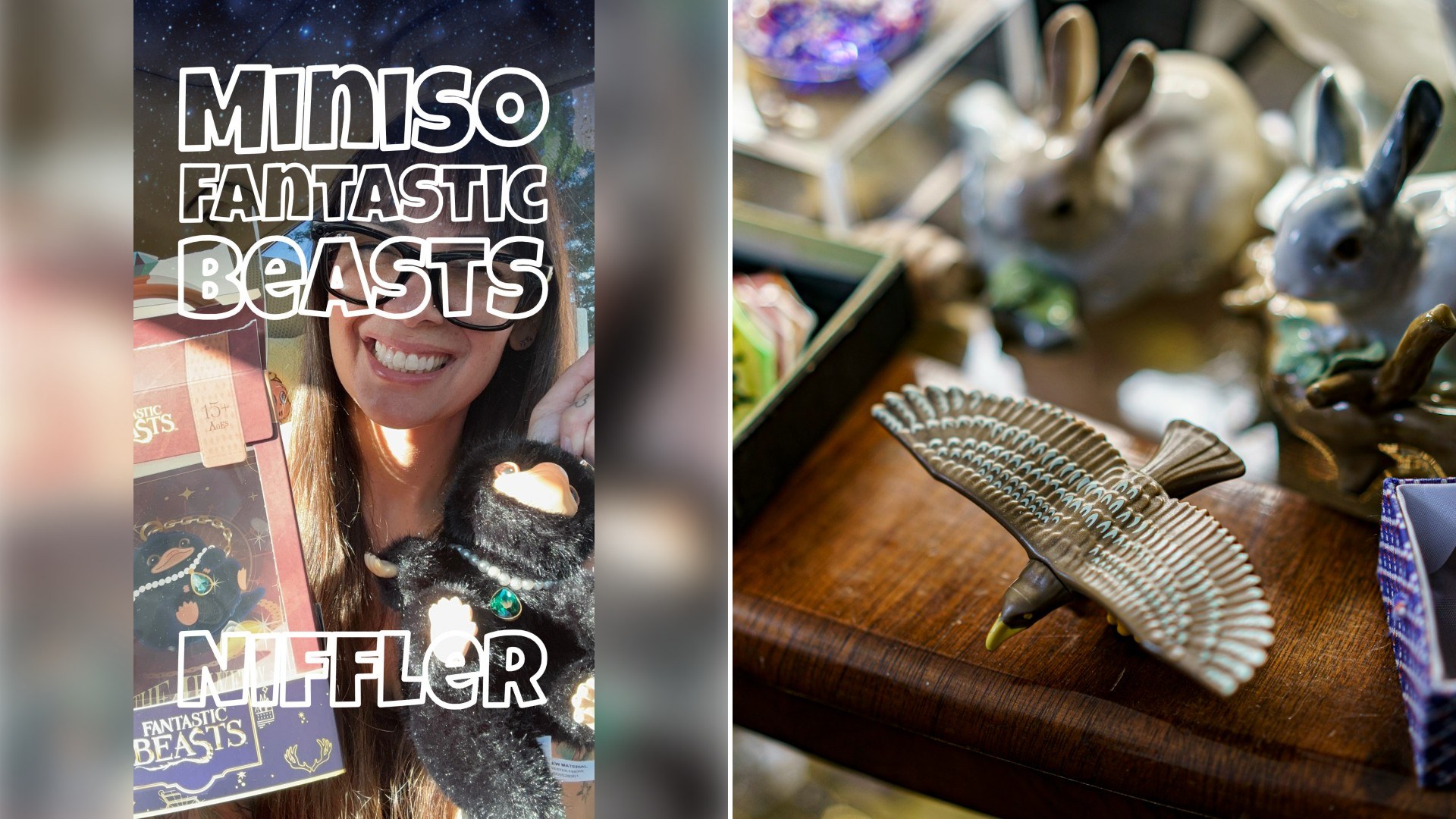
Blind-box collecting has a way of turning a simple shopping trip into a small event, and that is exactly what happens when @shannon_montipaya goes hunting specifically for Niffler-themed mystery boxes tied to the Wizarding World’s Fantastic Beasts franchise. Holding up a sealed mystery bag for the camera, she walks through the ritual every blind-box collector knows well: the anticipation before the reveal, the tear of the packaging, and the moment of truth when the keychain inside is finally visible.
The Niffler, the burrowing, treasure-obsessed magical creature introduced in the Fantastic Beasts films, has become a particular favorite within Wizarding World merchandise lines precisely because of that hoarding personality, making it a natural fit for a collectible built around the thrill of not knowing what you are going to get. When the keychain is finally revealed, her genuine, ear to ear reaction is the payoff the entire hunt was built toward.
Blind-box and mystery-pack collecting has exploded across pop culture fandoms over the past decade, borrowing a format long popular in Japanese toy culture and applying it to everything from anime figures to franchise keychains like this one. Part of the appeal is structural: unlike buying a specific figure off a shelf, a blind box turns even a modest purchase into a small gamble, with the possibility of a rare or especially desirable variant keeping longtime collectors coming back long after casual fans have moved on.
For a franchise like Fantastic Beasts, which continues to release new merchandise well after its films left theaters, blind-box lines also serve a practical purpose, giving devoted fans a reason to keep engaging with a universe that might otherwise fade from active pop-culture conversation. A collector willing to specifically seek out a themed subset, in this case one creature within a much larger lineup, is exactly the kind of enthusiast that keeps a franchise’s merchandise ecosystem alive between major releases.
Part of what makes this particular hunt so watchable is the specificity of it. Rather than simply grabbing whatever mystery box happens to be on the shelf, she is targeting one character within a much wider assortment, which turns a casual purchase into something closer to a small quest. That kind of focused collecting is common among fans who have moved past the general excitement of a franchise and into the more particular territory of curating a themed set, whether that means every variant of a single creature, every color of a single bag, or every keychain tied to a favorite side character rather than the marquee leads.
The blind-box format itself deserves some credit for why this kind of video works so well on camera. Unlike unboxing a single, known item, a mystery pull carries built-in suspense that translates naturally to short-form video, since the viewer is discovering the outcome at exactly the same moment as the person on screen. There is no editorializing needed, no voiceover explaining why the moment matters, because the format itself does the storytelling. That immediacy is a big part of why blind-box content has become such a reliable category across TikTok and Instagram, spanning everything from designer vinyl figures to trading cards to, as in this case, franchise keychains.
It also helps that collectible keychains occupy a strange, appealing middle ground in the broader collecting world. They are inexpensive enough to buy on impulse, small enough to display in bulk without needing a dedicated shelf or display case, and portable enough that collectors often clip them to bags or lanyards, turning a private collection into something semi-public. That visibility matters more than it might seem, since a collection that travels with someone into the world tends to spark conversations with strangers and fellow fans in a way that a boxed figure sitting at home never will.
There is also something to be said for how blind-box collecting rewards patience in a way that differs from traditional secondhand hunting. A thrifter scanning a rack for a specific vintage label is relying on luck within a chaotic, unsorted environment, while a blind-box collector is relying on luck within a controlled, manufactured one. Both depend on chance, but the blind-box version compresses that uncertainty into a single, dramatic moment of reveal, which is exactly the kind of beat that short-form video was built to capture.
The Wizarding World franchise in particular has leaned hard into this collector-first approach to merchandising in recent years, releasing waves of themed pins, keychains, and mystery packs long after the films themselves stopped generating new box office headlines. That strategy depends entirely on fans like this one, people willing to keep buying into a universe not because of any new theatrical release but because the collecting itself has become the ongoing relationship with the franchise. A keychain pull like this one is a small but telling data point in how modern fandoms sustain themselves between major cultural moments.
There is also a quieter appeal here that has nothing to do with the franchise at all: the simple, universal pleasure of tearing into a sealed package and not knowing what is inside. That feeling predates blind-box marketing by decades, echoing everything from cereal-box prizes to trading card packs pulled open on a childhood bedroom floor. Collectible companies did not invent that thrill so much as they packaged it, repeatedly, into a format that could be sold again and again to people who already know exactly what they are chasing.
For anyone drawn to this corner of collecting, the advice from veteran blind-box hunters is simple: know which characters or variants you actually want before you start buying, since the fun of the format depends on the surprise mattering, and it only matters when you already care about what might be inside.
That last point is worth sitting with, because it explains why a video like this one resonates even with viewers who have never bought a mystery box in their life. The joy on display is not really about the keychain itself, cute as it is, but about the specificity of wanting one particular thing badly enough to keep hunting until it shows up. That kind of targeted enthusiasm is instantly recognizable, whether it is applied to a Niffler keychain, a rare vinyl pressing, or a decades-old denim jacket in exactly the right size.
Whatever she pulls next, the hunt clearly is not over, and for a collector this focused, that is precisely the point.

Leave a Reply