

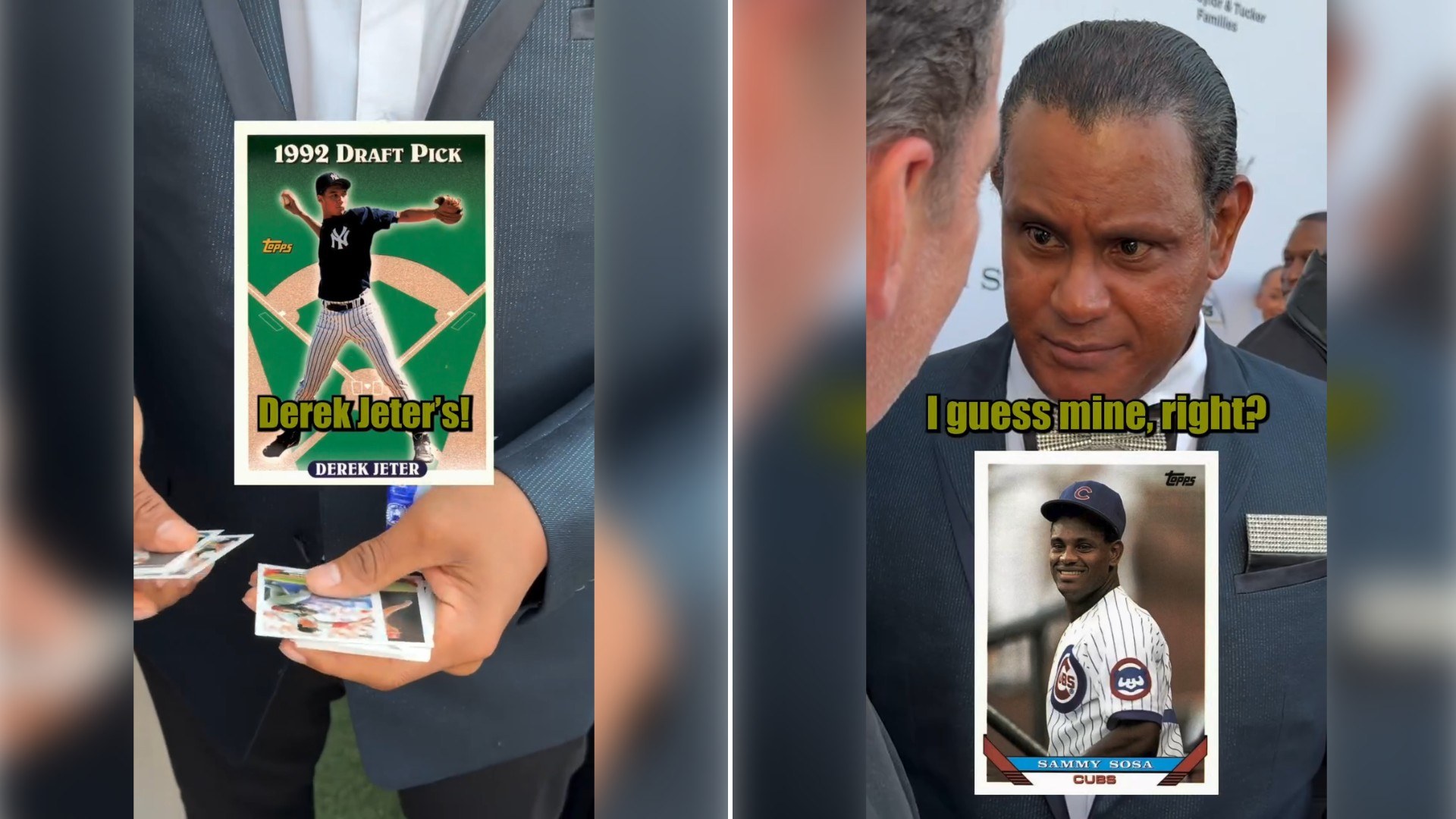
Red carpet encounters do not usually double as a trading card unboxing, but that is exactly what happens when @brianpirrip, a baseball card enthusiast, approaches former MLB star Sammy Sosa with vintage packs of 1980s and 90s Topps cards and asks him, right there on the carpet, to open them on camera. Among the packs are ones that could plausibly contain Sosa’s own early-career cards, giving the moment a genuinely personal edge beyond a typical celebrity pull-aside.
What follows is Sosa good-naturedly searching through the packs for a glimpse of his own younger self on cardboard, a surreal but clearly enjoyable experience for a player looking back at cards printed near the start of a career that would go on to define an era of the sport. His reaction, part amusement and part genuine curiosity, blends celebrity access with the same personal thrill any longtime card collector chases.
Sports card collecting has always carried a unique layer of meaning when a player encounters their own early cards decades later, offering a strange kind of full-circle moment between a collector’s hobby and an athlete’s own career archive. Sosa’s rookie-era cards remain among the more sought-after pieces from his period, both for their connection to his eventual home-run record chase and simply as artifacts of the sport’s card boom during that era.
For fans and collectors, moments like this one are a reminder of how differently the same object can feel to different people; a card that represents a valuable collectible to one person can represent a literal piece of someone else’s personal and professional history.
Approaching a public figure on a red carpet takes a particular kind of nerve, and choosing to do it with a stack of vintage card packs rather than a simple photo request or an autograph ask is what makes this specific approach stand out. Most red carpet interactions are brief, transactional, and forgettable by design, structured around quick photos and rehearsed sound bites. Introducing an activity as specific and personal as opening old packs in search of the subject’s own likeness breaks that formula entirely, turning a routine media moment into something closer to a genuine, unscripted interaction.
There is also something worth noting about how card-pack encounters like this one function differently depending on the era of cards involved. A modern athlete opening current-year packs in search of their own card is a fairly common, low-stakes promotional bit that teams and brands stage deliberately. A retired athlete opening decades-old packs from early in their own career, by contrast, carries genuine uncertainty, since neither the athlete nor the collector filming knows for certain what, if anything, will actually turn up. That uncertainty is exactly what gives a moment like this one its real suspense, rather than the manufactured kind more typical of sponsored pack-opening content.
Sammy Sosa specifically occupies a complicated but undeniably significant place in baseball card history, having been part of one of the sport’s most talked-about offensive eras, a period that drove enormous mainstream interest in the sport and, by extension, in the cards documenting it. Whatever complexities surround that broader chapter of baseball history, the collector demand for cards from that specific period has remained remarkably durable, driven by nostalgia for an era that brought a huge wave of casual fans into both the sport and the hobby simultaneously.
It is also worth appreciating the specific skill required to identify and source vintage packs likely to contain a particular player’s card in the first place. Unlike buying a single graded card with a known player already printed on it, an unopened pack from the correct era is a genuine gamble, requiring real knowledge of print runs, distribution, and which specific product lines from a given year were most likely to include a given rookie or early-career player. Bringing exactly the right packs to a chance encounter like this one reflects real hobby expertise, not just enthusiasm.
There is also something quietly moving about watching an athlete engage with their own history through the eyes of a fan rather than through a museum display or a highlight reel. A framed jersey or a statistic sheet tells one kind of story about a career, but a stack of ordinary cardboard packs, mass produced and sold for pocket change decades ago, tells a more intimate one, since those cards were made for kids and collectors, not for posterity, which makes rediscovering them decades later feel more personal than most official retrospectives ever manage.
For the broader trading card community, videos like this one also function as a reminder of why vintage sports cards continue to hold cultural weight well beyond their resale value. A card’s worth to a collector is often inseparable from the story attached to it, and few stories land harder than watching the actual subject of a card encounter it again, seemingly for the first time in years, live on camera.
It is also worth noting how quickly a moment like this one can circulate once it hits the wider trading card and sports fan communities online, since it sits at the intersection of two audiences that do not always overlap: collectors who track vintage card values and general baseball fans who simply enjoy seeing a beloved former player in a lighthearted, unscripted moment. That crossover appeal helps explain why a clip built around something as specific as pack odds and print runs can still land with viewers who have never opened a pack of cards in their life.
For anyone chasing a similarly memorable moment, the lesson here is simple: bringing the right vintage pack to the right encounter can turn an ordinary meet-and-greet into something neither the collector nor the athlete will forget.

Leave a Reply