

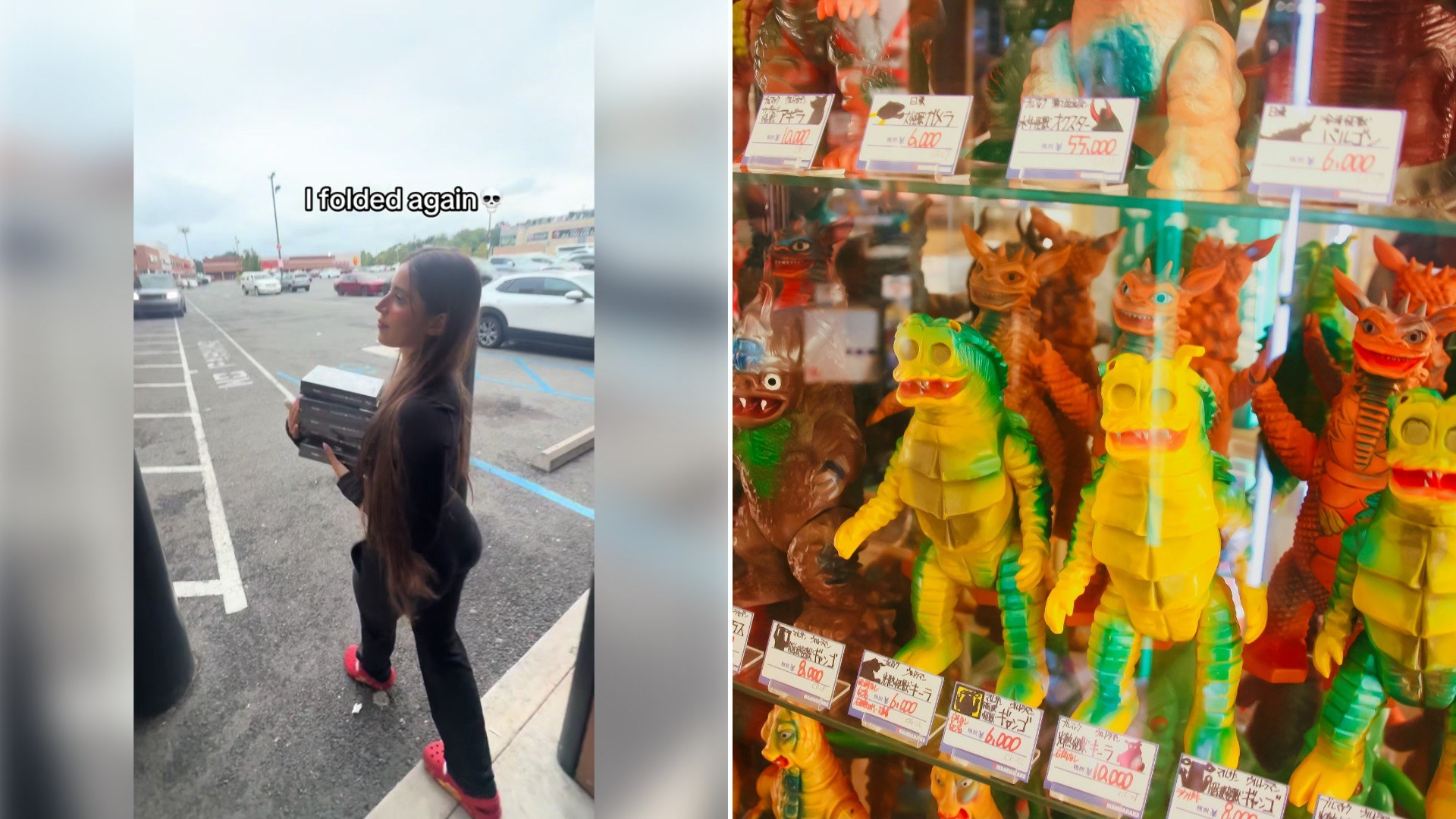
The running joke of the no-buy resolution is practically its own genre within collecting content, and @ladyyrainicorn adds a genuinely funny entry to it, walking through a parking lot with an entire armful of trading card boxes she just bought. Talking directly to whoever is filming, she explains, half sheepish and half laughing, that she went in with absolutely no plan to buy anything and still somehow walked out with a full stack anyway.
The honesty is what makes the confession land. Rather than pretending the purchase was planned or justified, she owns the impulse completely, framing it as folding again, a phrase that implies this is far from the first time a no-buy attempt has crumbled the moment she actually walked into a store.
No-buy challenges have become a popular, semi-serious framework across collecting and shopping communities generally, a way for enthusiasts to hold themselves publicly accountable to spending less on a hobby they know can get expensive fast. The specific comedy of this genre comes from how often those resolutions fail almost immediately once temptation is actually in front of someone, which is exactly the beat this video hits.
That self-aware failure is part of the appeal rather than something to hide, since collectors watching clearly relate more to an honest confession of giving in than they would to someone claiming perfect discipline. The relatability of folding, rather than succeeding, is what turns a simple shopping trip into a shareable moment.
Part of what makes the no-buy genre so durable across collecting communities is how universally recognizable the underlying dynamic is, regardless of the specific hobby involved. Whether the temptation is trading cards, vinyl records, vintage clothing, or anything else people collect passionately, the basic shape of the joke stays the same: good intentions declared publicly, then abandoned quietly the moment an actual store aisle presents an opportunity too good to pass up.
The phrase folding again specifically does a lot of narrative work in very few words, implying an entire history of similar failed attempts without needing to spell any of it out explicitly. That kind of shorthand only works because the audience already understands the genre well enough to fill in the rest themselves, recognizing this moment as one entry in an ongoing, familiar pattern rather than an isolated lapse.
There is also something worth noting about the specific choreography of a video like this one, filmed in a parking lot immediately after the purchase rather than staged later at home. That timing matters, since capturing the confession in the moment, still visibly holding the haul and still slightly out of breath from carrying it, preserves an authenticity that a more composed, after-the-fact retelling would inevitably lose.
Trading cards specifically present a particularly difficult category for anyone attempting a genuine no-buy period, since new releases, limited print runs, and the simple thrill of an unopened pack create a constant, rotating stream of fresh temptation that older, more static collecting categories do not generate at nearly the same pace. A collector trying to abstain from vintage furniture, for comparison, faces far less frequent, less varied temptation than one trying to abstain from an actively releasing trading card line.
It is also worth noting how this kind of video functions as a small act of community building within collecting spaces, normalizing the idea that lapses are common and, more importantly, funny rather than shameful. That normalization matters for a hobby that can otherwise carry some quiet guilt around spending, giving collectors permission to laugh at their own inconsistency rather than hide it.
There is also something worth saying about the specific comedic timing of a confession delivered immediately after the fact rather than reflected on later with more distance. Filming the moment right in the parking lot, boxes still visibly in hand, captures a rawness that a more composed, retrospective confession would inevitably smooth over, letting viewers see the immediate, unfiltered gap between stated intention and actual behavior rather than a cleaned-up summary of it after the fact.
It is also worth noting how content like this one plays a quiet but real role in building trust between a creator and their audience. A creator who only ever shows successful restraint or perfectly disciplined collecting habits risks feeling unrelatable or even a little dishonest to an audience who knows from their own experience how hard genuine restraint actually is. Admitting failure, especially with humor rather than defensiveness, signals a kind of honesty that tends to deepen audience loyalty rather than undermine it.
The armful-of-boxes visual itself also does real comedic work independent of anything said out loud, since the sheer volume on display contradicts any claim of a small, reasonable slip almost instantly. A single impulse box might read as a minor, forgivable lapse, but an entire armful visibly undercuts any attempt to downplay the moment, which is exactly why the visual pairs so well with the self-deprecating tone of the confession itself.
There is also a small, quietly optimistic note buried in a video like this one, the implicit suggestion that a failed no-buy attempt is never really the end of the story, only the latest chapter in an ongoing, mostly good-natured relationship with a hobby that clearly brings genuine joy despite the occasional lapse in discipline. That framing keeps the tone light rather than self-critical, treating the whole cycle of resolving and folding as part of the fun rather than something to feel genuinely bad about.
For fellow collectors attempting their own no-buy resolutions, this video offers a familiar, forgiving kind of company: nearly everyone in the hobby has folded at least once, and laughing about it on camera afterward is, apparently, half the fun.

Leave a Reply