

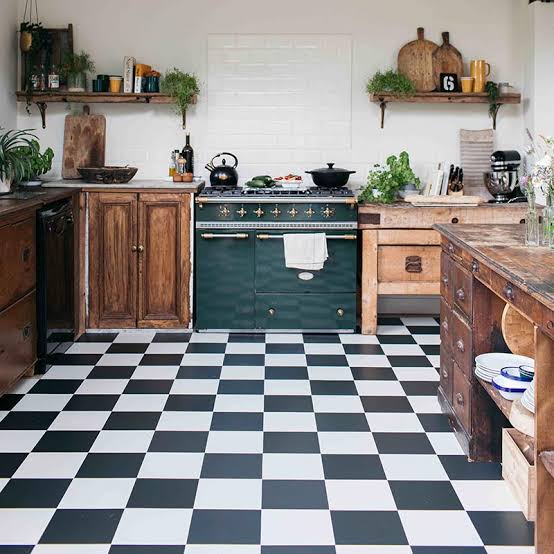
“Checkerboard floor” searches climbed 38 percent in the first three quarters of 2025 compared with the same period a year earlier, and “bathroom checkerboard” searches more than doubled — up 103 percent — according to Houzz’s own 2026 U.S. Home Design Trend Predictions. That’s a pattern most associated with old-school diners, 1950s kitchens, and black-and-white film-era glamour, suddenly climbing fast enough to land on a major platform’s list of the coming year’s biggest design shifts.
The Numbers
Houzz’s research measures search activity across its own platform, giving it a real-time read on what homeowners and renovators are actively planning rather than a lagging indicator of what’s already been built. The bathroom-specific number — up 103 percent — outpaced the general “checkerboard floor” search category by a wide margin, according to the same report, suggesting the pattern is finding its fastest foothold in smaller, higher-impact rooms where a bold floor is easier to commit to than in a full kitchen or living space. Forbes’ separate coverage of Houzz’s 2026 predictions placed the checkerboard revival alongside a broader traditional-style resurgence that also includes inset cabinetry and arched range hoods — bold pattern and old-world craftsmanship rising together rather than as competing trends.

Not Just Black and White Anymore
The bigger shift inside the data isn’t that checkerboard is back — it’s that designers are actively moving away from the classic black-and-white combination while keeping the pattern itself. Houzz’s report specifically calls out sage-and-cream pairings alongside deeper, more saturated colors like oxblood, emerald, and burgundy replacing the traditional high-contrast palette. Swapping the colors changes the pattern’s whole personality: black-and-white checkerboard reads as graphic and retro-diner, while an oxblood-and-cream or emerald-and-cream version reads closer to old-world European tile work, softening the pattern’s more novelty-leaning associations.
Where It’s Landing
Bathrooms and mudrooms are absorbing the fastest growth in this trend, according to Houzz’s data, in part because a checkerboard floor in a smaller enclosed room reads as a deliberate design statement rather than a whole-house commitment. Kitchens remain the classic application, but the pattern is also showing up in outdoor patios and entryways, where high-quality materials — honed marble, handmade terra cotta — are being used specifically to keep the look from reading as a cheap vinyl throwback. Material quality is doing a lot of the work in separating “intentional revival” from “kitschy pastiche” here: a checkerboard floor in real stone ages and photographs completely differently than one in printed sheet flooring.
Why the Pattern Reads as Timeless Rather Than Just Retro
Checkerboard flooring predates the mid-century era it’s most associated with by centuries — it shows up in European palazzo floors and Renaissance-era churches long before it became a soda-fountain cliché. That deeper history is part of why designers can push the palette away from black-and-white without losing the pattern’s basic appeal: the checkerboard grid itself, not the specific color combination, is what reads as classic. It also explains why the pattern keeps cycling back into fashion roughly once a generation instead of disappearing for good the way more decade-specific trends tend to.
What the Growth Signals
A pattern that was once shorthand for “1950s soda shop” moving into bathrooms, mudrooms, and outdoor spaces in a deliberately elevated palette suggests something more durable than a nostalgia cycle. It reads as designers finding a genuinely flexible historical motif — one old enough to feel timeless, bold enough to photograph well, and adaptable enough in color to fit almost any room it’s dropped into.

Leave a Reply