


For more than a decade, the charm bracelet all but disappeared from serious fashion conversation, pushed out by a minimalist moment that prized a single clean bangle over anything that jingled. Then, on July 6, 2025, in Paris, a designer walked the very first look of his debut collection down the runway wearing a stacked gold charm bracelet, and the whole category came roaring back to life.
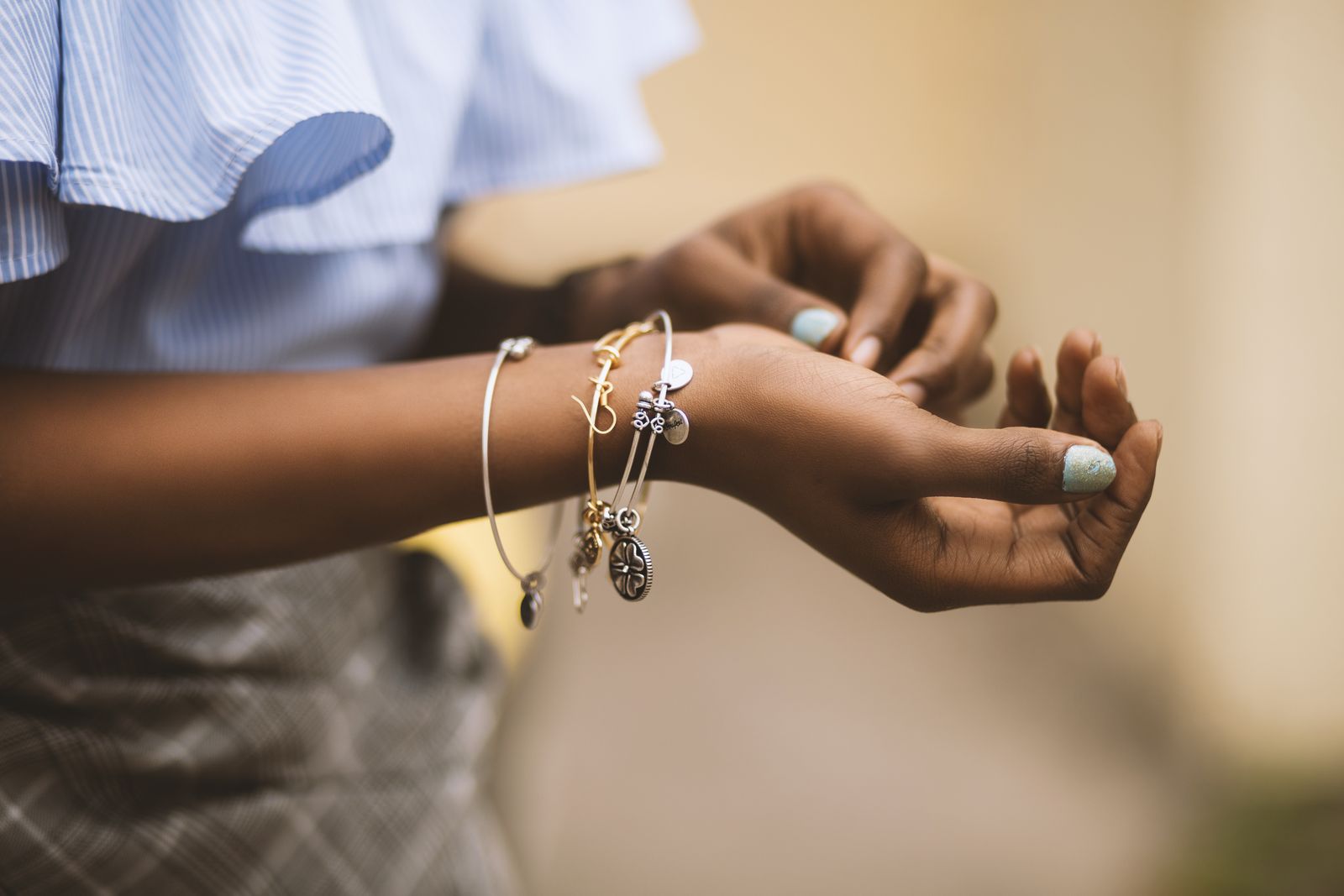
That designer was Michael Rider, newly installed as creative director of Celine, and the moment was, by design, a piece of the brand’s own history talking back to itself. Rider had spent years working under Phoebe Philo during her celebrated run at Celine before leaving to lead design at Polo Ralph Lauren, and when he returned to take the top job, he reached back further still, to a 1992 Celine advertising campaign that had paired heavy tweed with an almost theatrical amount of stacked gold jewelry. For his Spring 2026 debut, according to Marie Claire UK, he brought that pairing back nearly intact: skinny jeans, an asymmetric blazer, stacked rings, and a golden charm bracelet loaded with small, personal-feeling trinkets, the kind of thing that looked less like a runway prop and more like something someone had actually been collecting for years.
It’s worth sitting with how long the charm bracelet had actually been gone. The style peaked hard in the mid-to-late 2000s, when a stack of bangles, a loaded charm bracelet, and a fistful of rings on every finger was practically a uniform, fueled in no small part by brands like Pandora that turned the “add a charm for every milestone” concept into a mass retail category. Then the pendulum swung, and swung hard, toward the pared-back, single-gold-chain aesthetic that Phoebe Philo herself helped define at Celine in the 2010s. For years, “more is more” jewelry read as dated rather than daring. A whole generation of shoppers grew up associating charm bracelets with their mothers’ or grandmothers’ jewelry boxes rather than with anything they’d choose to wear themselves.
That association isn’t wrong, exactly, it’s just incomplete. Charm bracelets are a genuinely old form, and their modern shape traces back to the Victorian era, where, according to Antique Trader, Queen Victoria herself helped popularize the style, reportedly owning bracelets strung with items as sentimental as her own children’s baby teeth and as decorative as painted miniature family portraits. Earlier Victorian versions were often rigid bangles hung with smoothed, engraved coins known as “love tokens,” with padlock-shaped charms doubling as functional clasps. By the 1920s, fine jewelers including Cartier were producing Art Deco charm bracelets in precious metals and gemstones, while the following decades brought cheaper Bakelite and sterling silver versions within reach of far more people. The style hit its broadest saturation in the 1950s and ’60s, when costume jewelry houses like Napier and Monet churned out affordable charm bracelets that, per Antique Trader, became something close to a rite of passage sitting in nearly every woman’s jewelry box.
Seen against that backdrop, the 2000s Pandora-fueled boom wasn’t really the birth of the trend, it was just its most recent mass-market peak, one loud enough that its subsequent quiet felt permanent. It wasn’t. Fashion cycles built on decades-old codes tend to resurface exactly when a design house with real archival weight decides to point at them again, and Celine, a brand with its own specific 1992 receipt for stacked-charm styling, was about as credible a source as the trend could ask for.
The ripple effect moved fast. Within the same fashion season, charm-heavy styling turned up on runways at Burberry and Zimmermann as well, and secondhand and vintage sellers reported renewed interest in exactly the kind of loaded, sentimental bracelets that had been gathering dust in drawers. That’s the real tell that a trend has legs rather than just a single flashy runway moment: when the actual old objects, not just new interpretations of them, start moving again.
What makes the charm bracelet different from a lot of resurrected trends is that it was never actually built to be static. Every version of it, from Victorian love tokens to Cartier’s Art Deco pieces to a Pandora starter bracelet bought for a sixteenth birthday, was designed to be added to over time, which means the ones sitting in drawers right now aren’t just old jewelry. They’re small, wearable timelines, and it turns out fashion just needed one runway moment to remember that.

Leave a Reply