

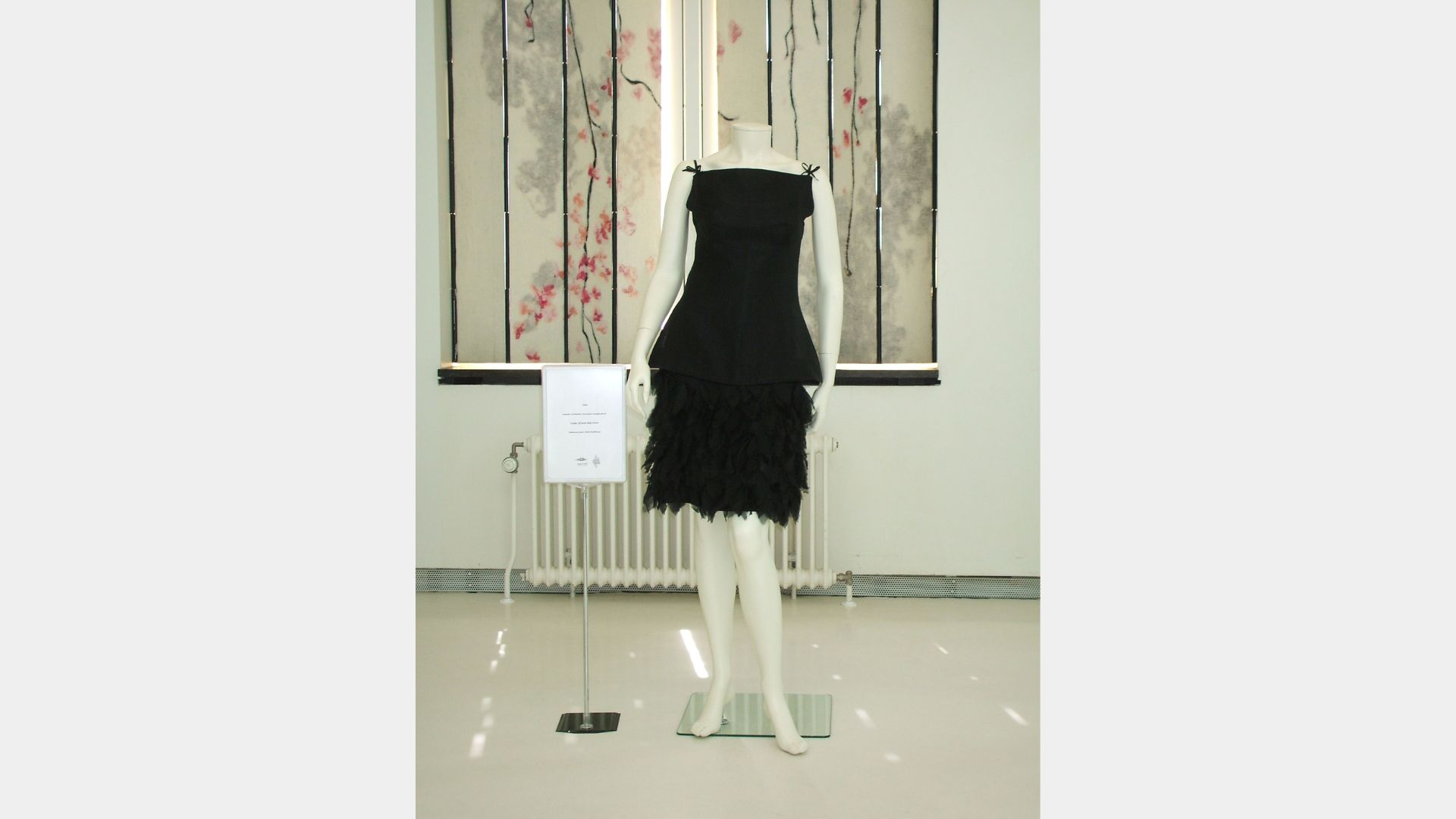
One hundred years ago this October, Vogue put a single black dress on its cover and gave it a nickname that stuck: “The Ford.” Coco Chanel’s design was long-sleeved, cropped below the knee, belted low at the hip, and almost severe in a color that, at the time, mostly meant mourning or a maid’s uniform. The Ford comparison had nothing to do with looks. It was about volume: the magazine was betting this dress would be made simply and cheaply enough that nearly anyone could own one, just as Ford’s car had put driving within reach of ordinary people. A century later, the bet has paid off. The little black dress is still the one thing almost every closet contains, whether it cost $30 or $3,000.
A Dress Engineered, Not Just Designed
Chanel didn’t build the dress out of luxury fabric. She built it out of jersey, a knit previously used for men’s underwear and sportswear, and cut it with the plain lines of a uniform rather than the fuss of a 1920s eveningwear. The Metropolitan Museum of Art’s own collection includes a Chanel ensemble from around 1927 that shows the technique up close: seam binding, carefully arranged pleats, a finely finished hem, and a hand-sewn belt, all worked into modest wool and silk. The Met’s catalog describes it as an example of what Chanel called “poverty de luxe” — turning cheap, practical fabric into something that read as luxury through tailoring alone, borrowing construction ideas from riding habits, menswear, and service uniforms rather than from the ballgowns her competitors were still making.

Black Was a Risk, Not a Safe Choice
It’s easy to forget now, but black was a strange color to build a fashion moment around in 1926. France was still processing staggering losses from World War I and the Spanish flu pandemic, and black clothing carried heavy associations with mourning and household servants, according to Smithsonian Magazine. Many of Chanel’s contemporaries reached for bright colors instead, treating them as a visual antidote to years of grief. Chanel went the opposite direction, embracing black’s severity and then softening it with the accessories that became her own signature — a rope of oversized faux pearls, a fabric camellia, a plain cloche hat. The dress read as modern precisely because it refused to apologize for being plain.
The Ford Line Was Marketing, Not the Whole Story
The “everywoman’s Ford” framing made for a great headline, but it wasn’t really new territory. A National Museums Scotland exhibition on the little black dress, covered by BBC News, traced black dressing back well before 1926: to Queen Victoria’s decades of mourning wear, to the surge in funeral fashion after King Edward VII’s 1910 death (the so-called “Black Ascot”), and to ordinary working women who had already been wearing practical black dresses, in cheaper matte fabrics, years before Chanel ever sketched hers. Both World Wars pushed the style further into the mainstream for practical reasons: wartime demand for mourning wear in the 1910s, and material shortages in the 1940s that kept designs simple and hemlines short. What made 1926 the turning point wasn’t invention so much as timing. Chanel took a shape workingwomen already relied on and put it on the cover of the most influential fashion magazine in the world, at the exact moment synthetic dye had made black fabric cheap to produce at scale.
Even Chanel Couldn’t Leave It Alone
The house never really stopped revisiting its own idea. Decades after the original ran in Vogue, the Met’s collection also holds a 1987–88 Chanel Boutique piece designed by Karl Lagerfeld that reworks the same dropped-waist, knee-length silhouette in black vinyl and polyester jersey instead of crepe — a wink at the original’s austerity, done up in glossy, faintly rebellious 1980s materials. The Met’s own notes call it “tongue-in-cheek,” proof that Chanel’s design team understood exactly what they were sitting on: not a single dress, but a formula flexible enough to be remade in whatever fabric a given decade wanted.
Why the Shape Never Left
Nearly every designer who came after Chanel has taken a turn with the same silhouette, belted and black and unfussy, because it solves the same problem it solved in 1926: it looks deliberate no matter what’s happening around it. That’s the real reason a hundred-year-old dress still sells today. It was never really about black as a color. It was about proving that something built simply, and built well, doesn’t need to be reinvented every season to stay in demand. It just needs, every so often, to be remade, the way Chanel’s own house kept remaking it.

Leave a Reply