

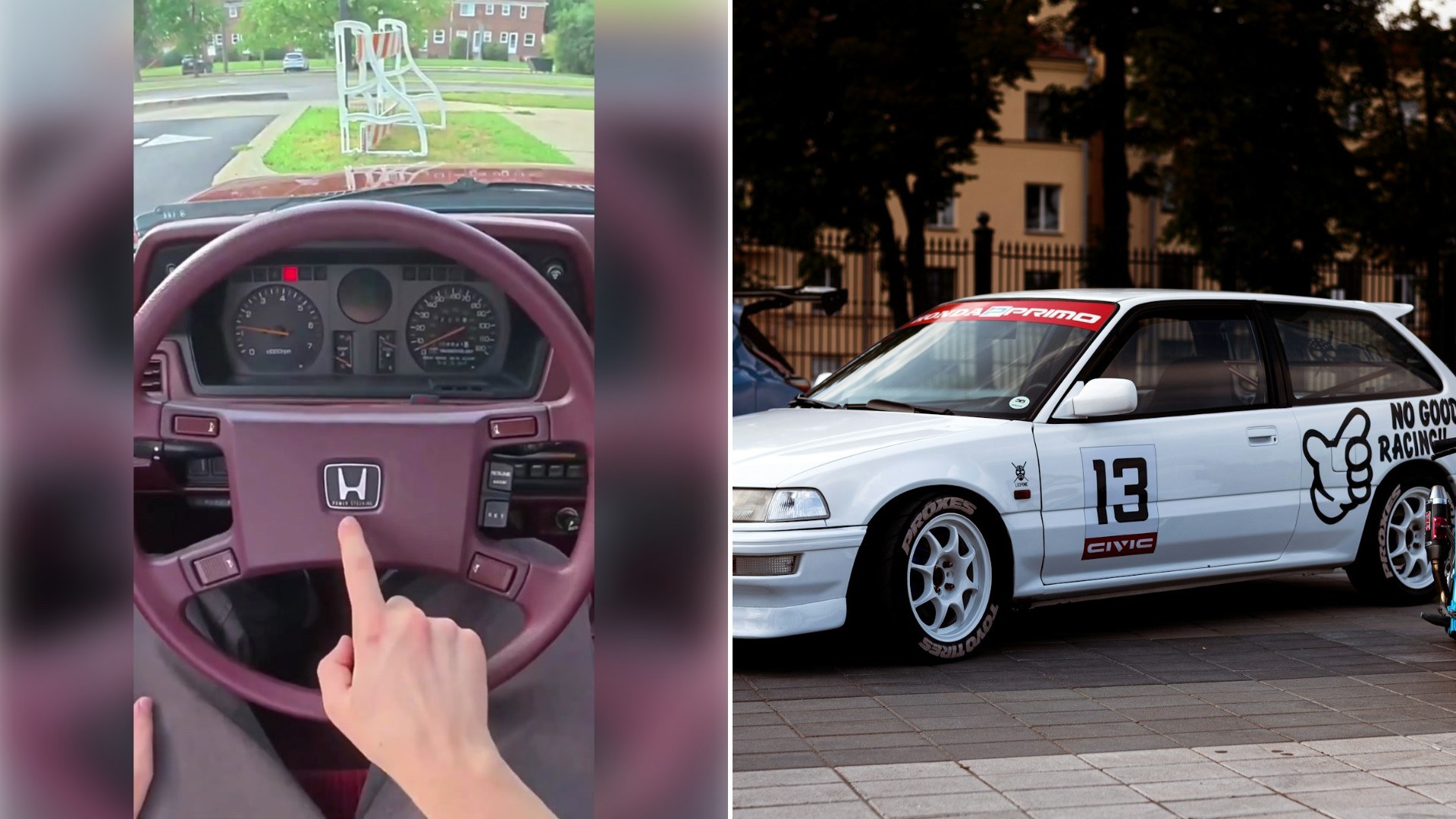
Classic car enthusiasts tend to get excited about engines and exteriors, but the latest video from @tutorialdrives makes the case that some of the most interesting details on a vintage vehicle are hiding in plain sight inside the cabin. Sitting behind the wheel of a classic 1980s Honda Accord sedan, the creator walks through the car’s original interior features one by one, treating what might look like an ordinary dashboard to a casual observer as a genuinely notable piece of automotive design history.
Pointing out specific badges and controls as the video progresses, including the power steering label mounted where any driver of the era would have seen it every time they got behind the wheel, the creator explains what made these particular design choices notable for their moment in automotive history. It is a small detail, but one that speaks to an era when features that are now taken for granted in nearly every vehicle, like power steering, were still novel enough to be explicitly labeled and advertised right on the dashboard.
@tutorialdrives
What comes through clearly across the video is just how well the interior has held up, with the creator noting that every original detail inside still works exactly as intended decades after the car first rolled off the line. For anyone who has ever owned an older vehicle, that kind of functional longevity is genuinely impressive, since interior components like switches, gauges, and trim pieces are often the first parts of an aging car to fail or degrade, even when the engine underneath the hood is running perfectly fine.
The Honda Accord first launched in the mid-1970s and quickly became one of the defining vehicles of the Japanese auto industry’s rise in the American market, prized for its reliability, its fuel efficiency during an era of rising gas prices, and its comparatively simple, well-engineered interior layout. By the 1980s, the Accord had become a genuine sales phenomenon in the United States, and surviving examples from that era in strong original condition have become increasingly appreciated by collectors who value understated, functional design over flashier options from the same period.
That appreciation for functional simplicity is a big part of why interior-focused content like this resonates with a broad audience of car enthusiasts, not just Honda loyalists specifically. Modern vehicle interiors are often dominated by touchscreens and software-driven controls that can feel disconnected from the physical act of driving, and there is a specific nostalgia, shared by people who never even owned an Accord themselves, for the tactile simplicity of physical switches, clearly labeled buttons, and dashboards designed to be understood at a glance rather than navigated through menus.
For collectors and enthusiasts hoping to find and preserve a vehicle in similarly strong original condition, experts in the vintage Japanese car space generally emphasize a few consistent priorities: seeking out low-mileage examples that have been garage kept rather than exposed to years of sun and temperature swings, being cautious about aftermarket modifications that can compromise a car’s originality and therefore its collector value, and prioritizing regular use and maintenance over long-term storage, since interior components in particular tend to hold up better when a car continues to be driven rather than left sitting for years at a time.
Ultimately, a video like this one works as a small piece of advocacy for paying closer attention to the parts of automotive history that do not usually get the spotlight. Engines and exteriors tend to dominate classic car conversations, but the interior of a well-preserved vehicle like this 1980s Accord offers its own quiet testimony to an era of automotive design that prioritized durability and clarity, features that, decades later, still work exactly as intended every single time someone gets behind the wheel.
It is also a useful reminder that a vehicle’s interior tells its own story about how it was cared for over the decades. A dashboard and set of controls still functioning exactly as designed after more than forty years typically reflects an owner history of garage storage and regular light use rather than years of neglect, making the car’s well-preserved cabin as much a testament to its past owners as to Honda’s original engineering.
There is also a broader appreciation running through content like this for cars that were engineered to be understood rather than merely operated, a philosophy increasingly rare as modern dashboards trend toward abstraction, and one that explains why even viewers with no personal connection to this specific model still find themselves drawn into a walkthrough of switches and badges from another era.
For readers who own or are considering buying a vehicle of similar age, the lesson here extends beyond this particular Accord, since a full, honest inventory of which original features still function as intended is one of the best ways to judge a vintage car’s true condition beyond whatever the engine and exterior alone might suggest.
It is a detail easy to overlook until a car this age fails to deliver it, which is exactly why a fully functioning original interior tends to impress enthusiasts even more than a flashy exterior restoration might on its own.

Leave a Reply