

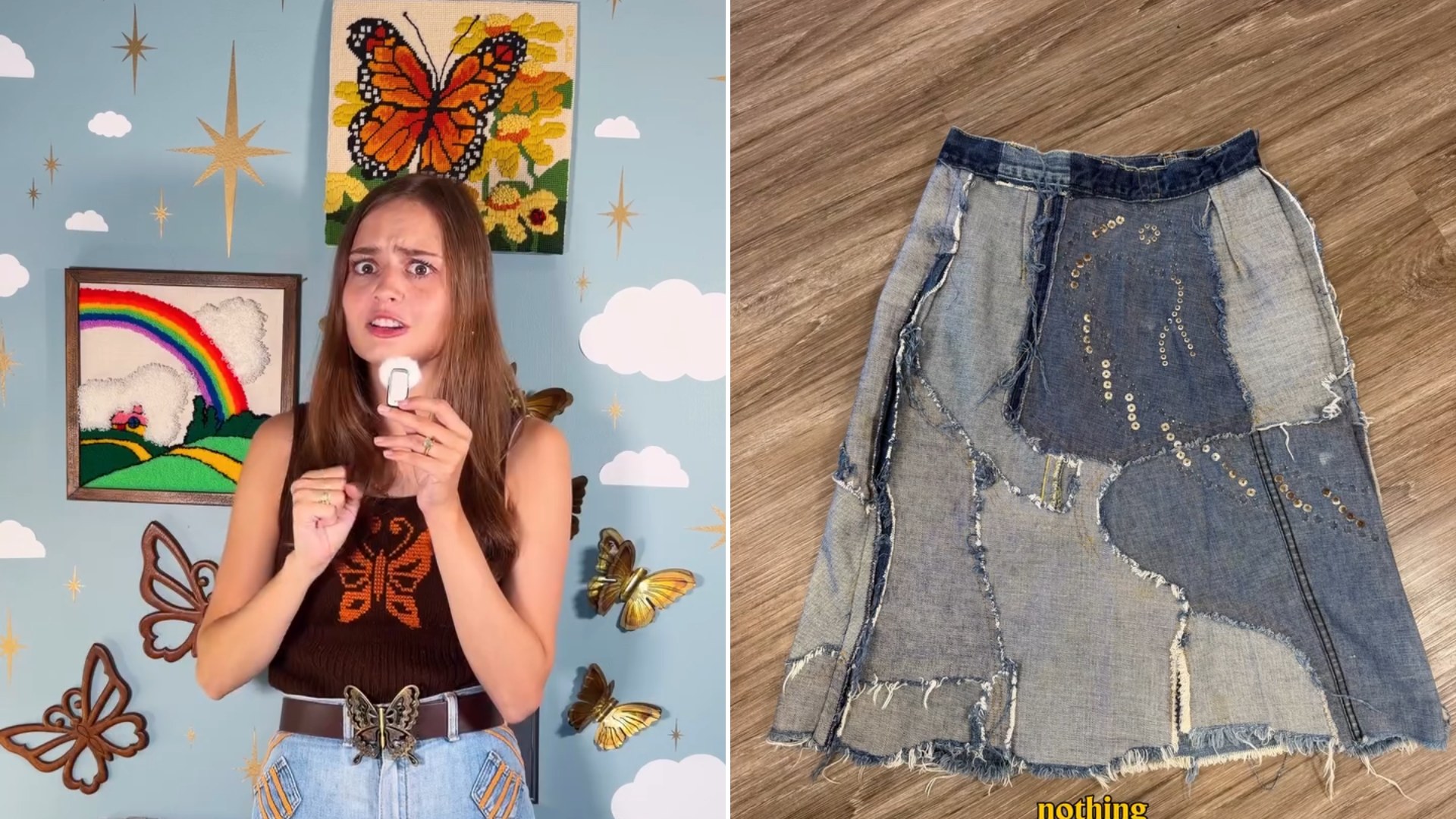
Secondhand shopping has quietly turned into detective work for a certain kind of buyer, the type who does not just want a good piece but wants to know exactly where it came from. That instinct is what led heytheremissblue to do something most Depop shoppers never bother with. After buying a vintage denim skirt that looked far too well made and too distinctive to be an ordinary mass market piece, she went straight to the source and contacted the original designer to confirm it was real.
Denim holds up in a way a lot of other vintage fabric simply does not. A well made skirt from decades ago can survive wash after wash and still land on a hanger looking sharp, which is part of why denim pieces so often outlive the rest of a wardrobe from the same era. It also means a genuinely rare denim piece, cut by a small or independent designer rather than a mass manufacturer, can circulate through closets and resale bins for years without anyone realizing what they are holding.
Why Provenance Has Become Part of the Hunt
Platforms like Depop turned secondhand shopping into something closer to browsing a flea market than digging through a single local thrift store, and that shift brought a flood of pieces with murky histories along with it. A tag, a construction detail, or a signature stitch pattern can hint that something came from a specific designer’s small early collection rather than a big box retailer, but hints are not proof. Reaching out directly to a designer, when that designer is still findable and willing to respond, is becoming a more common step for buyers who want their find confirmed rather than just assumed.
A Quick Primer on Denim’s Staying Power
Denim as a category has weathered fashion cycles better than almost any other textile, partly because it was built for durability from the start and partly because designers keep finding new ways to reinvent it. The eighties brought exaggerated proportions and heavy stonewashing, the nineties leaned into slip skirts and dark rinses, and the two thousands pushed low rise cuts and heavy distressing. A skirt that mixes construction details from more than one of those eras, or uses a cut that does not fit neatly into any of them, is often the clue that tips off an experienced buyer that something unusual is going on.
Doing the Research Before Hitting Send
Reaching out to a designer is rarely as simple as firing off a single message. Buyers serious about confirming a piece usually spend time first comparing tags, stitching, and construction against whatever archival photos or old lookbooks they can track down online, building a case before ever contacting anyone. That groundwork makes the eventual conversation more productive too, since a designer is far more likely to engage with someone who can point to specific details rather than someone who just says a piece looks old.
What Makes a Denim Skirt Worth That Effort
Vintage denim skirts carry a lot of design history packed into one simple silhouette. Decades of trends moved through them, from asymmetrical hemlines and patchwork paneling to raw distressing and dark selvedge washes that mass retailers rarely bothered replicating well. A skirt built by a designer working in smaller batches, with construction choices that do not match anything from a big chain, is exactly the kind of piece that raises a buyer’s suspicion they might have found something genuinely significant rather than just old.
Confirmation Changes Everything
Getting a direct answer from the person who actually designed a piece does more than settle a curiosity. It turns a good guess into documented history, which matters enormously if the piece is ever resold, insured, or simply passed down. It also validates the kind of patient, detail oriented shopping that a lot of vintage buyers pride themselves on, the instinct to notice a stitch or a cut that looks off from everything else on the rack.
A Reminder to Look Closer
Most people flipping through a Depop listing are not going to email a designer to check their receipts, and that is fine, most vintage pieces do not need that level of scrutiny. But every so often a piece is distinctive enough to be worth the extra step, and this denim skirt is a good reminder that the most interesting finds in secondhand shopping are not always the loudest ones on the rack. Sometimes they are just the ones built well enough, and cut strangely enough, to make a buyer stop and ask questions.

Leave a Reply