

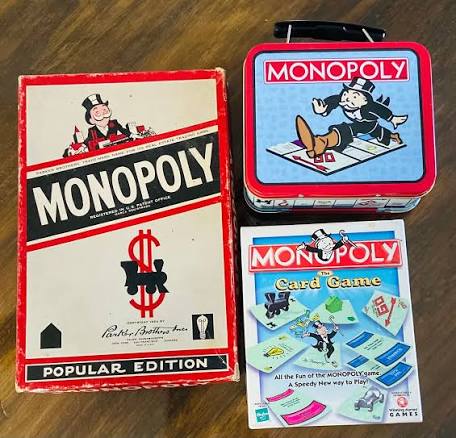
Sometime around 1941, a Leeds toy-and-playing-card printer called John Waddington Ltd. began quietly building an altered version of one of Britain’s best-selling board games — one with a magnetic compass hidden inside a playing token, a two-part metal file screwed together inside the box, and genuine German, Italian, and French currency tucked beneath the stacks of pretend Monopoly money.
The sets went to Allied prisoners of war through parcels that looked, to German camp censors, like ordinary care packages of games and pastimes. They weren’t.
The Spy Behind the Game
The program traced back to MI9, the British intelligence branch created in December 1939, three months after the war began, specifically to help downed airmen and captured soldiers escape and get home, according to the account published by the Eden Camp Modern History Museum. Inside MI9, an officer named Christopher Clayton Hutton is credited with conceiving what the museum calls “the Waddington project,” pairing military intelligence with a game manufacturer that already had a rare technical edge: Waddingtons was the only British printer that had perfected silk-printing, the process needed to make maps that could be folded into a tiny square, unfolded silently, and reused without tearing, according to the WW2 Escape Lines Memorial Society’s history of the operation.
What Was Hidden Where
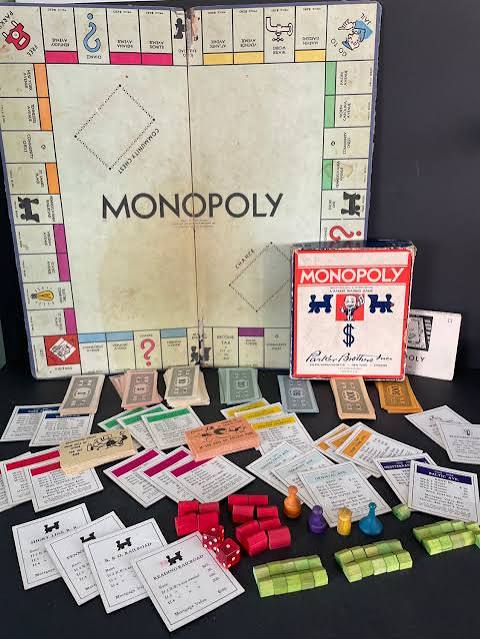
Waddingtons ran trials of the cloth-printed escape maps as early as 1940, according to Eden Camp, before the concealment method expanded into a fuller kit. Compasses and metal files were disguised as ordinary playing pieces. Foreign banknotes were slipped beneath the piles of Monopoly money. Maps, keyed to whatever region a shipment of POWs was being held near, were worked into the board or the box itself, according to both the Eden Camp and Escape Lines Memorial Society accounts. A researcher page published by UC Santa Barbara’s geography department adds that German camp officials generally viewed board games as good for prisoner morale, which meant the packages received noticeably lighter scrutiny than personal parcels — precisely the gap MI9 was counting on.
Identifying which sets were rigged required its own code. The Eden Camp museum describes a system of punctuation marks printed onto the board itself: a period after Marylebone Station signaled a hidden map of Italy, while a mark near Free Parking indicated maps of northern France or Germany, depending on the version distributed. Aircrews were briefed on these markings before missions, so that if they were captured, they would know which “ordinary” Monopoly set smuggled into camp was actually a survival kit in disguise.
Getting the Games to the Camps
Genuine Red Cross parcels were too tightly regulated for MI9 to risk tampering with directly, so the rigged games were routed instead through invented charitable fronts, including one identified by Eden Camp as the “Licensed Victuallers’ Sports Association,” created largely to move games and recreational supplies into camps without drawing German suspicion. Thousands of altered sets are believed to have reached prisoners this way over the course of the war, and the UC Santa Barbara account credits the program, alongside MI9’s other escape aids, with supporting a meaningful share of the more than 35,000 Allied escapes recorded from German-held camps by the war’s end, though the exact fraction attributable to the Monopoly sets specifically is difficult to verify at this distance.
Kept Quiet for Six Decades
The operation wasn’t formally acknowledged until 2007, when Waddingtons and the surviving craftspeople who built the rigged sets were publicly recognized at a ceremony, more than 60 years after the last kit shipped, according to both the Escape Lines Memorial Society and Eden Camp accounts. By then, most of the people who built and used the sets were gone, and the company itself had long since been folded into Hasbro, which acquired the Waddingtons Monopoly license in 1994. What’s left is a strange footnote to a game still sold in toy aisles worldwide: for a few wartime years, losing at Monopoly might have meant nothing at all, and winning might have meant a folded silk map that told a prisoner exactly which direction to run.
A Game Built for Getting Out
Every wartime escape aid MI9 built depended on the same trick: hiding something meaningful inside something the enemy had already decided was harmless, whether that was a compass stitched into a flight jacket or a map worked into a board game nobody thought twice about confiscating. Monopoly just happened to be the version still sitting in closets and toy aisles today, which is probably the only reason this particular piece of wartime tradecraft got remembered at all.

Leave a Reply