

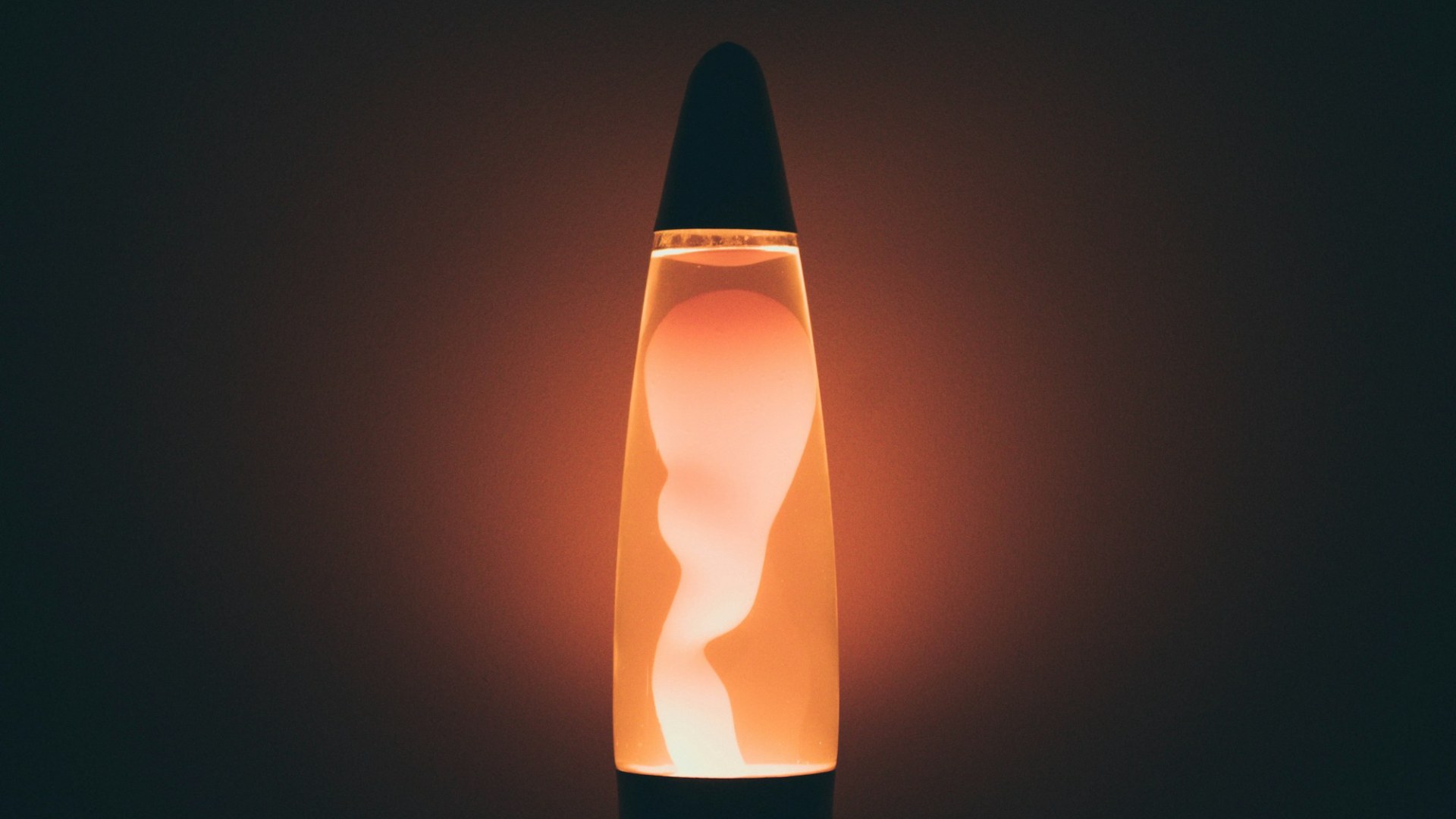
A cocktail shaker and an egg timer sound like the setup for a kitchen mishap, not the birth of one of the most recognizable pieces of retro decor ever made. That homemade experiment belonged to a British accountant who spent years perfecting a formula he never fully wrote down anywhere, and the company he founded still will not tell anyone the exact recipe.
A Pub Napkin Kind of Invention
Edward Craven Walker was not a chemist, an engineer, or a toy designer by trade. He ran pubs and was, by most accounts, a restless tinkerer who liked building things in his spare time. According to Smithsonian Magazine’s history of the lava lamp, Walker first became fascinated by a homemade egg timer he spotted in a pub, a glass container filled with liquid that produced slow-moving blobs as it heated on a stove. He set out to recreate and improve the effect himself, running experiments with wax, oil, water, and whatever household containers he had lying around, cocktail shakers reportedly included, until he landed on a formula that behaved the way he wanted.

From Kitchen Experiment to Crestworth
By the early 1960s, Walker had refined his homemade blob-lamp concept enough to bring it to market. He founded a company called Crestworth to manufacture and sell what he named the Astro lamp, and the design caught on quickly during the psychedelic wave of the mid-to-late 1960s, when its slow, hypnotic movement fit the era’s visual language almost perfectly. Crestworth later renamed itself Mathmos, the name still used today, and per Mathmos’s own company heritage page, the business Walker started is still headquartered in the United Kingdom and still manufacturing lamps built on his original design principles.
The Formula Nobody Outside the Company Knows
What makes the lava lamp’s history unusual among midcentury inventions is how little of the actual science has ever been made public. The lamp works because the wax mixture and the surrounding liquid have carefully balanced densities that shift with heat, so the wax sinks when cool and rises in blobs once warmed by the bulb below it. Getting that balance right took Walker years of trial and error, and neither he nor the company he founded ever published the precise formula. Mathmos has continued to treat the exact recipe as proprietary information for more than six decades, guarding it the way a soft drink company might guard a signature flavor rather than publishing it as an open engineering spec the way many mechanical toy patents eventually become.
Why the Secrecy Stuck Around
Plenty of midcentury novelty items eventually get reverse-engineered once patents expire and competitors study the mechanism closely enough. Lava lamps have not entirely escaped that fate, cheaper knockoffs using different wax blends have existed for decades, but none of them behave quite like an original Mathmos lamp, and collectors and enthusiasts still debate exactly why. Part of the answer is that Walker’s formula depended on more than a simple ratio, it also involved specific chemical additives that affect surface tension and melting behavior, details that are difficult to reverse-engineer just by watching a lamp in motion.
A Design That Outlived Its Decade
Most novelty items tied tightly to a single decade’s aesthetic eventually fade into nostalgia pieces that only show up at themed parties or thrift stores. Walker’s invention took a different path. Lava lamps went through a genuine decline in the 1970s and 1980s before roaring back into popularity in the 1990s and again in recent years, each time finding a new generation that treats the slow-moving wax as a genuinely calming visual rather than a kitschy throwback. That staying power is rare for an object this tied to one specific visual moment in design history.
An Accountant’s Legacy
Walker died in 2000, having spent his later years still closely involved with the company he founded, and Mathmos has continued operating under new leadership ever since, still built around the same basic chemistry he never fully explained to anyone outside the business. It is a strange kind of legacy: a formula so simple in concept, wax, liquid, and heat, yet specific enough in execution that no one has ever managed to duplicate it perfectly from the outside. For a lamp built out of a cocktail shaker and an egg timer, that is a remarkably well-kept secret.

Leave a Reply